
Vintage Pine Prep Table
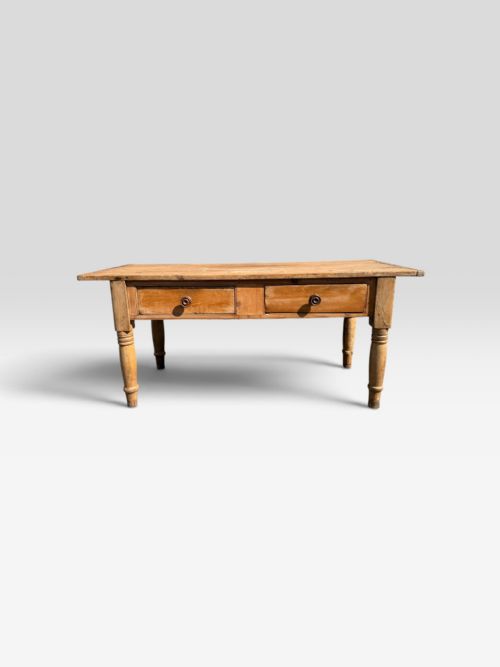
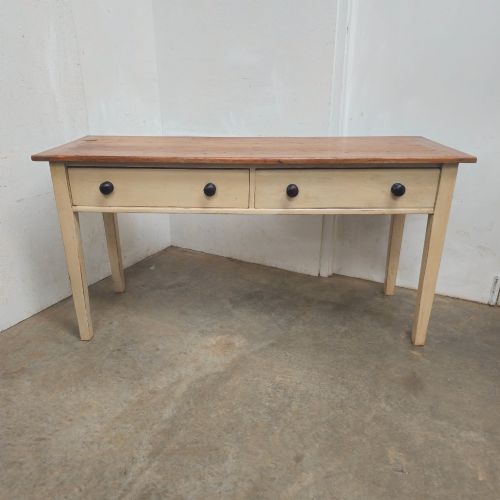
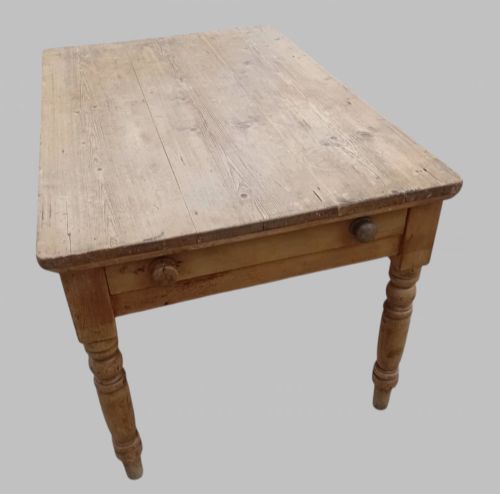
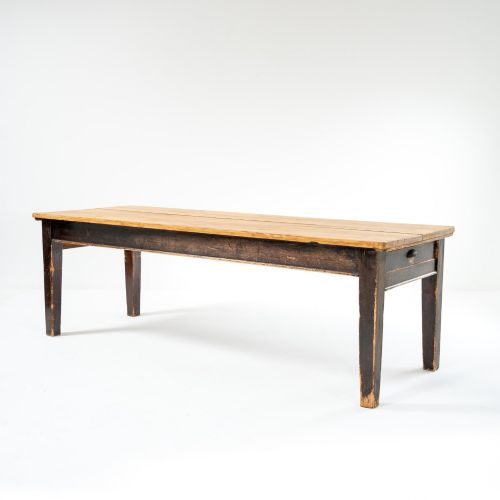
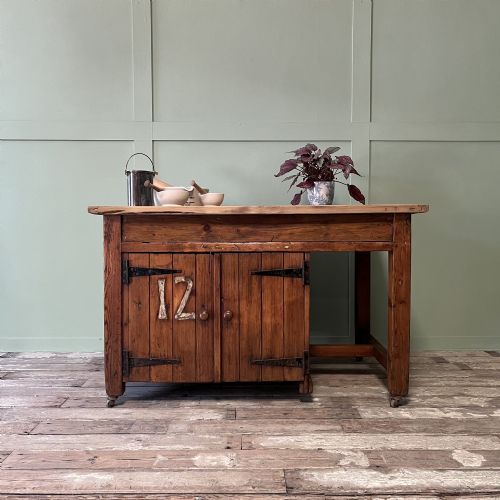
A vintage pine prep table brings honest utility and rugged character to a kitchen, offering a sturdy workspace built for heavy daily use.
Vintage Pine Prep Table
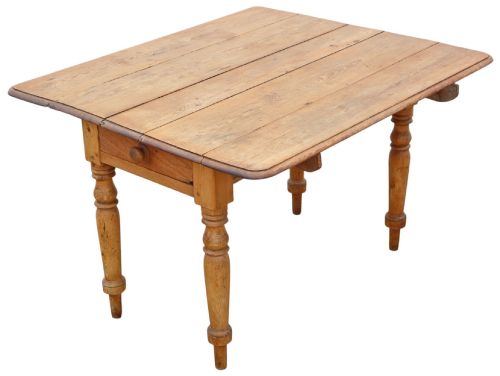
A vintage pine prep table is a heavy-duty utilitarian surface designed for practical tasks in domestic or commercial spaces, ranging from domestic kitchens to dairies and bakeries. These pieces appear frequently in the nineteenth century and early twentieth century formats, spanning Victorian, Edwardian, and regional European styles.
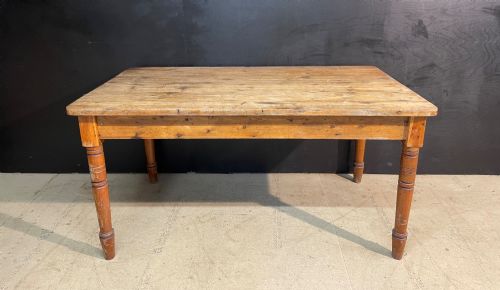
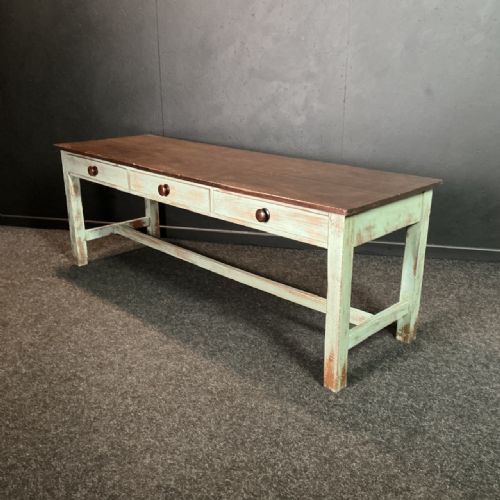
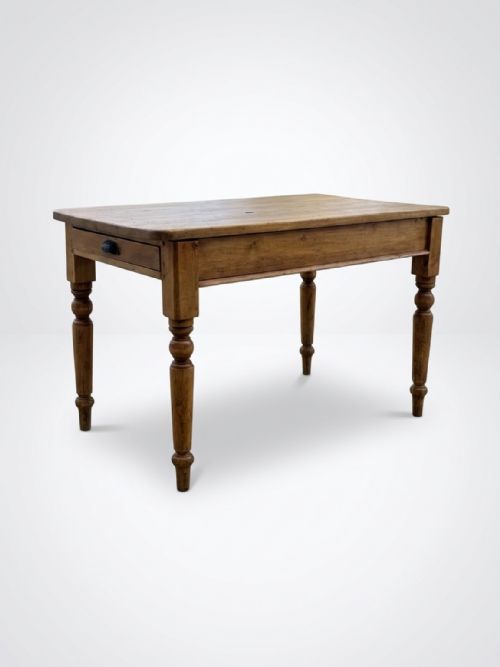
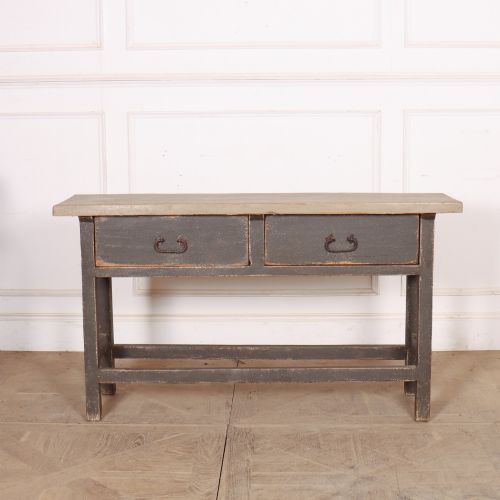
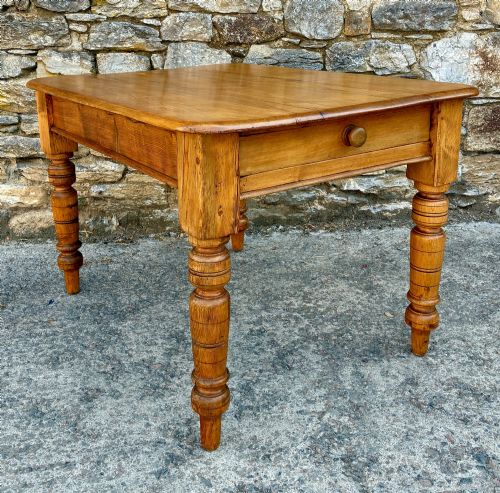
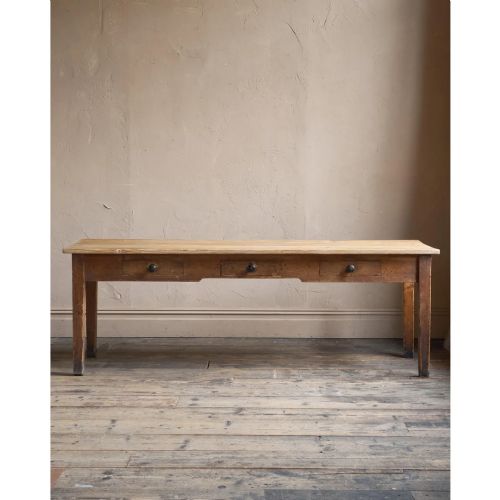
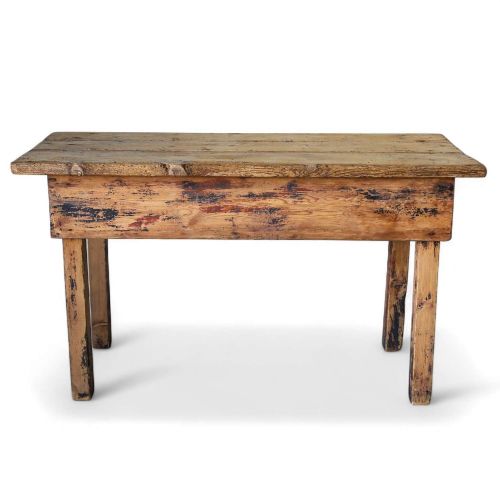
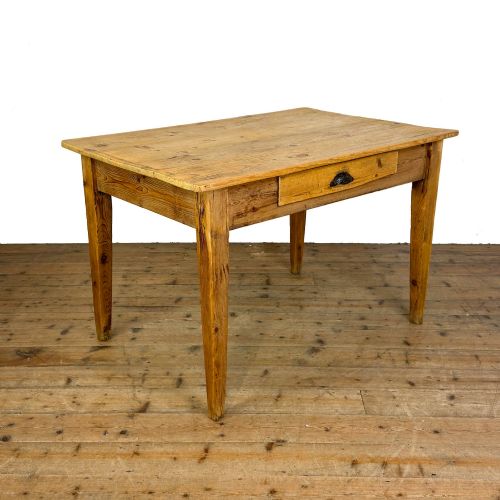
Buyers seeking a vintage pine prep table encounter forms such as farmhouse kitchen tables, bakers tables, dairy tables, and scullery tables. Many examples incorporate deep drawers, scrub tops, or lower tiers intended for storing implements and ingredients.
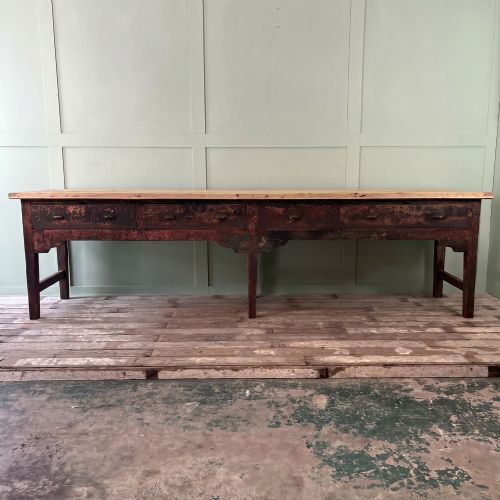
Origins stretch across English, French, and Scandinavian workshops, reflecting local traditions in proportions and paint finishes. The listings here showcase everything from compact side tables to expansive harvest tables exceeding eight feet in length.
How they were made
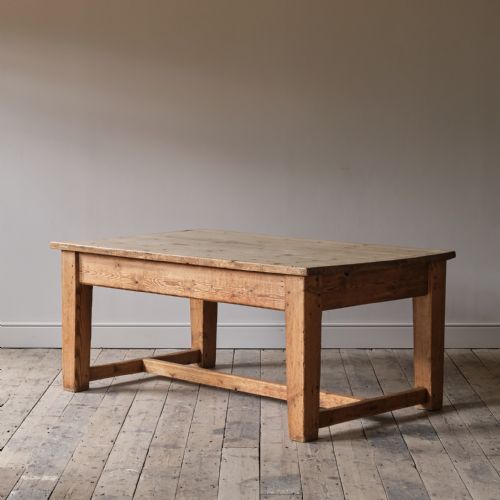
Makers constructed these tables primarily from solid pine, often pairing native softwoods with durable scrub tops in sycamore, fruitwood, or pitch pine. Carpenters relied on traditional joinery methods, securing heavy plank tops to sturdy square-section or turned supports to withstand vigorous kneading and chopping.
Surfaces frequently display the marks of historic usage, while structural elements utilise iron or brass brackets and fixings for added stability. Many regional pieces feature original applied coatings such as Falu red paint or traditional painted finishes on the legs and bases.
The listings feature pine alongside pitch pine, sycamore, and fruitwood, paired with iron and brass hardware.
What varies in quality
Quality in a vintage pine prep table rests on the integrity of the timber and the honesty of its wear. Superior pieces retain their original proportions and uncompromised structural mass, avoiding excessive restoration that strips away centuries of working character.
The presence of original paint finishes, authentic scrub tops, and functional maker additions like deep drawers or multiple tiers elevate an example. Lesser pieces suffer from unsympathetic modern alterations or replacement tops that disrupt the historical continuity of the object.
The Vintage Pine Prep Table Glossary
- Scrub top
- A bare wooden tabletop designed to be repeatedly scoured clean with water and sand. This treatment leaves the grain raised and pale.
- Falu paint
- A traditional deep red paint originating in Sweden, composed of copper mine residue and linseed oil. It provides a durable, matte finish on historic softwoods.
- Harvest table
- An elongated, narrow table built to seat farm workers during seasonal communal meals. These pieces often feature ample clearance underneath and robust wooden framing.
- Drapers table
- A long, wide table historically used in textile shops for measuring and cutting cloth. They frequently include lower shelves or multiple drawers for storing bolts of fabric.
Vintage Pine Prep Table: Frequently Asked Questions
How were these tables originally used?
These tables served as heavy-duty work surfaces in domestic kitchens, bakeries, dairies, and sculleries. Cooks and artisans used them for kneading dough, preparing meat, and sorting produce.
Their robust construction meant they could handle the constant strain of daily labour without wobbling. Over decades, the timber absorbed flour, water, and natural oils from active use.
What is a scrub top?
A scrub top is an unsealed wooden surface designed to withstand aggressive daily cleaning with water and stiff brushes. Cooks would scour the timber to remove food residue and maintain hygiene.
This rigorous cleaning process leaves the grain raised and bleached white over time. It forms a tactile, pale surface that contrasts with the darker, painted or waxed bases.
How do I care for a vintage pine table?
Keep the wood nourished by applying natural beeswax periodically to prevent the dry pine from splitting. Avoid placing hot pans directly onto historic surfaces and use boards for chopping.
Clean spills promptly with a damp cloth rather than soaking the wood. Allowing the table to breathe maintains its historic patina and character.
How do I date a vintage pine prep table?
Dating relies on examining the construction methods, tool marks, and overall proportions of the piece. Hand-sawn boards, early iron fixings, and traditional pegged joinery point toward nineteenth-century origins.
Paint analysis and style clues, such as square-section supports or turned legs, help narrow the period down further. Wear patterns also tell a story of long-term historic utility.