


Vintage Pine Counter
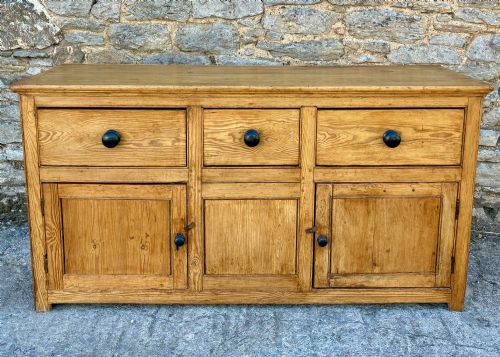
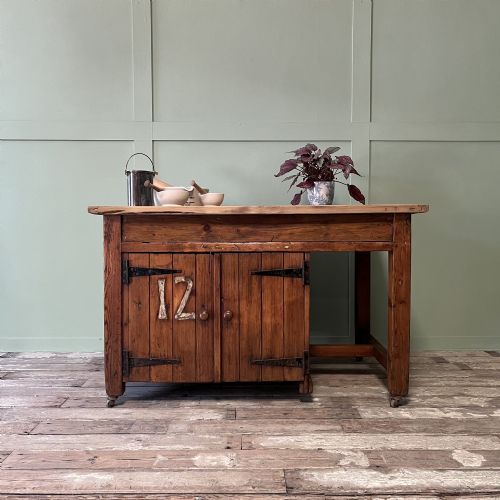
A vintage pine counter brings hard-working utility and honest timber grain into a modern kitchen or shop.
Vintage Pine Counter
A vintage pine counter spans heavy shop fittings, drapers' tables, and long work surfaces designed for daily commerce or domestic use. You are most likely to meet 19th Century and Victorian examples built for trade, alongside Edwardian prep tables and bank of drawers units.
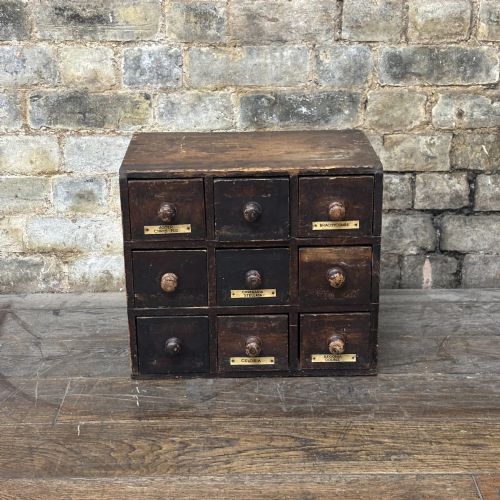
Origins stretch across English, French, Hungarian, and Swedish workshops, bringing distinct regional proportions and surface treatments. Many pieces double as reception stations, florist seed chests, or haberdashery banks with dozens of small drawers.
The enduring appeal of a vintage pine counter lies in its robust timber construction and utilitarian honesty. These fixtures served shopkeepers and artisans before finding a second life in contemporary domestic spaces.
How they were made
Construction relies heavily on solid pine timber, frequently paired with beech or elm for structural strength and working surfaces. Iron and metal brackets, handles, and zinc tops appear on pieces built for heavy commercial service.
Surfaces often retain original layers of paint in white, cream, light green, or soft grey applied during their working lives. Carpenters utilised dovetail joints for drawer construction and pegged mortise and tenon joints for frames that needed to withstand constant daily pressure.
Current listings span the 19th Century, Victorian, Edwardian, and 1930s periods, incorporating pine, beech, elm, oak, paint, metal, iron, and zinc.
What varies in quality
Quality rests in the integrity of the original timber and the retention of authentic working surfaces. Pieces with undisturbed multi-layered paintwork or deep patinated polish sit at the upper end of the range.
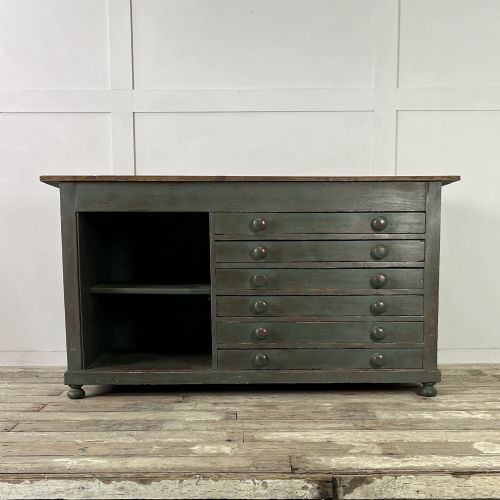
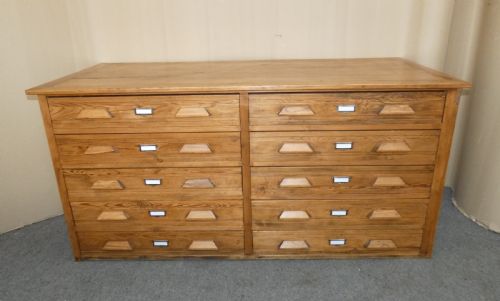
Proportion and scale dictate desirability, particularly in multi-drawer shop fittings and long prep tables where balanced bank configurations matter. The survival of original hardware, such as brass pulls or cast iron brackets, elevates the character of the counter.
The Vintage Pine Counter Glossary
- Haberdashery
- A collection of shallow glazed or panelled drawers originally used for selling small sewing goods and ribbons. These banks are prized for storage in modern homes.
- Drapers table
- A long, wide work table featuring a generous top and minimal lower obstruction, built for measuring and cutting rolls of cloth. They provide substantial surface area for food preparation.
- Shop fitting
- Custom furniture built specifically for commercial interiors, including counters, greeting stations, and display cabinets. These pieces are constructed for heavy public use.
- Prep table
- A sturdy wooden table designed for kitchen or bakery preparation, often fitted with drawers for utensils. The tops show the scars of chopping and kneading.
- Patina
- The surface sheen and colour acquired through decades of handling, cleaning, and exposure to light. It indicates the age and genuine working history of the timber.
Vintage Pine Counter: Frequently Asked Questions
How do I clean an original painted counter?
Dust gently with a soft dry cloth and avoid harsh chemical cleaners that strip historic paint layers.
Feed bare pine surfaces with a traditional beeswax polish to protect the grain without creating a glossy film.
Can I use a shop counter as a kitchen island?
Many vintage counters match standard modern worktop heights and offer deep drawer storage for kitchen equipment.
Ensure the timber is sealed appropriately if the surface will encounter regular moisture and food preparation.
What is the difference between a prep table and a counter?
Prep tables are generally open-framed work surfaces accessible from multiple sides for food tasks or baking.
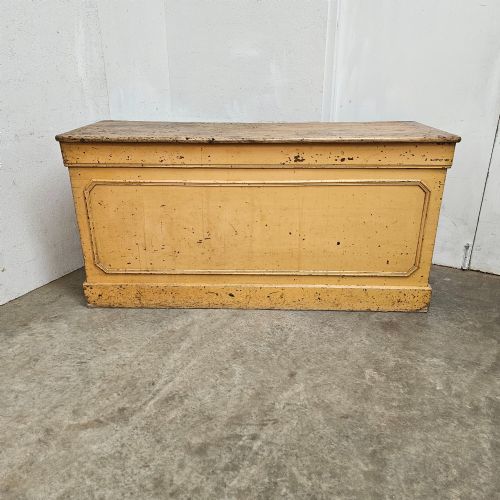
Counters usually feature enclosed cupboards, banks of drawers, or solid panelled fronts designed to divide a room.
How do I identify French versus English counters?
French pieces often display softer cornices, slender proportions, and distinctive regional paint colours like cream or soft green.
English examples tend to use heavier framing and more utilitarian hardware suited to industrial or commercial trade.