

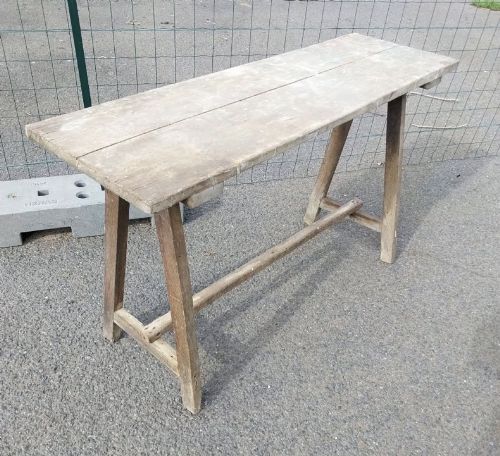
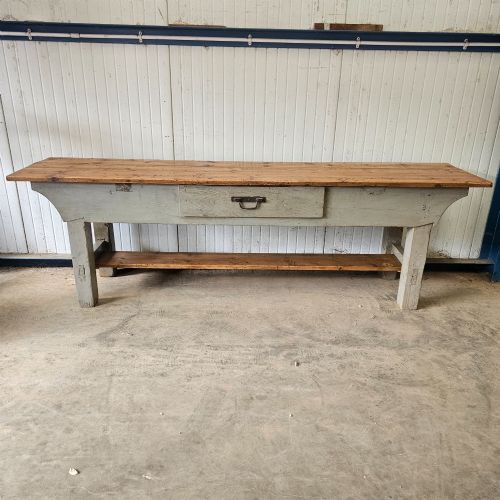
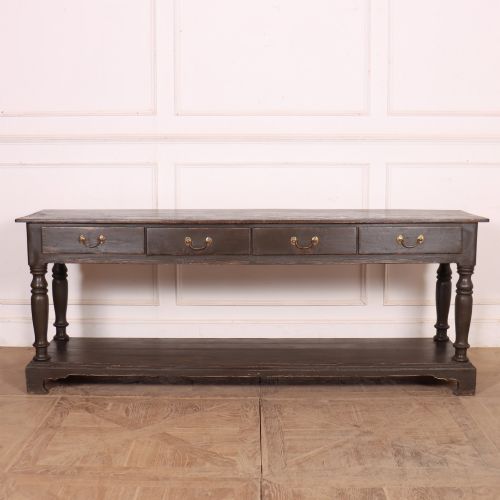
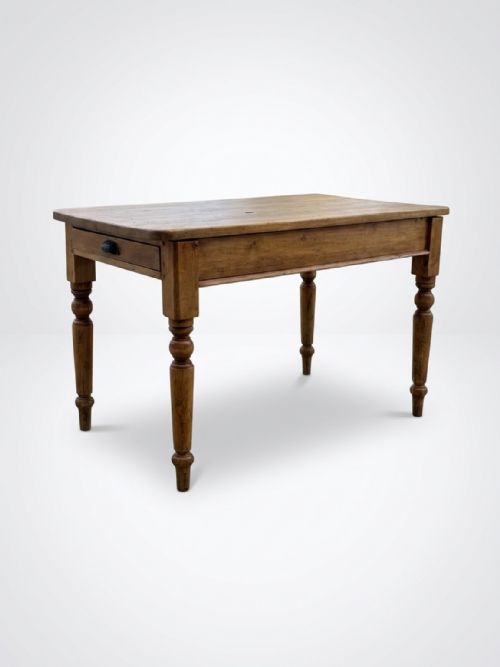
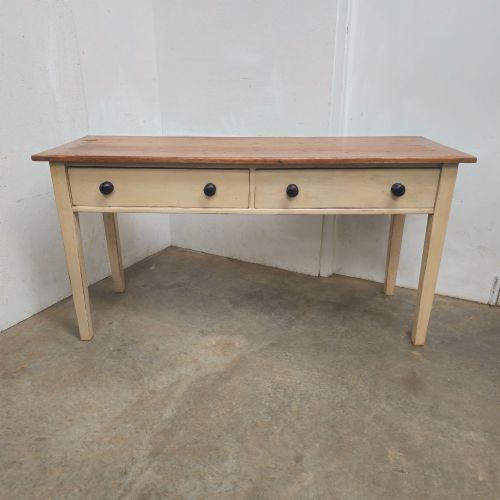
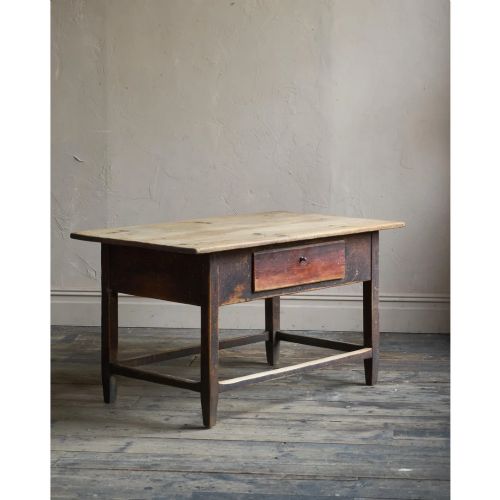
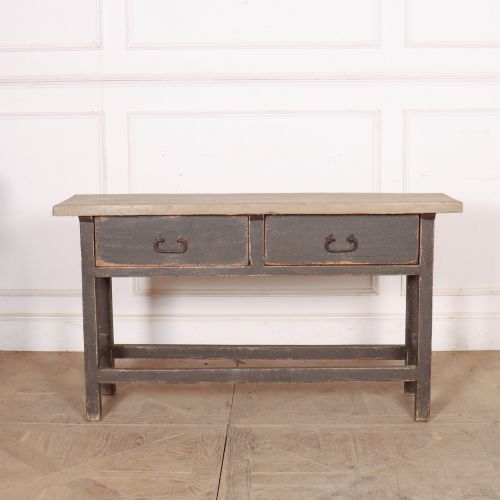
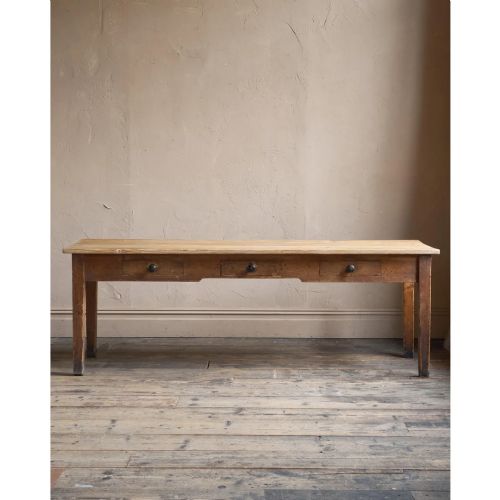
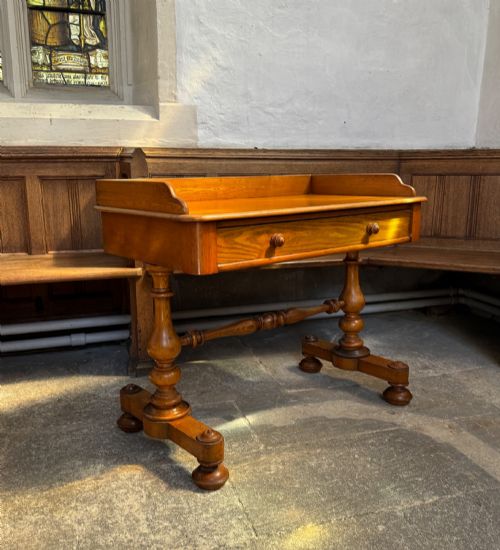
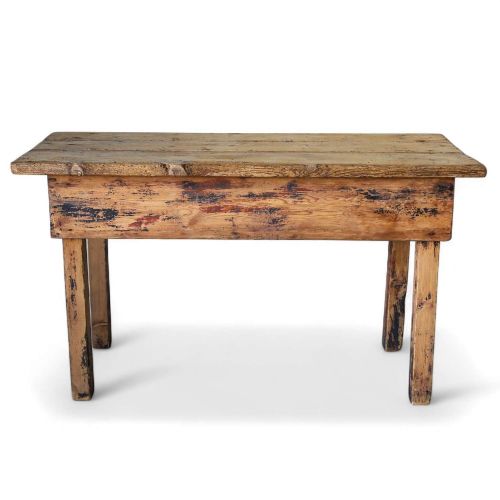
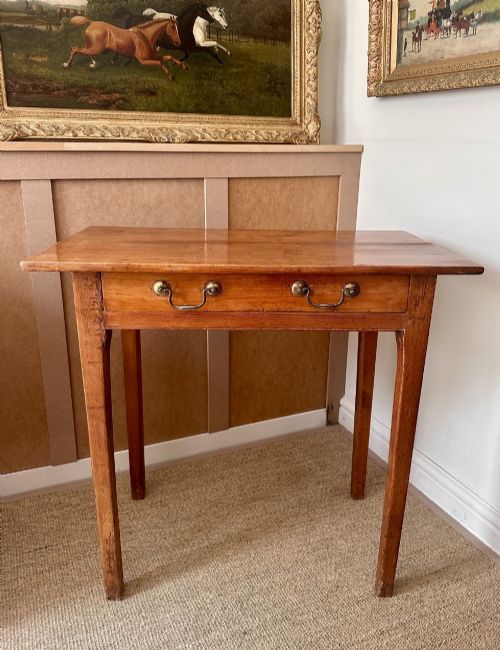
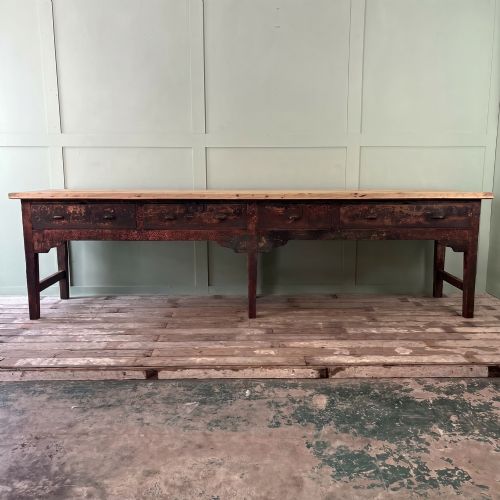
Vintage Pine Console
A vintage pine console brings warmth and utility to a hallway or living space through time-worn surfaces and honest timber construction.
Vintage Pine Console
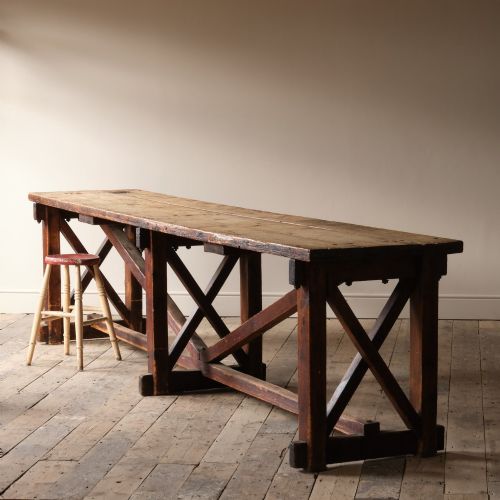
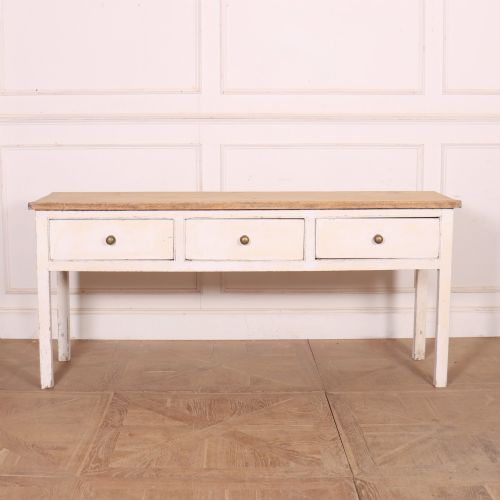
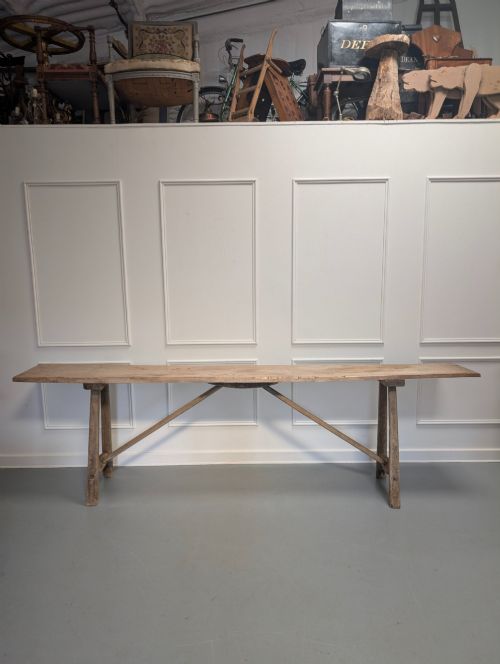
A vintage pine console encompasses a practical variety of narrow tables and working surfaces drawn from domestic and utilitarian contexts. When searching for a vintage pine console, buyers encounter forms that originally served as laundry tables, washstands, dresser bases, and workbenches across the nineteenth and early twentieth centuries.
The selection here draws heavily from British, French, and Scandinavian origins, reflecting domestic traditions where robust timber construction met daily labour. Many pieces arrive from country houses, sculleries, and dairies, retaining the generous proportions and straightforward utility required by past trades.
While purpose-built console tables appear, many examples adapt other narrow furniture types - such as serving tables, potting tables, and organ benches - to modern hallway and living room settings. This flexibility allows each table to function as a narrow surface whilst carrying the distinct character of its original workspace.
Materials and construction
Solid pine forms the primary structure of these tables, frequently paired with secondary softwoods and occasionally augmented by hardwood tops like sycamore. Construction relies on traditional joinery methods suited to heavy use, including pegged mortise and tenon frames, dovetailed drawer boxes, and sturdy box stretchers.
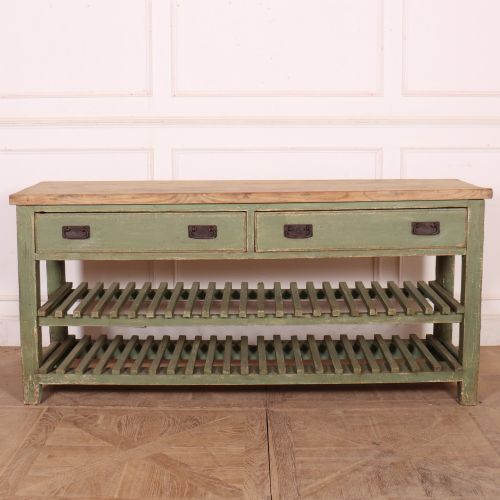
Surface treatments vary from bare scrubbed timber to layers of historic paint finishes, including scumble and original decorative coatings. Metal elements appear in supportive roles, with brass handles, iron brackets, and cast-iron industrial bases integrated into utilitarian designs.
Vintage Pine Console Retail Price Guide 2026
Typical asking prices for vintage pine console among the pieces listed under this phrase on Sellingantiques today, from the lower quarter to the upper quarter. They describe what is for sale here now, not the wider market.
Several tables began life as organ benches or Victorian laundry surfaces before finding peaceful retirement as narrow hallway furniture.
Judging quality and character
Quality in these tables rests upon the integrity of the timber and the honesty of its wear, where deep patination accumulated through decades of work elevates an ordinary board. The presence of original paint finishes, untouched structural joints, and period hardware separates a truly characterful survivor from later assemblies.
Proportions and stability dictate utility, with well-balanced legs and sound stretchers ensuring daily practicality without wobble. Subtle details like dovetailed drawer construction and untouched maker marks reveal the care invested in utilitarian furniture.
The Vintage Pine Console Glossary
- Scrub-top
- A bare wooden table top designed to be scrubbed clean with water and brush after daily kitchen or dairy work. This process leaves the grain raised and pale.
- Potboard dresser base
- A low sideboard featuring an open lower shelf near the floor, originally designed for storing heavy pots and domestic vessels. The shelf provides structural rigidity to the legs.
- Scumble
- A semi-transparent decorative paint layer applied over a base colour to simulate the grain of more expensive hardwoods like oak or walnut. It was widely used in Victorian interior decoration.
- Box stretcher
- A framework of wooden rails connecting the lower legs on all four sides to reinforce the table against lateral movement. These stretchers frequently double as footrests.
- Draper table
- A long, narrow table traditionally utilised in textile shops for measuring and cutting fabric. Their extended proportions suit modern hallway placement.
Vintage Pine Console: Frequently Asked Questions
How do I use a vintage pine console in a modern hallway?
A narrow pine table provides an ideal surface for dropping keys, placing table lamps, or arranging decorative vessels without obstructing foot traffic. Their restrained depths suit tight corridors while adding immediate textural warmth against plain walls.
Pairing the table with a wall mirror or low baskets underneath creates functional storage for shoes and daily clutter. The weathered timber acts as a neutral anchor that softens modern interiors.
Are these tables water-resistant for kitchen use?
Most historic pine surfaces feature historic wax, oil, or scrubbed finishes that tolerate light daily moisture but require coasters and prompt wiping. Unsealed scrubbed tops absorb liquids quickly, which contributes to their aged patina over time.
Applying additional clear beeswax or food-safe sealer helps protect the timber if the table sees heavy food preparation or potting work. Regular maintenance preserves the dry, tactile quality of the antique wood.
How can I tell an 19th-century pine table from a later reproduction?
Examine the underside and drawer construction for hand-cut dovetails, pit-sawn board marks, and pegged joinery rather than modern metal screws. Genuine age shows in the irregular shrinkage of the timber and undulating wear patterns around frequently handled edges.
Historic paint finishes also exhibit subtle craquelure, natural fading, and multi-layered wear that modern distressed paint struggles to replicate authentically. The weight and density of older pine heartwood generally feel substantially heavier than modern plantation timber.
Do painted pine tables retain their original colour?
Many tables retain layers of early or original paint, often showing appealing wear where hands touched the wood over generations. Scumble glazes and traditional milk paints age gradually, developing a soft chalky texture.
While some pieces have been stripped to bare pine by previous owners, others preserve rich traces of historic green, grey, or cream pigments. Inspecting edges and protected underside areas reveals the true sequence of underlying decorative layers.