





Vintage Percussion Gun
A vintage percussion gun brings the weight of nineteenth-century engineering and military history directly to your cabinet.
Vintage Percussion Gun
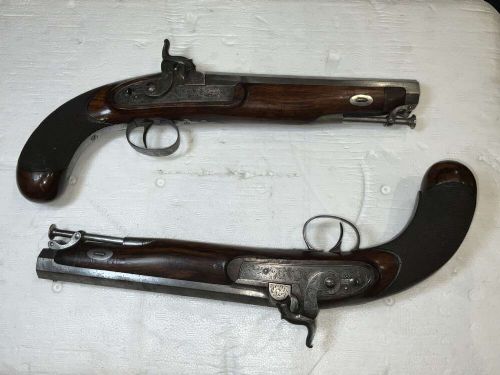
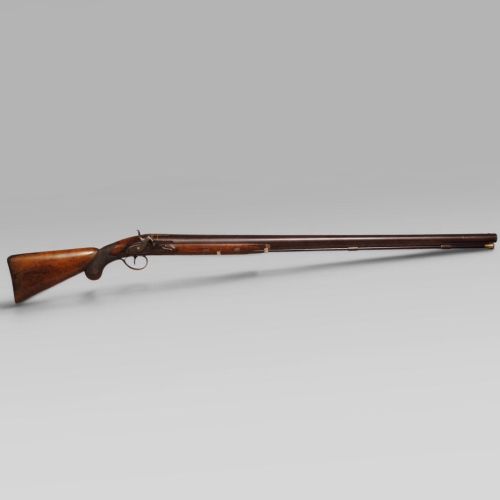
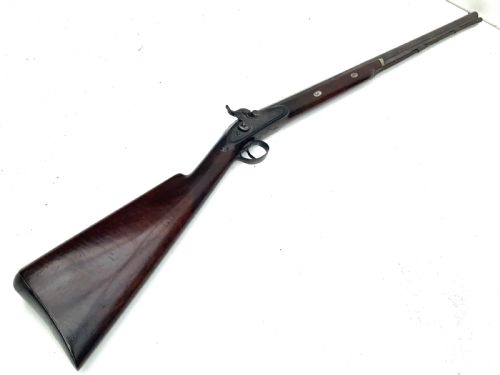
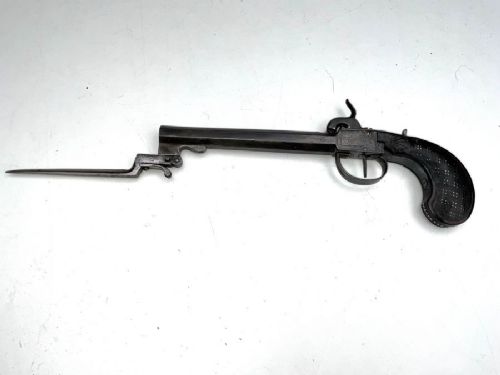
When you search for a vintage percussion gun, you encounter nineteenth-century firearms that rely on the percussion cap ignition system rather than earlier flintlocks. These pieces range from heavy fowling pieces and military muskets to compact pocket revolvers and belt pistols.
The selections span the Victorian era, the Regency period, and mid-century military campaigns, including American Civil War pieces and European service arms. You find items designated for officers, gentlemen, and state contracts, reflecting the diverse uses of black powder weaponry during the 1800s and 1850s.
Forms vary significantly, from single-barrel sporting rifles and pepperpot pistols to boxed Colt revolvers complete with accessories. The examples on this page encompass British, American, and continental origins, showing the widespread adoption of the percussion lock.
How they were made
Gunmakers constructed the barrels and internal mechanisms using steel and iron, pairing them with stocks shaped from walnut, oak, and mahogany. Selected pieces incorporate brass mounts, while presentation or cased sets often feature fitted interiors lined with velvet.
The manufacturing process combined metal forging and precision machining with traditional woodworking for the stocks. Makers applied mechanical engraving, proof marks, and specific finishes to the metal components, alongside paper labels or instructions found inside fitted boxes.
Vintage Percussion Gun Retail Price Guide 2026
Typical asking prices for vintage percussion gun among the pieces listed under this phrase on Sellingantiques today, from the lower quarter to the upper quarter. They describe what is for sale here now, not the wider market.
Some nineteenth-century Colt revolvers travelled with paper instructions still sitting quietly inside their velvet-lined mahogany boxes.
What varies in quality
Quality in these firearms rests on the crispness of the lock mechanism, the integrity of the timber stock, and the clarity of maker signatures or serial numbers. Pieces produced by renowned workshops exhibit finer file work, better balance, and superior overall execution.
Original accessories, matching serial numbers on revolvers, and complete cased sets elevate the standing of a piece considerably. The presence of documented military service or specific maker attributions distinguishes standard utilitarian arms from high-grade collector examples.
H Tatham London·John Manton & Son·Auguste Francotte Liège
The Vintage Percussion Gun Glossary
- Percussion cap
- A small metal cup containing a priming compound that explodes when struck by the hammer, igniting the black powder charge. This invention superseded the flintlock system in the nineteenth century.
- Fowling piece
- A lightweight, smoothbore long gun designed primarily for hunting birds and small game. These weapons typically feature long barrels and graceful lines suited to sporting use.
- Pepperpot pistol
- A multi-barrel firearm featuring several rotating barrels that revolve around a central axis when cocked and fired. This design provided multiple shots before reloading was necessary.
- Socket bayonet
- A blade attachment that fits over the muzzle of a long gun and locks into place with a ring or slot. It allowed infantrymen to convert a musket or rifle into a thrusting weapon.
- Black powder
- The early chemical propellant composed of sulphur, charcoal, and potassium nitrate used to fire projectiles in these vintage arms. It requires specific maintenance after firing to prevent corrosion.
Vintage Percussion Gun: Frequently Asked Questions
How do I care for a vintage percussion gun?
Keep the metal components lightly oiled with a suitable preservative and store the firearm in a stable, dry environment away from direct heat sources. Avoid using modern cleaning solvents that might damage nineteenth-century finishes or original wood.
Inspect the internal lock mechanism periodically to ensure dust and debris do not accumulate in the works. Handle the timber stocks with care, applying appropriate waxes only when the wood appears dry.
Can I shoot a vintage percussion gun?
Firing antique firearms requires expert professional inspection to verify that the barrel, breech, and lock are structurally sound. Many collectors choose to keep these pieces as display or study objects rather than shooting them.
If you intend to use black powder, you must consult a qualified gunsmith who specialises in antique arms to test the metal and confirm safe operating pressures.
What is the difference between a fowler and a musket?
A fowler is a sporting smoothbore designed for hunting game, characterised by a lighter weight and finer finish. A musket is a military arm built for infantry combat, prioritising rugged durability and standardisation.
Muskets often accept bayonets for close combat, whereas sporting fowlers focus on balance and accuracy in the field.
How do I identify the date of a percussion pistol?
Look for proof marks, maker signatures, patent dates, and serial numbers stamped onto the metal or engraved on the lock plate. These details often link the piece to specific periods or known military contracts.
Cross-referencing the maker's working address or military issue stamps helps narrow the timeframe of manufacture to a specific decade.