
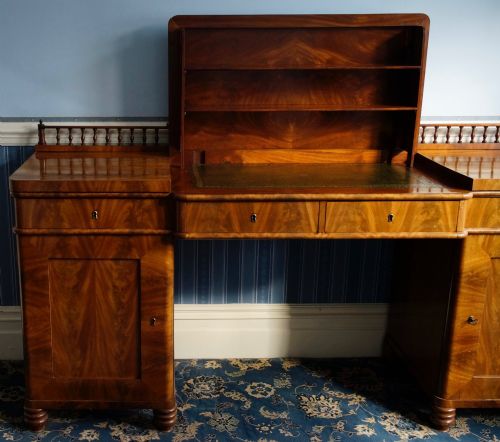

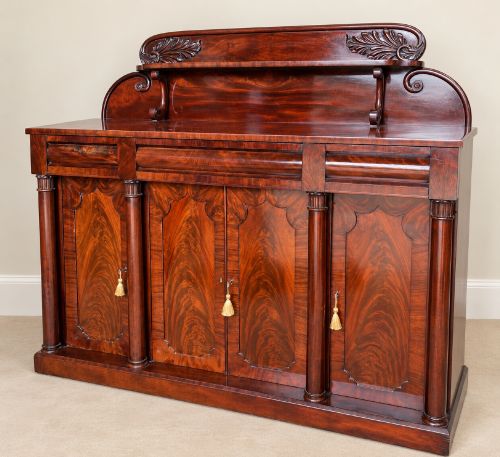
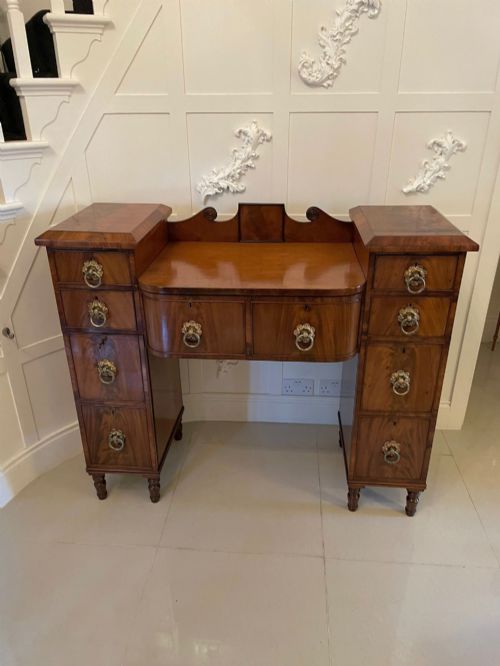
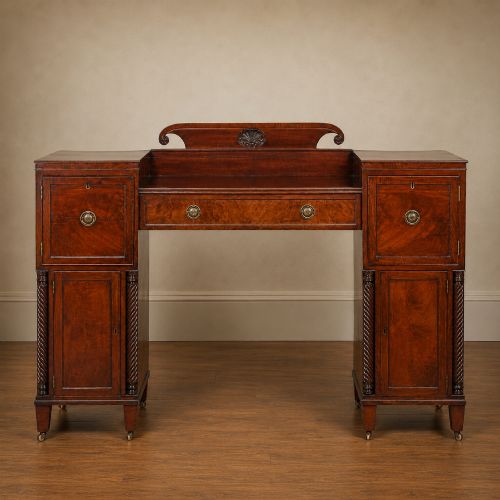



Vintage Pedestal Sideboard
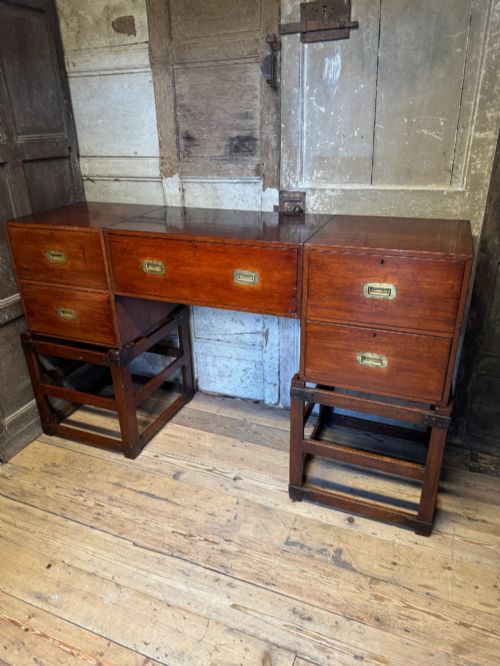
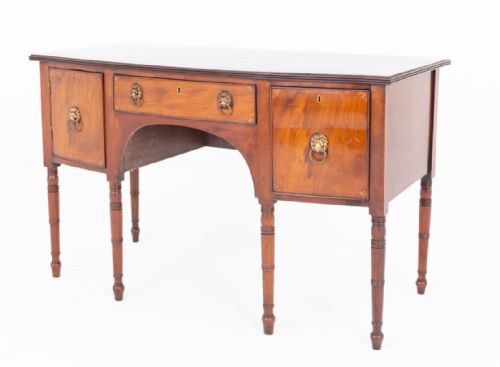
These vintage pedestal sideboard pieces are substantial dining room furniture forms offering grand proportions and deep storage.
Vintage Pedestal Sideboard
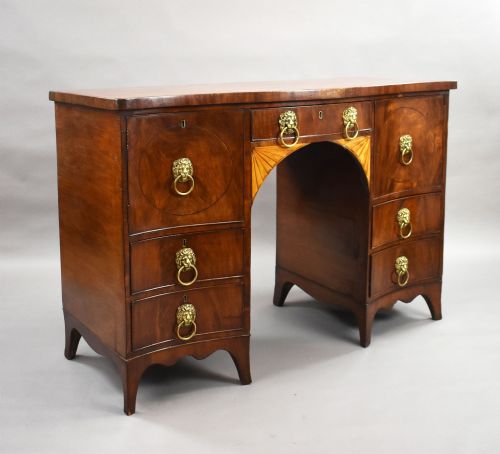
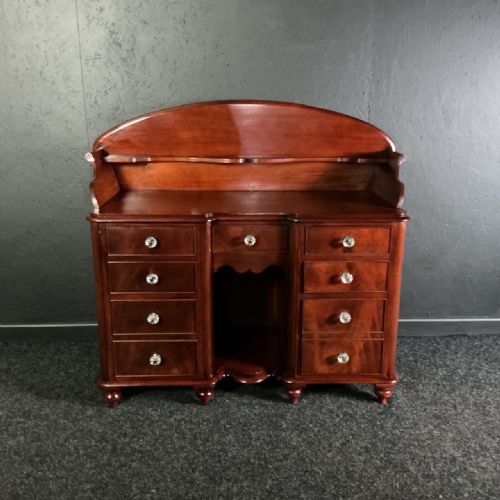
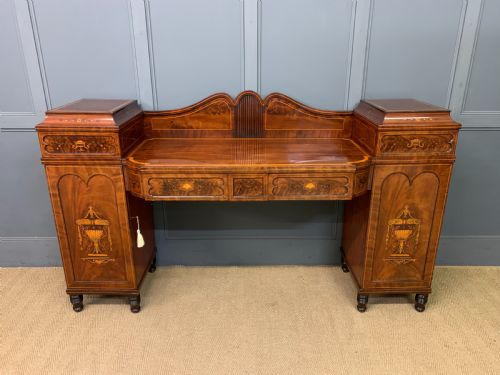
A vintage pedestal sideboard forms a grand focal point in a dining room, designed with outer cupboards flanking a central recess or drawers. These pieces appear frequently in mahogany and flame mahogany veneer, reflecting the prominent output of the nineteenth century and revival periods.
Buyers seeking this furniture encounter varied iterations spanning Georgian, Regency, and Victorian aesthetics, often featuring substantial timber construction. The configuration provides considerable surface space alongside functional cabinet storage within the pedestals.
How they were made
Cabinet makers utilised dense hardwoods like mahogany and padauk, frequently applying figured or flame mahogany veneer to large flat surfaces to highlight natural timber grain. Brass mounts, handles, and gallery rails appear as structural and decorative hardware.
Inlaid details incorporate contrasting timbers such as boxwood and satinwood to create geometric or floral borders along the front edges and drawer faces.
The selection includes mahogany, flame mahogany veneer, padauk, and oak across Georgian, Regency, and Victorian periods.
What varies in quality
The selection of timber grain on the drawer fronts and pedestal doors dictates much of the visual merit, with matched flame mahogany exhibiting superior depth. Superior execution shows in the crispness of carved mouldings and the precision of inlaid boxwood or satinwood stringing.
Underpinning the construction is the integrity of the cabinet carcase and the smooth operation of heavy pedestal doors, where seasoned timber prevents warping over decades of use.
John Gregory London·Étienne Kohlmann·Epstein
The Vintage Pedestal Sideboard Glossary
- Pedestal sideboard
- A large dining room cabinet featuring two distinct side pillars or cupboards supporting a central board or serving surface. These forms emerged strongly during the Georgian and Regency periods.
- Flame mahogany
- A decorative wood veneer harvested from the fork of the mahogany tree where the grain twists to create a fiery, patterned effect. Cabinet makers prized this timber for principal display surfaces.
- Pedestal
- An architectural support column or enclosed cupboard base positioned beneath the main body of the sideboard. They often conceal bottle drawers or shelving.
- Inlay
- A technique where contrasting woods like boxwood or satinwood are set flush into the primary mahogany surface to form decorative patterns. This ornamentation defines many revival and Georgian pieces.
- Chiffonier
- A compact sideboard or low cabinet equipped with drawers and enclosed shelving, common in Victorian interiors. It serves a similar storage function on a smaller scale.
Vintage Pedestal Sideboard: Frequently Asked Questions
Where do you put a vintage pedestal sideboard?
These large furniture forms suit spacious dining rooms or wide hallways where their substantial depth and length can be appreciated without crowding the floor plan.
Position them against a primary wall to anchor the room, ensuring sufficient clearance around the pedestals for opening cabinet doors fully.
How do I clean a mahogany sideboard?
Dust the timber regularly with a soft, dry cloth to prevent particulate accumulation on the flame mahogany veneer and polished surfaces.
Apply a traditional beeswax polish sparingly when the wood appears dry, rubbing gently along the direction of the grain to maintain the natural lustre.
Can I use a pedestal sideboard for storage?
The enclosed pedestals and central drawers offer deep storage capacity for dining linen, heavy tableware, and serving platters.
Ensure items stored inside do not exceed the depth of the shelves or force the cabinet doors to strain against the timber frame.
How do I identify a Regency pedestal sideboard?
Regency examples frequently display classical architectural motifs, such as brass lion paw feet, ionic details, and heavily figured mahogany veneers.
Examine the construction of the drawers and the weight of the pedestals, as Regency pieces typically exhibit robust proportions from the early nineteenth century.