



Vintage Pedestal Credenza
A vintage pedestal credenza brings architectural dignity to a room, offering grand proportions and disciplined storage through classic woodcraft.
Vintage Pedestal Credenza
A vintage pedestal credenza groups substantial sideboards, servers, and cabinets under the broader umbrella of large dining and reception room storage. The pieces encountered here span several distinct eras, drawing heavily upon Regency, Georgian, and Victorian cabinet-making traditions.
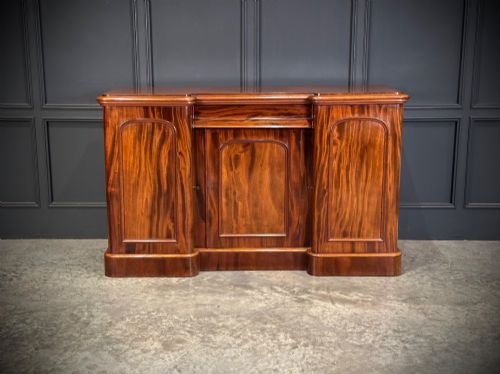
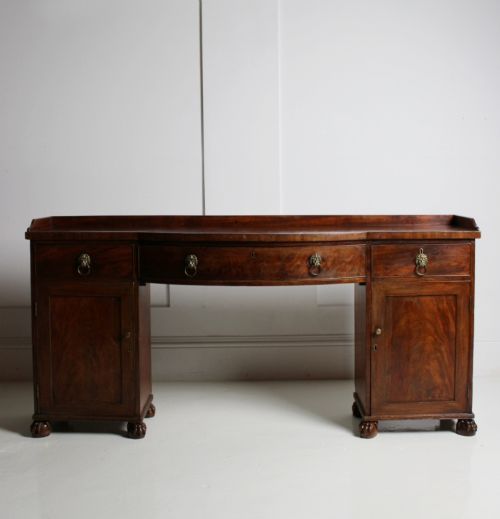
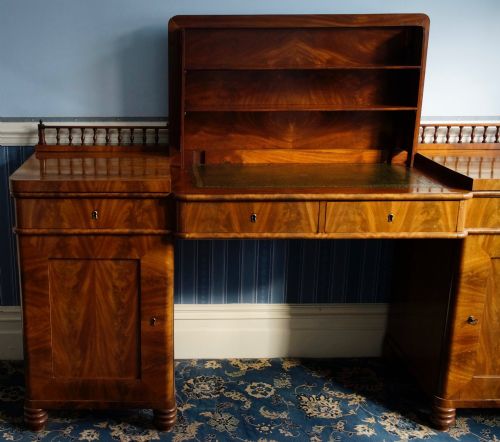
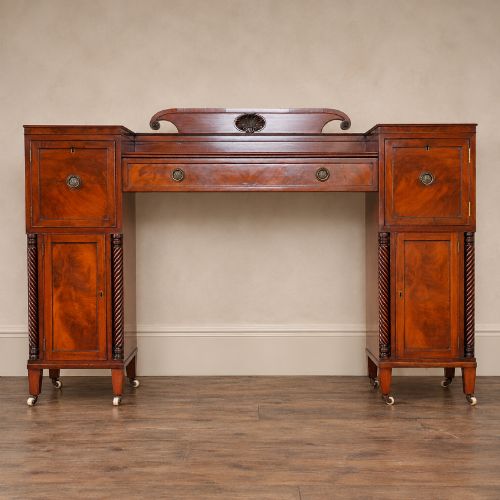
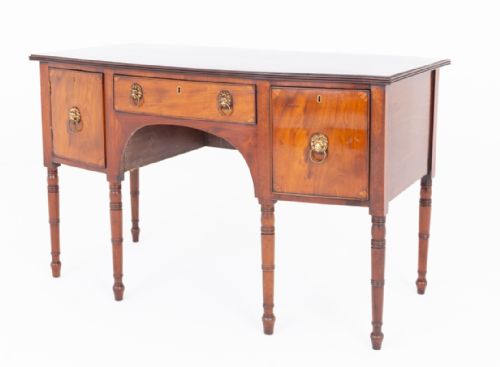
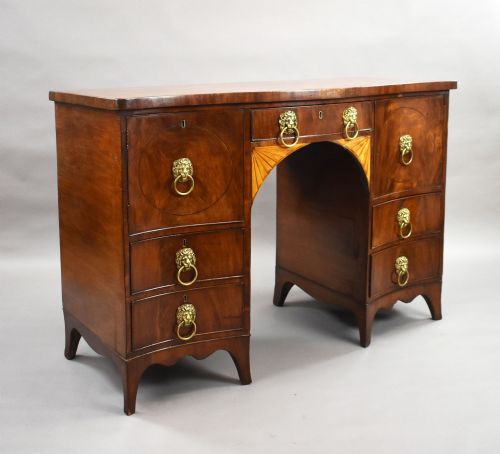
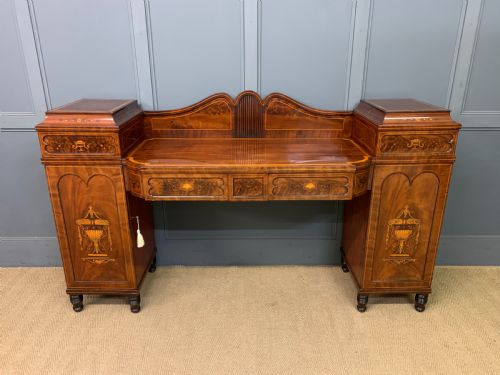
Buyers will most frequently meet mahogany pedestal sideboards and chiffoniers featuring substantial pedestals flanking a central recess. These forms originated to serve dining rooms, functioning as serving surfaces and storage for silver or linen.
Origins stretch from formal British workshops to Anglo-Indian ateliers, incorporating regional woods such as padouk alongside traditional British timbers. The resulting variety ranges from austere geometric pedestals to deeply carved breakfront server layouts.
What varies in quality
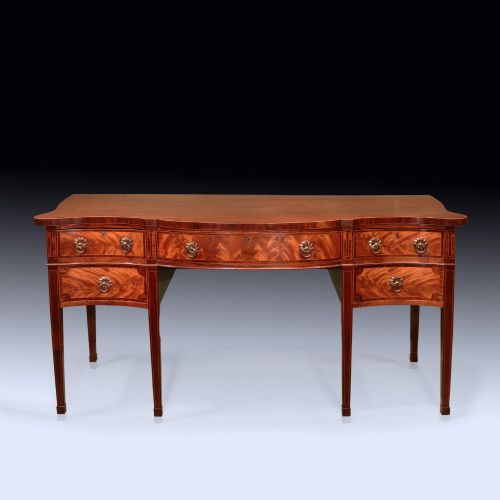
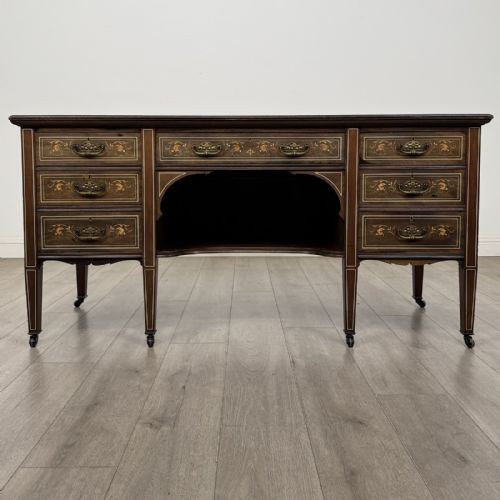
The degree of refinement in the timber selection and veneer matching defines the upper tier of these pieces. Master cabinet-makers utilised highly figured flame mahogany and crisp marquetry, whereas simpler pieces relied on plain sawn surfaces.
Structural complexity also dictates worth, separating straightforward pedestals from elaborate designs featuring brass galleries, drop wells, or stage-backs. The integration of secondary woods and the precision of the joinery mark the transition from standard utility furniture to fine boardroom and dining room appointments.
Vintage Pedestal Credenza Retail Price Guide 2026
Typical asking prices for vintage pedestal credenza among the pieces listed under this phrase on Sellingantiques today, from the lower quarter to the upper quarter. They describe what is for sale here now, not the wider market.
Listings feature mahogany predominantly, complemented by brass fittings and contrasting satinwood or boxwood inlay across multiple nineteenth-century periods.
Goodall of Manchester
The Vintage Pedestal Credenza Glossary
- Pedestal
- A structural support column or housing positioned at either end of a sideboard base. It often contains concealed cupboards or drawers for heavy dining plate.
- Flame mahogany
- A decorative veneer cut from wood where the branch meets the trunk, producing a rippling, flame-like pattern. It was favoured by Regency and Victorian cabinet-makers for primary visual surfaces.
- Chiffonier
- A compact sideboard or low cabinet typically fitted with enclosed shelving below and sometimes a mirror or small gallery above. It served smaller reception spaces in Victorian homes.
- Breakfront
- A cabinet front where the central section projects forward from the flanking pedestals or wings. This layout creates depth and shadow across the elevation of the furniture.
- Marquetry
- The art of applying small pieces of veneer to form decorative patterns and pictures. Craftsmen utilised boxwood and satinwood to create contrasting foliate motifs.
Vintage Pedestal Credenza: Frequently Asked Questions
What is a pedestal credenza used for?
These large storage items were traditionally placed in formal dining rooms to hold silverware, porcelain, and serving dishes during meals.
Today, they function as substantial sideboards in open plan living spaces or dining rooms, providing deep enclosed storage and a wide display surface.
How do I identify a Regency period piece?
Regency pieces often display classical architectural motifs, bold brass galleries, and richly figured flame mahogany veneers.
They lean towards clean geometric lines and structural balance, frequently incorporating pedestal ends flanking a central recess or drop well.
What timber is most common?
Mahogany is the predominant wood found across these listings, appearing both as solid timber and as highly figured flame veneer.
Secondary materials include exotic woods like padouk and gonçalo-alvez, alongside lighter stringing in satinwood and boxwood.
How do Victorian pieces differ from Georgian ones?
Georgian examples tend to exhibit restrained classical proportions and understated mahogany surfaces designed for formal eighteenth-century interiors.
Victorian iterations often scale up the mass, incorporating deeper carvings, heavier pedestals, and occasionally mirrorbacks or stage-backs.