


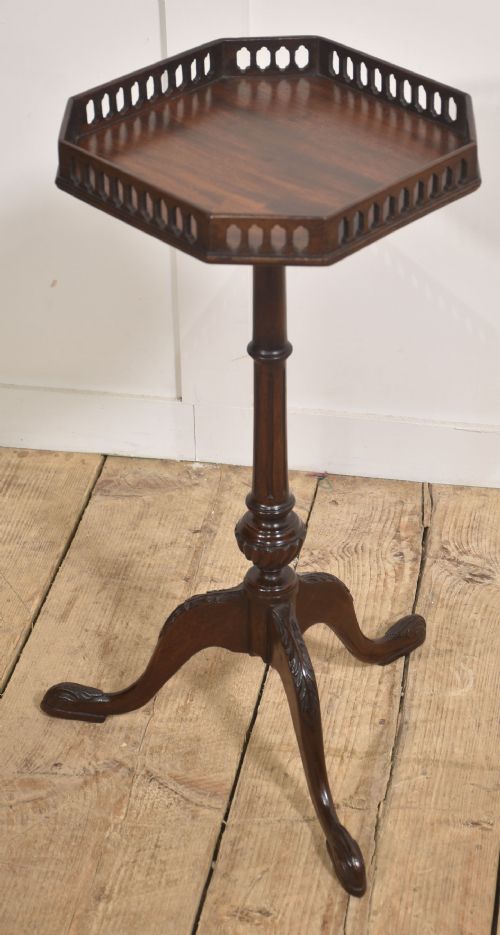

Vintage Pedestal Candle Table
A vintage pedestal candle table brings subtle height and a warm resting place for a flickering light beside an armchair.
Vintage Pedestal Candle Table
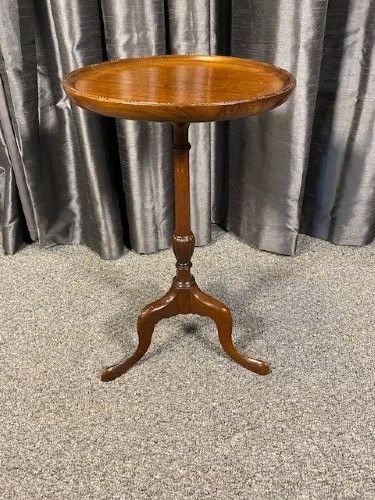
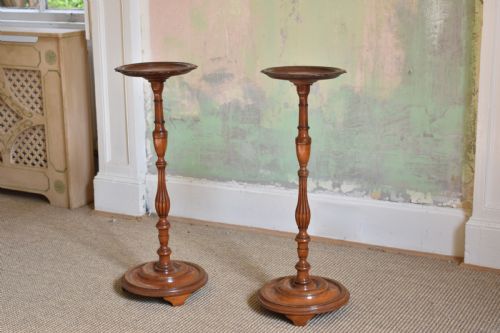
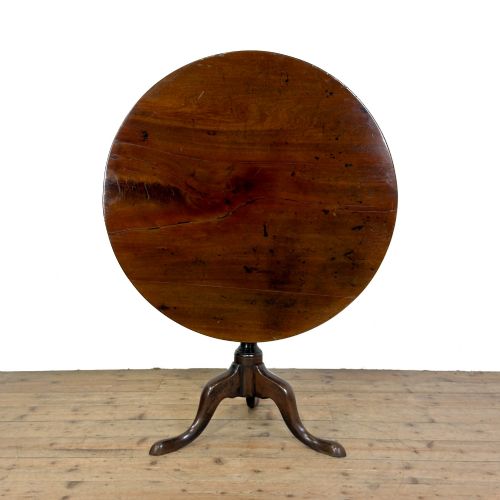
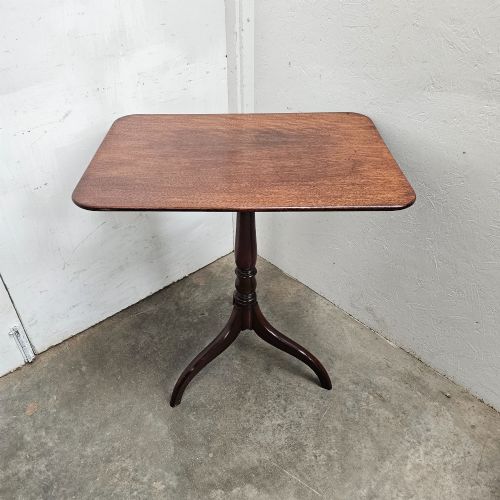
A vintage pedestal candle table provides a compact surface designed to hold a single light or small vessel close to seating. These pieces appear in forms such as wine tables, tripod tables, torchieres, and occasional stands.
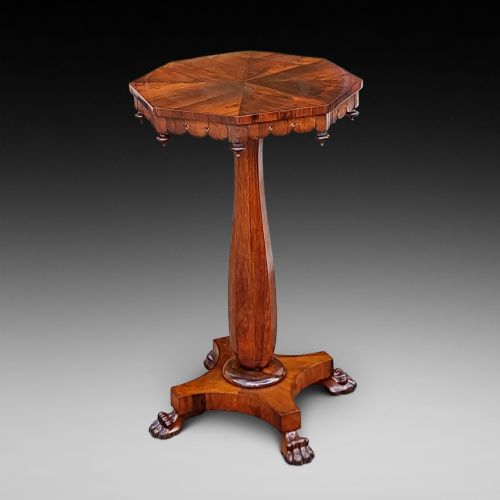
The selections on this page span several centuries, with particular emphasis on Georgian, Regency, Victorian, and Edwardian periods. Mahogany remains the most frequent wood, accompanied by walnut, oak, satinwood, and rosewood.
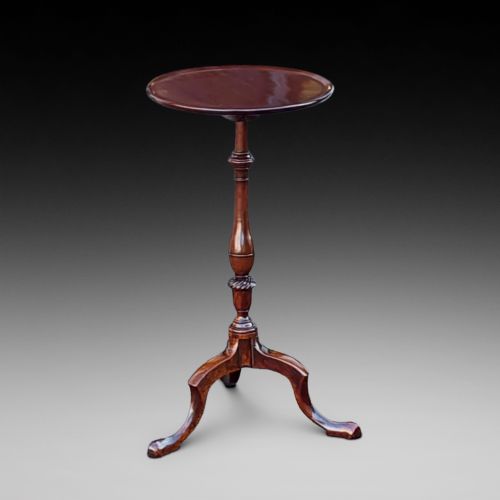
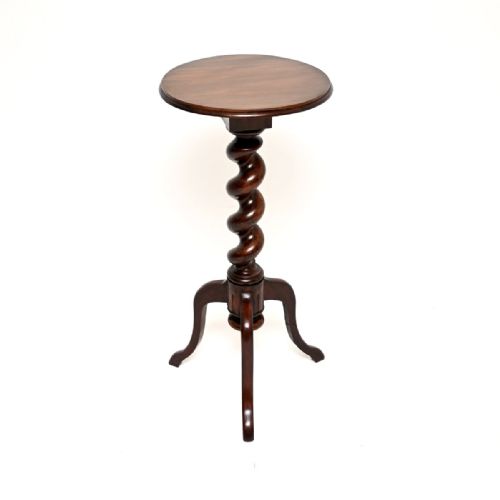
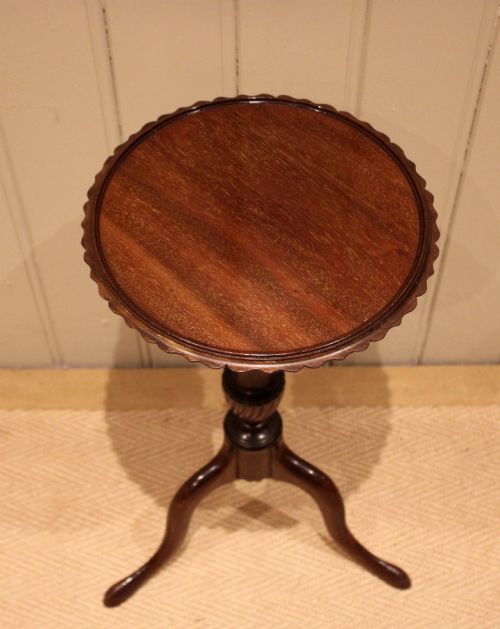
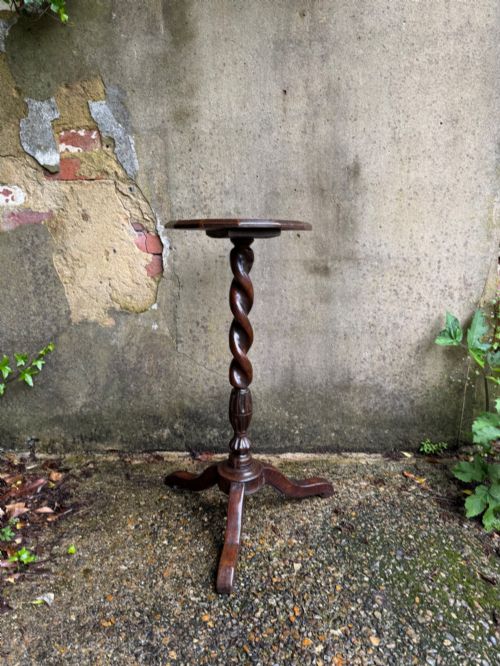
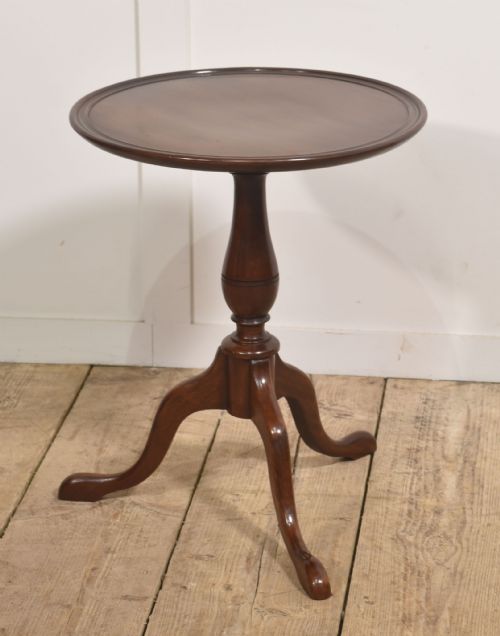
Buyers encounter versions featuring plain circular tops, tray edges, pie crust rims, or barley twist supports. Each piece serves the dual purpose of utility and decorative presence in a room.
How they were made
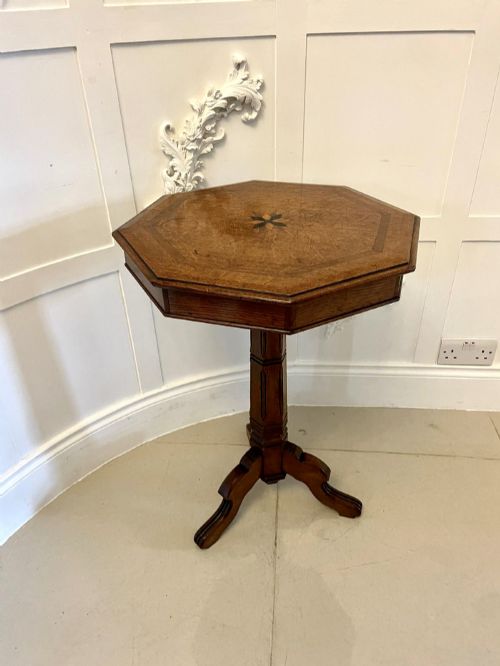
Cabinetmakers constructed these tables primarily from dense hardwoods like mahogany, walnut, and oak, often employing turned central pedestals resting on three-legged tripod bases. Marquetry inlay and figured veneers appear on select examples to add decorative contrast to the timber tops.
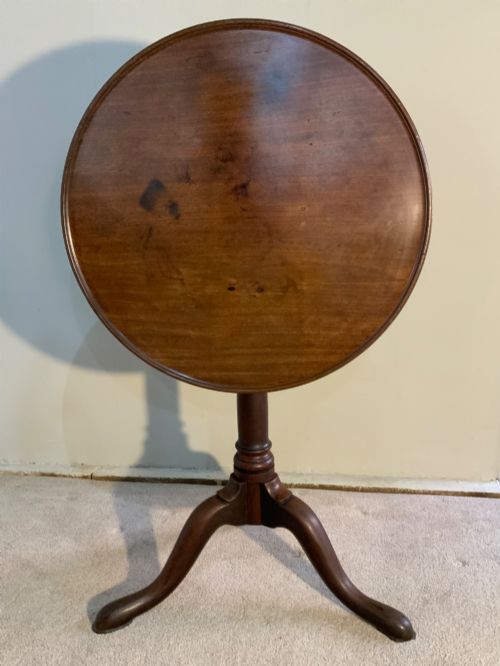
Joinery methods included mortise and tenon connections and tilt-top mechanisms allowing tops to fold away when not in use. Turning lathes shaped the barley twist columns and slender stems, while brass fittings occasionally secured adjustable stands.
Current listings feature pieces spanning the Georgian, Regency, Victorian, and Edwardian periods, constructed in mahogany, oak, walnut, rosewood, and satinwood.
What varies in quality
The quality of a pedestal table rests upon the choice of timber, the crispness of the turned column, and the stability of the tripod base. Superior examples display carefully selected grain patterns on the top and hand-carved details on the knees and feet.
Proportion and balance dictate the integrity of the piece, where a well-weighted base prevents tipping. Finer items integrate subtle design elements such as pie crust borders or delicate marquetry inlay rather than relying on plain surfaces.
The Vintage Pedestal Candle Table Glossary
- Tripod base
- A three-legged support system common on small tables, offering stability on uneven older floors. This configuration allows the legs to splay outward for balance.
- Tilt-top mechanism
- A hinge arrangement beneath the table surface allowing the top to pivot vertically. This feature saved floor space in historic interiors when the table was stored against a wall.
- Torchiere
- A tall stand or pedestal originally designed to carry a flaming torch or large candle. These slender pieces elevate illumination sources to eye level in a room.
- Barley twist
- A spiral turning technique applied to wooden table stems and furniture legs. This decorative carving creates a helical rope effect popular in Victorian joinery.
- Pie crust edge
- A raised, scalloped wooden border carved around the circumference of a table top. This ornate moulding resembles the crimped crust of a pastry.
Vintage Pedestal Candle Table: Frequently Asked Questions
What is a vintage pedestal candle table used for?
These small stands originally served to hold wax candles or oil lamps beside seating areas before electric lighting became common. Today they function as compact side tables for drinks, books, or small decorative objects.
Their narrow footprint allows them to fit easily into tight corners, beside armchairs, or in hallways where larger furniture would obstruct movement.
How do I tell a Georgian table from a Victorian one?
Georgian tables tend to feature restrained classical proportions, smooth mahogany surfaces, and delicate tripod legs terminating in pad or spade feet. Cabinetmakers in this era focused on clean lines and structural balance.
Victorian versions frequently introduce heavier ornamentation, such as barley twist stems, octagonal tops, and darker walnut veneers. The carving on nineteenth-century pieces is often bolder and more profuse than earlier styles.
Are tilt-top tables stable?
Tilt-top tables rely on a catch mechanism beneath the surface to lock the top flat against the pedestal. When properly maintained, this joint holds the surface firm during normal daily use.
Because the mechanism involves moving wooden components, older examples may show slight play at the pivot point, which is standard for folding tables of considerable age.
Where should I place a candle stand in my home?
A candle stand suits spaces requiring a small surface without visual clutter, such as the gap between two armchairs or beside a reading seat. Their modest diameter makes them ideal for narrow spots.
Avoid placing them in heavy traffic lanes where an accidental bump might dislodge items resting on the narrow circular top.