


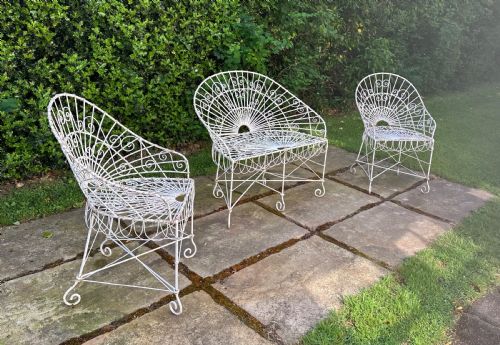
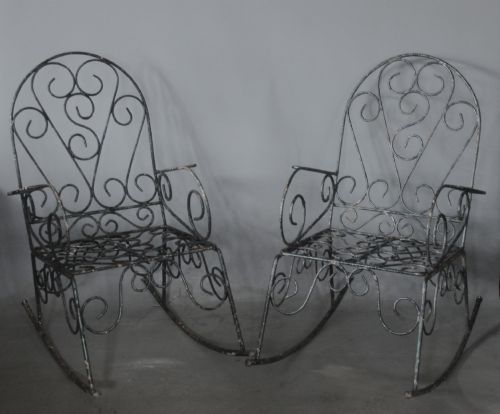

Vintage Patio Chairs
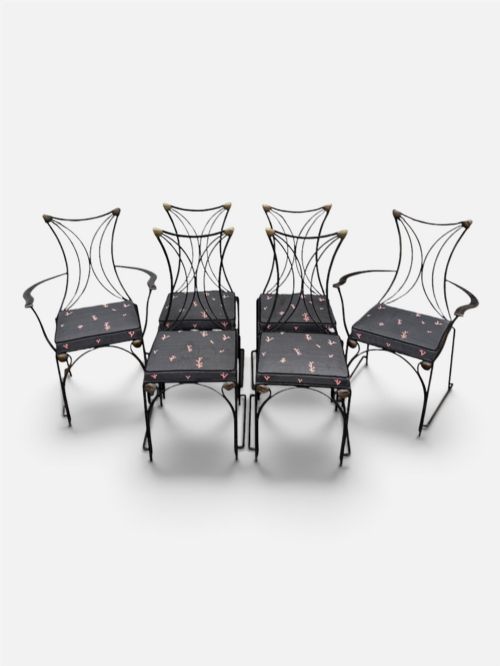
Vintage patio chairs span robust 19th-century cast iron and wirework designs to mid-century French metal dining sets built for outdoor living.
Vintage Patio Chairs
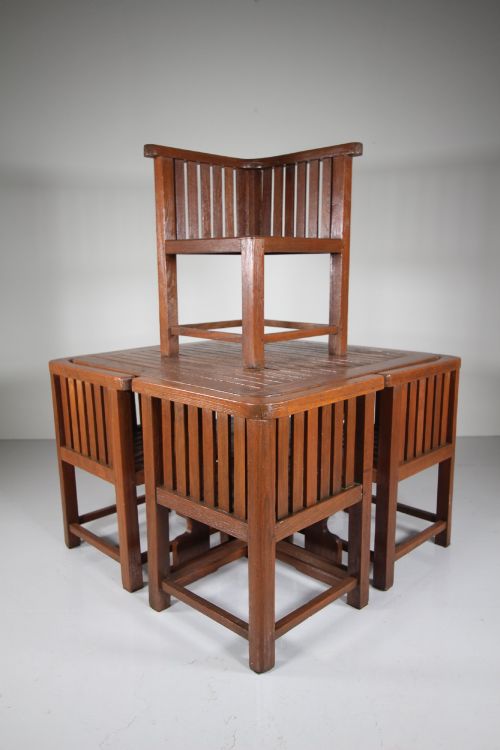
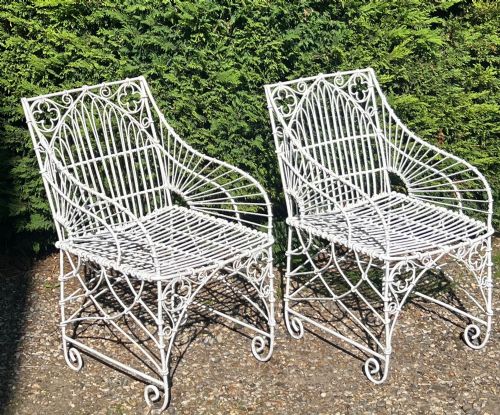
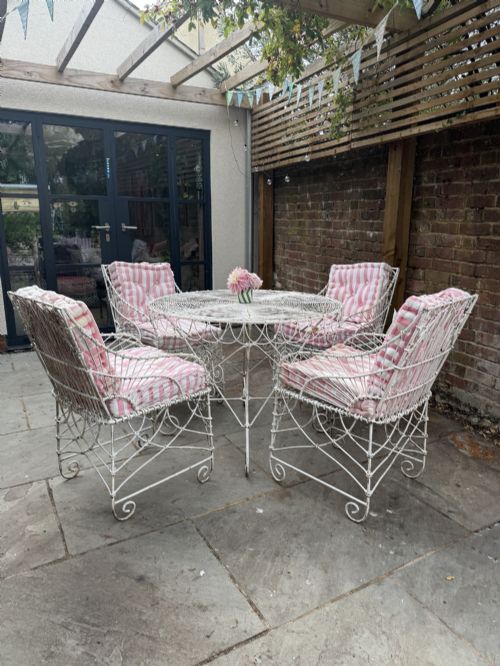
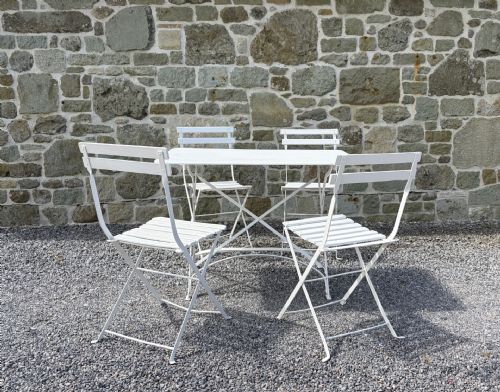
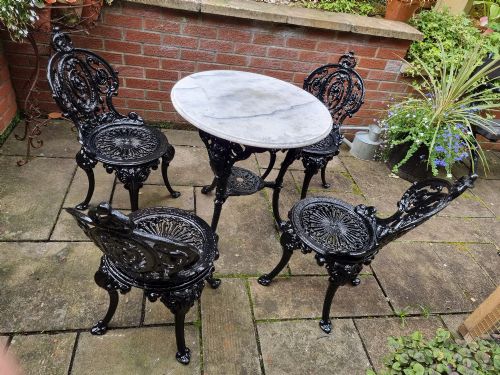
When you search for vintage patio chairs, you encounter durable garden seating designed for exterior use across multiple periods. The selection on this page ranges from 19th-century Victorian and Gothic revival pieces to 1920s French bistro chairs and mid-century metal dining sets.
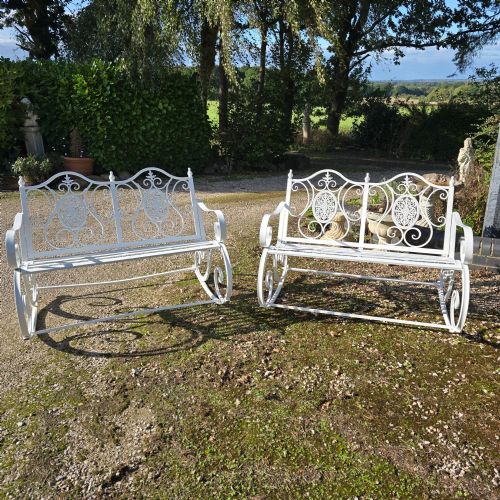
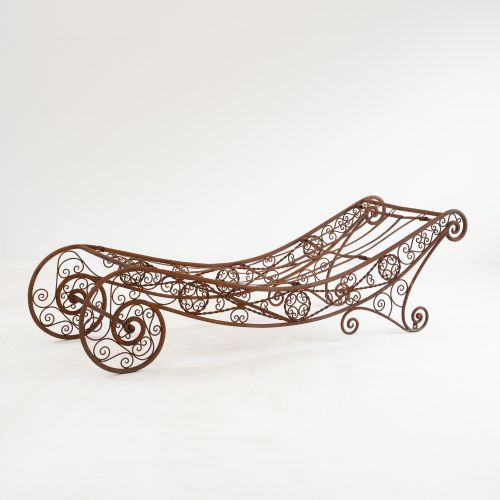
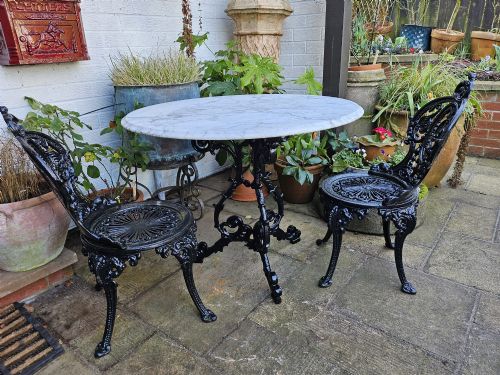
These items typically appear as individual garden chairs, matched pairs, or complete dining sets including tables. Forms include folding chairs, rocking benches, armchairs, and daybeds intended for terraces, lawns, and conservatory spaces.
How they were made
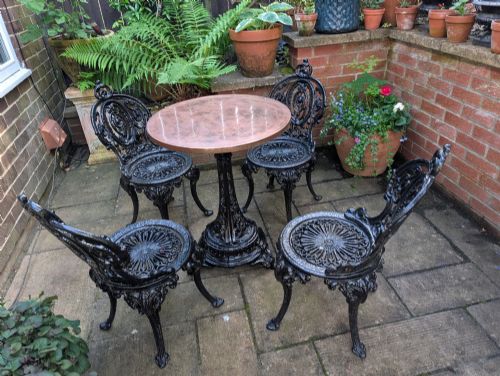
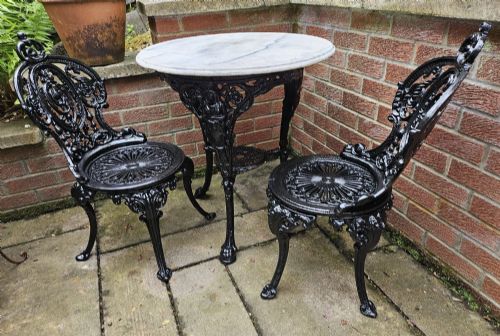
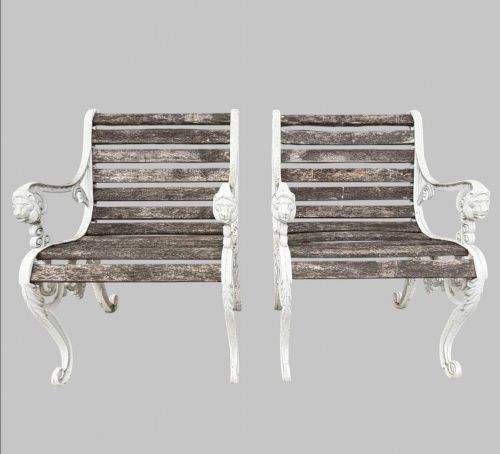
The construction of these pieces relies heavily on cast iron, wrought iron, and wirework formed into structural frames and decorative motifs. Foundry techniques allowed makers to produce intricate details such as lion masks and shell patterns in heavy iron.
Many examples combine metal frameworks with wooden components, marble tops, or zinc surfaces. Painted finishes and protective coatings were applied to guard against weathering in outdoor environments.
Vintage Patio Chairs Retail Price Guide 2026
Typical asking prices for vintage patio chairs among the pieces listed under this phrase on Sellingantiques today, from the lower quarter to the upper quarter. They describe what is for sale here now, not the wider market.
Listings feature garden furniture from the 1880s through to the 1950s, incorporating cast iron, teak, marble, and wirework.
What varies in quality
The distinction between standard production items and exceptional pieces lies in the crispness of the casting and the complexity of the ironwork. Pieces featuring branded labels, distinctive ornamentation, or designs attributed to notable workshops command greater interest.
Structural integrity and the preservation of original surfaces also determine the standing of each piece. Surviving makers' marks, original marble tops, and intact folding mechanisms distinguish superior examples from ordinary garden furniture.
Heals·Christopher Dresser
The Vintage Patio Chairs Glossary
- Cast iron
- A strong, rigid alloy poured into moulds to create ornate garden furniture frames. It provides the heavy weight and detailed ornamentation seen in Victorian and early 20th-century pieces.
- Wrought iron
- Iron heated and hammered into shape by hand or machine to form resilient outdoor furniture. This material allows for slender, curved designs such as scrolls and structural bracing.
- Wirework
- Metal rods and wire bent and welded into intricate open-pattern garden seating and tables. Popular in the late 19th century, this technique offers a lighter visual weight than solid cast iron.
- Bistro set
- A small table accompanied by two or four chairs designed for compact outdoor dining. These sets often utilise folding metal frames for ease of storage.
Vintage Patio Chairs: Frequently Asked Questions
How do I clean vintage patio chairs?
Maintenance depends on the material, but most iron and wirework pieces benefit from gentle washing with mild soapy water and a soft brush. Avoid harsh chemical strippers that might remove historic paint layers.
Dry the metal thoroughly after cleaning and apply a suitable protective wax or rust inhibitor where appropriate. Wooden elements require specialised oils to prevent weathering outdoors.
Can I leave them outside all winter?
Leaving vintage metal and wooden garden furniture exposed to freezing temperatures and heavy moisture accelerates corrosion and rot. Moving pieces into a shed, garage, or sheltered porch during harsh weather preserves the finish.
If indoor storage is impossible, covering the furniture with breathable outdoor protection helps minimise moisture damage and frost expansion in iron joints.
How do I date a cast iron chair?
Dating relies on stylistic clues, construction methods, and any surviving foundry marks or registration numbers stamped into the metal. Victorian pieces often feature heavy ornamentation like Gothic revival motifs or fern patterns.
Later 20th-century designs tend towards simpler geometric lines or streamlined French bistro styles. Comparing decorative details with documented catalogues helps narrow down the decade.
Are folding chairs less sturdy?
Folding mechanisms on period garden chairs were engineered for practical storage without sacrificing everyday stability. High-quality iron folding frames use robust pivot joints that remain secure when locked open.
Testing the mechanism reveals whether the joints retain their original alignment. Regular light oiling keeps the hinges operating smoothly.