




Vintage Paper Painting Floral
These vintage paper painting floral works bring botanical colour to a room through delicate watercolours and gouache on paper from the nineteenth and twentieth centuries.
Vintage Paper Painting Floral
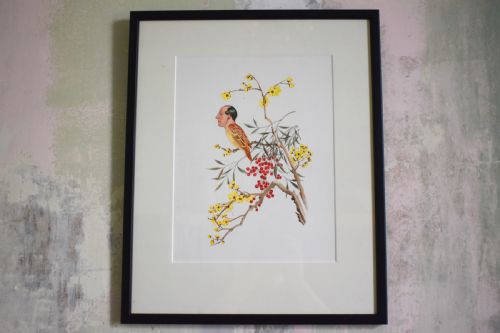
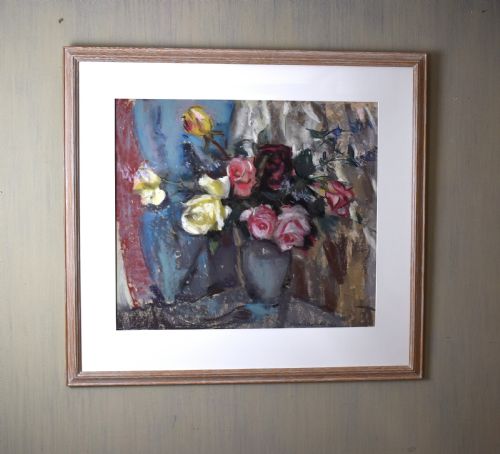
A vintage paper painting floral search reveals delicate watercolours, gouache studies and pastel works depicting garden flowers, still lifes and landscapes. These pieces span from the nineteenth century through the Edwardian era and mid-twentieth century, capturing botanical subjects with varied intensity.
The works most commonly encountered on this page are framed watercolour paintings on paper. Artists render wallflowers, roses, anemones and garden views in soft pigments, mounted behind glass in wood frames ready for hanging.
How they were made
Artists applied watercolour pigment and gouache directly onto paper surfaces, sometimes working on silk or mounting sheets into wood frames with glass protection. The technique relies on the absorbency of paper to hold translucent washes of colour.
Support materials include aged paper and card, housed within period wooden frames that occasionally incorporate lacquer or glass components. Desk accessories and decorative bowls also utilise wood, lacquer and papier-mâché.
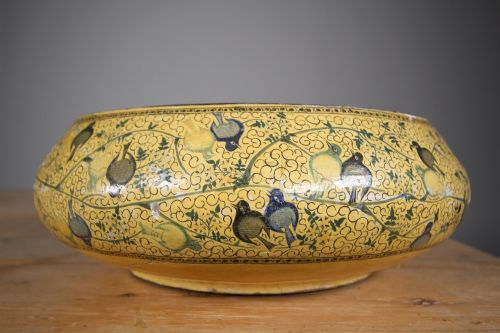
Listings span periods from the nineteenth century through the 1960s, featuring watercolour paintings, gouache on silk, papier-mâché items and Kashmiri bowls.
What varies in quality
Quality rests upon the sureness of the brushwork and the preservation of the pigment against fading. Master watercolourists achieve depth and botanical accuracy through controlled washes rather than heavy layering.
The integrity of the paper support and the originality of the frame also define the standard. Pieces that retain their original glass and framing without excessive damp staining command greater appreciation.
James Tower·Henrietta Creswell·William Edward Fox·Lester Sutcliffe·Lilian Stannard·Rowland Henry Hill·Phyllis I Hibbert·Lena M Alexander·Marian Chase·Owen Bowen·Charlotte Isa James·Alice Macallan Swan·Marion Broom·Edith Alice Andrews·Jane Utley·Beatrice Parsons·Theresa Sylvester Stannard·Minnie Smythe
The Vintage Paper Painting Floral Glossary
- Watercolour
- A painting method in which the paints are made of pigments suspended in a water-based solution. The paper shows through the translucent washes.
- Gouache
- An opaque water-based paint that includes a binding agent and white pigment to create solid, matte colour areas. It provides stronger highlights than traditional watercolour.
- Still life
- A work depicting inanimate subject matter, typically commonplace objects such as flowers in a jug or fruit on a plate. Floral still lifes dominate this category.
- Papier-mâché
- A composite material consisting of paper pieces or pulp, sometimes reinforced with glue or resin, moulded and dried. It forms trays, buttons and decorative objects.
- Edwardian
- Pertaining to the reign of King Edward VII, spanning the early twentieth century. Pieces from this period often reflect refined domestic ornamentation.
Vintage Paper Painting Floral: Frequently Asked Questions
How should I hang watercolour paintings?
Keep watercolours away from direct sunlight to prevent the pigment from fading over time. Direct exposure to bright daylight damages delicate paper and washes.
Position them on interior walls where environmental conditions remain stable. Avoid humid spaces such as kitchens and bathrooms to protect the paper and frame.
What subjects appear in these paintings?
Floral studies dominate the selection, featuring wallflowers, camellias, anemones and cosmos arranged in jugs or growing in walled gardens. Artists also painted park scenes and landscape views.
Still life compositions frequently combine garden flowers with fruit or ceramic vessels. These works record botanical varieties popular in domestic gardens across past decades.
How do I identify Edwardian watercolours?
Edwardian pieces often carry specific framing styles, signature formats and subject matter reflecting early twentieth-century domestic tastes. The palette tends towards naturalistic garden tones.
Examining the reverse of the frame or paper backing frequently reveals period framing trade labels or handwritten artist inscriptions that confirm the date.
Can I reframe an antique painting?
Retain original period frames whenever possible, as they contribute to the historical character of the artwork. Changing a frame alters the context in which the piece survived.
Consult a professional framer if the existing mount causes physical damage to the paper. Acid-free backing materials protect antique paper from chemical deterioration.