


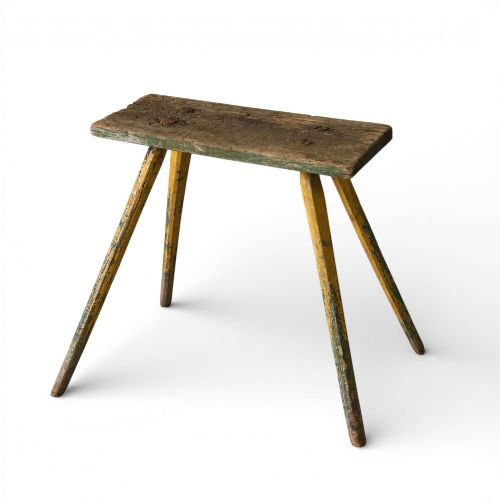
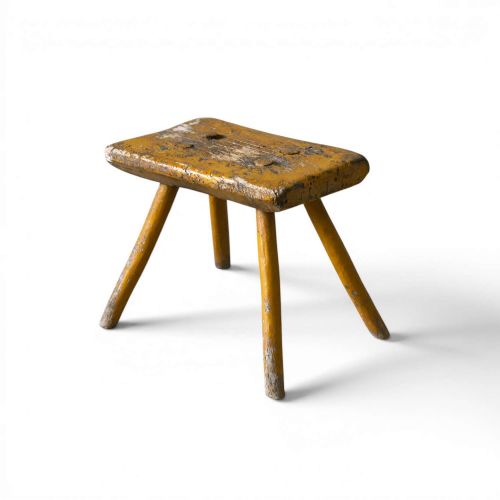
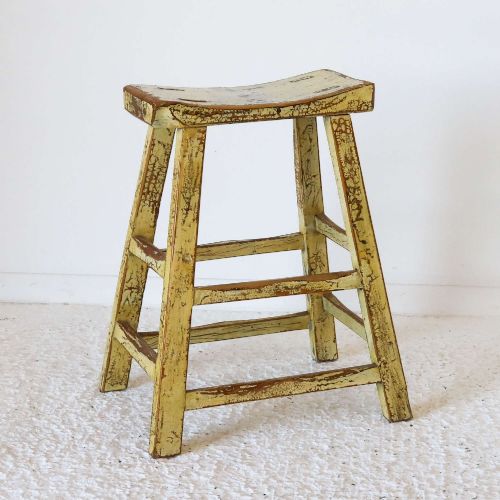
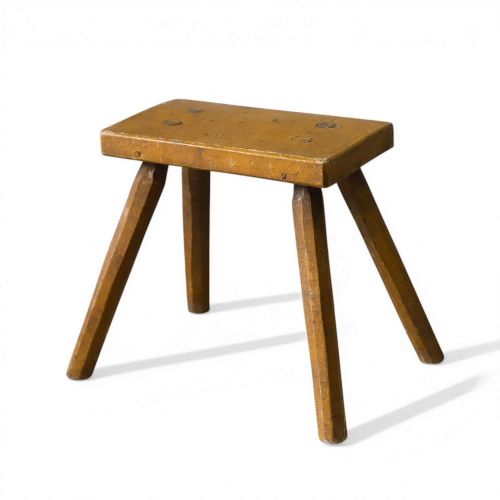



Vintage Painted Stool
A vintage painted stool brings surface colour and honest utility to a room, ranging from rustic milking seats to refined Gustavian forms.
Vintage Painted Stool
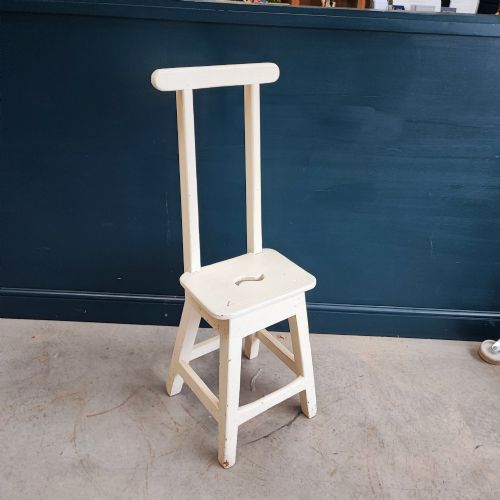
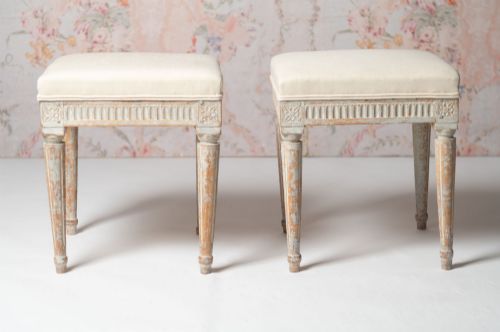
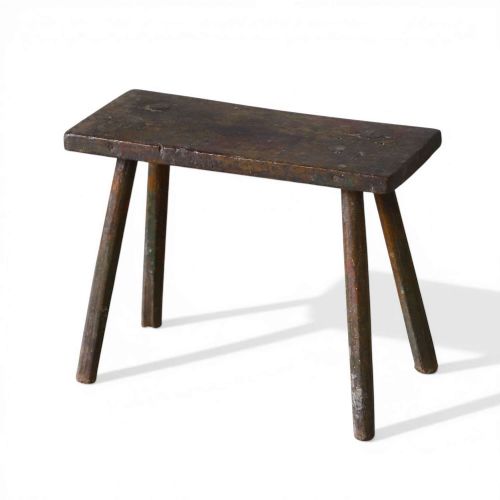
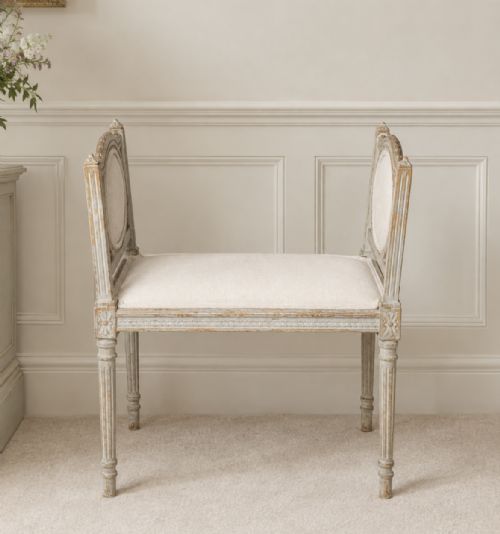
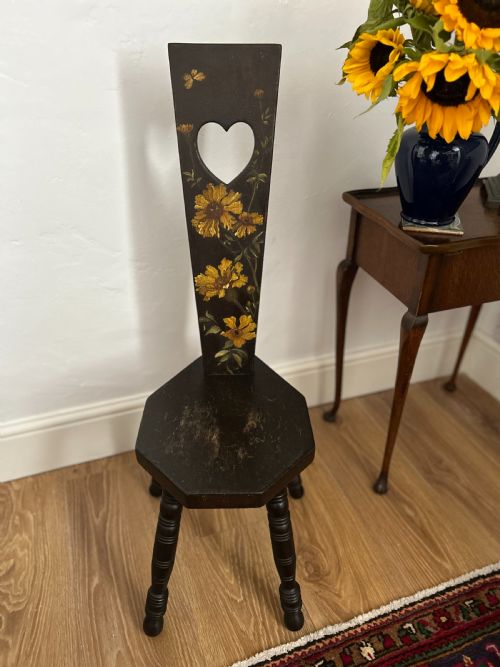
When you search for a vintage painted stool, you encounter a diverse group of low seating spanning the eighteenth to the twentieth centuries. The selection includes simple country milking stools, French provincial designs, and Swedish Gustavian pieces.
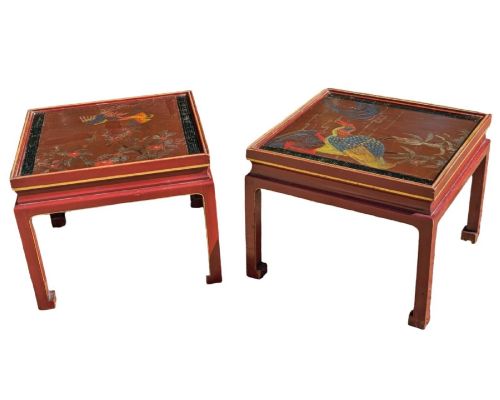
The most common examples on this page are rustic wooden forms finished in original paint, alongside European neoclassical and regional Asian lacquer variations. These objects function practically as extra seats, footrests, or small side surfaces.
Originating from domestic, agricultural, and workshop settings, these pieces carry the marks of regular use beneath their decorative or protective layers of paint.
Materials and Construction
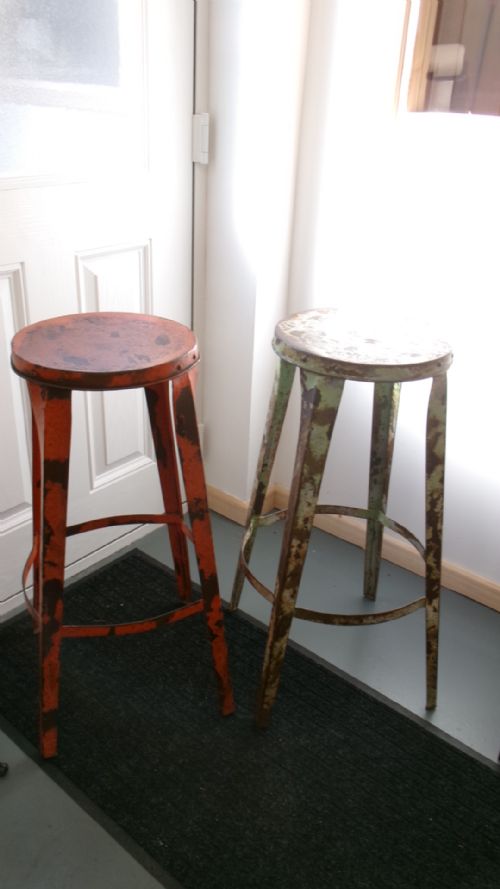
Makers utilised solid timbers such as pine, elm, and beech to construct the frames, often joining legs directly into thick wooden seats or assembling them with traditional carpentry joints. Metal also appears in industrial bar variants.
Surfaces received finishes of oil paint, distemper, or lacquer, frequently applied in layers that now exhibit natural weathering, crackle, and patina over decades of handling.
Vintage Painted Stool Retail Price Guide 2026
Typical asking prices for vintage painted stool among the pieces listed under this phrase on Sellingantiques today, from the lower quarter to the upper quarter. They describe what is for sale here now, not the wider market.
Listings feature pine, beech, elm, and metal materials across nineteenth and twentieth century periods.
Distinctions in Quality
Quality rests primarily in the survival of original surface finishes and the integrity of the structural timber. Untouched regional paintwork elevates an ordinary milking stool above pieces with later refinishing.
The sophistication of the design, from simple vernacular turnery to detailed French or Swedish carved woodwork, dictates the character and refinement of the individual object.
Miles & Edwards
The Vintage Painted Stool Glossary
- Gustavian
- The Swedish interpretation of French neoclassical design, characterised by pale painted finishes and restrained classical motifs. It flourished from the late eighteenth century onwards.
- Milking stool
- A simple utilitarian three-legged or four-legged seat used by agricultural workers. These items often feature robust wooden construction and worn original paint.
- Chinoiserie
- European decorative style reflecting Chinese artistic traditions, frequently seen in lacquered finishes and painted motifs on furniture. This aesthetic gained popularity across various periods.
- Lacquer
- A durable resin finish applied to wooden objects to create a smooth, protective, and decorative surface. It is typical of Asian furniture forms.
- Curule
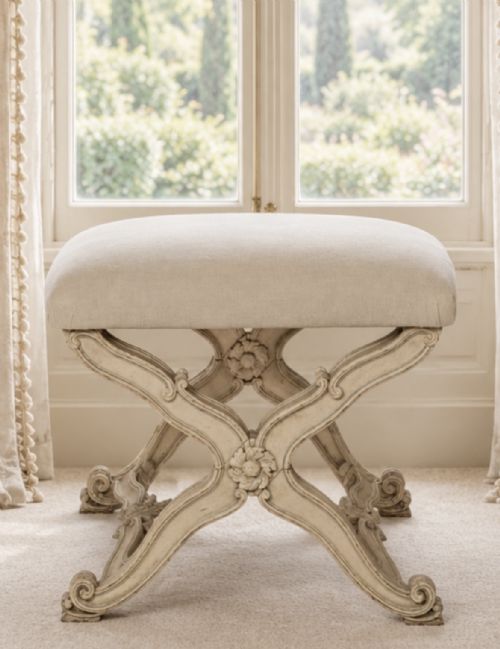
- An ancient chair shape featuring X-shaped intersecting legs. In later centuries, this form was adapted for formal footstools and seats.
Vintage Painted Stool: Frequently Asked Questions
How do I identify original paint?
Original paint exhibits natural wear patterns, oxidation, and multiple underlying layers that match the age of the wooden substrate. Look for consistent craquelure and friction marks in areas of frequent handling.
Later overpainting often feels uniform or masks the natural grain texture of the pine, elm, or beech beneath. Examining edges and joints helps reveal earlier colour schemes.
Where can I use these stools at home?
These compact pieces fit easily beside a fireplace, beneath a console table, or as an impromptu perch in a hallway. Low variants also function effectively as plant stands or bedside surfaces.
Their varied heights and painted finishes allow them to complement both traditional country interiors and more formal period rooms.
What is the difference between French and Swedish styles?
French styles like Louis XV and Régence lean towards curved cabriole legs, carved ornamentation, and upholstered surfaces. They project a decorative, urban sensibility.
Swedish Gustavian design favours simpler geometric lines, fluted legs, and pale monochrome paintwork. It offers a more restrained, neoclassical aesthetic.
How should I care for fragile painted surfaces?
Maintain these pieces by dusting gently with a dry, soft cloth and avoiding liquid cleaners or harsh chemical solvents. Keep them away from direct sunlight and strong heat sources to prevent paint flaking.
Wax can sometimes protect stable historic finishes, but flaking distemper or delicate lacquer requires professional conservation advice.