

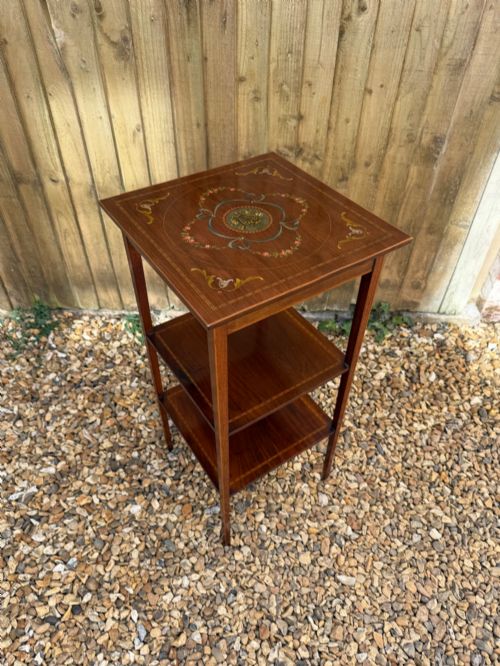
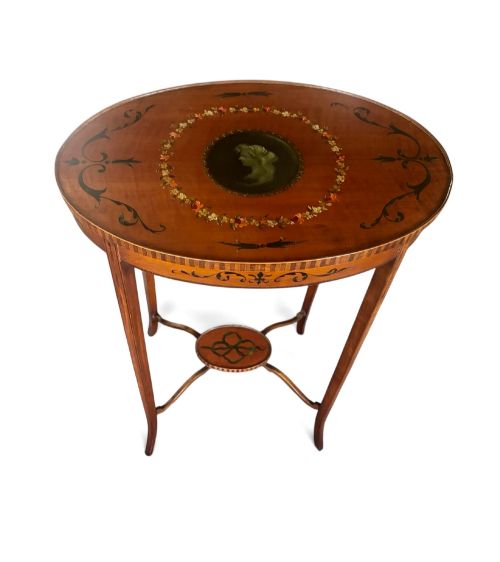
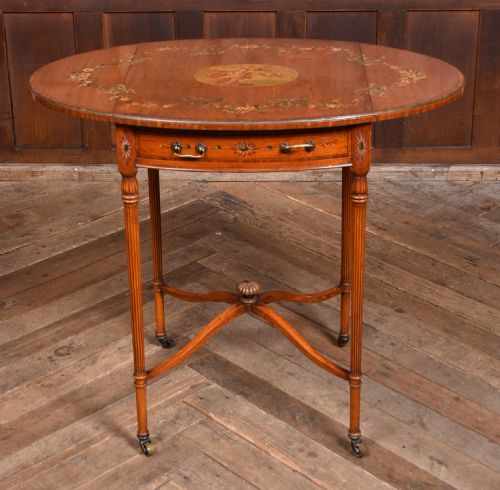
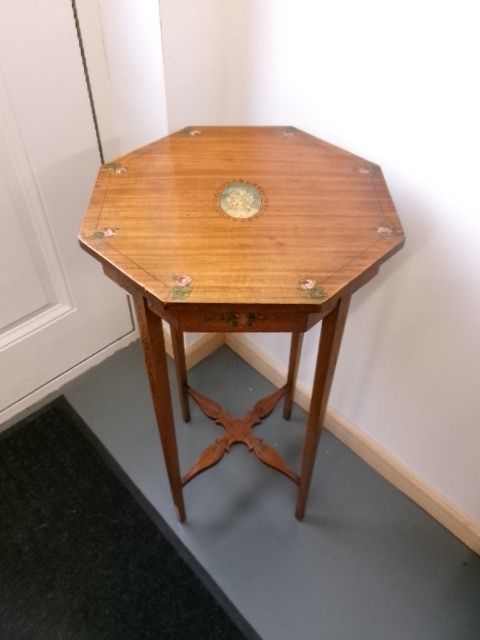


Vintage Painted Satinwood Table
A vintage painted satinwood table brings bright, classical elegance to a room through delicate hand-painted motifs and light timbers.
Vintage Painted Satinwood Table
A vintage painted satinwood table combines light timber surfaces with decorative painted details, drawing upon Sheraton Revival, Neoclassical, and Edwardian styles. These pieces range from occasional tables and side tables to console tables, bedside cabinets, and dressing tables.
Most examples originate from the Edwardian period and the late nineteenth century, alongside occasional eighteenth-century George III pieces. Buyers meet compact occasional tables, octagonal forms, and demi-lune console tables most frequently on this page.
Functional items such as desks, writing tables, and sewing tables also appear within the selection. Each form utilises the pale grain of satinwood as a canvas for floral decoration, portrait work, and classical motifs.
Materials and construction
Cabinet makers utilised satinwood veneers alongside mahogany and boxwood inlay to build these tables. The pale timber provided a smooth ground for hand-painted detailing and delicate floral decoration.
Workshops incorporated brass hardware, ormolu mounts, and leather inserts into finer writing desks and console tables. Structural elements often combined solid timber framing with fine marquetry and contrasting stringing.
Some tables hid sewing accessories inside fitted work boxes while others simply stood there looking pretty with painted flowers.
Judging the standard
The precision of the hand-painted detailing dictates the tier of the piece, separating simple floral flourishes from intricate portrait work. Crisp boxwood inlay and balanced proportions elevate certain tables above standard production.
The selection of the satinwood veneer itself creates distinction, where tighter figure and richer grain figure prominently in superior examples. Original ormolu mounts and well-preserved painted surfaces carry greater weight than later embellishments.
The Vintage Painted Satinwood Table Glossary
- Satinwood
- A durable tropical timber featuring a lustrous, golden-yellow sheen. It served as the primary surface for decorative painting and inlay work.
- Demi-lune
- A half-moon shape characteristic of console tables and side tables designed to sit flush against a wall. This profile became popular during the eighteenth and early twentieth centuries.
- Sheraton Revival
- A design movement inspired by late eighteenth-century neoclassical furniture. These pieces favour lighter proportions, satinwood veneers, and painted classical motifs.
- Ormolu
- Gilded bronze used for decorative mounts and hardware. Workshops applied it to accent high-status tables and jardinières.
- Marquetry
- The art of applying thin pieces of wood veneer to form decorative patterns and pictures. Craftsmen used contrasting timbers like boxwood to achieve linear definition.
Vintage Painted Satinwood Table: Frequently Asked Questions
What rooms suit a satinwood table?
These pieces fit drawing rooms, bedrooms, and studies as occasional surfaces or writing desks. Their pale timber brightens darker corners without overwhelming surrounding furniture.
Compact forms like bedside cabinets and small side tables adapt easily to modern interiors as functional display points.
How do I care for painted wood?
Keep the table away from direct sunlight to protect the painted decoration and prevent the satinwood from darkening unevenly. Use dry, soft cloths for dusting rather than liquid polishes.
Maintain consistent room humidity to protect the wood veneers and prevent the delicate inlay from lifting over time.
How to date an Edwardian piece?
Look for construction markers typical of the early twentieth century alongside the characteristic Sheraton Revival style. Edwardian makers often combined machine-sawn internal timbers with hand-finished painted details.
Proportions and decorative motifs usually reflect the revivalist tastes prevalent between eighteen-hundred-ninety and nineteen-twenty.
Were these tables used for writing?
Certain forms like Carlton House desks and writing tables served specific correspondence duties. Other occasional tables functioned primarily for display, tea service, or decorative work.
Interior compartments in work boxes and writing surfaces indicate their original purpose for letters and needlework.