


Vintage Ormolu Candlesticks
Vintage ormolu candlesticks bring bright gilt warmth and classical French styling to a room.
Vintage Ormolu Candlesticks
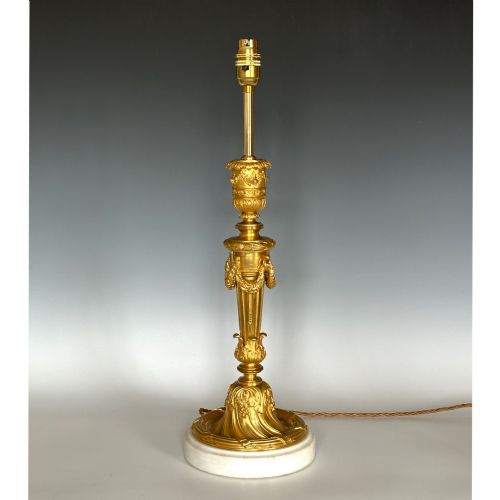
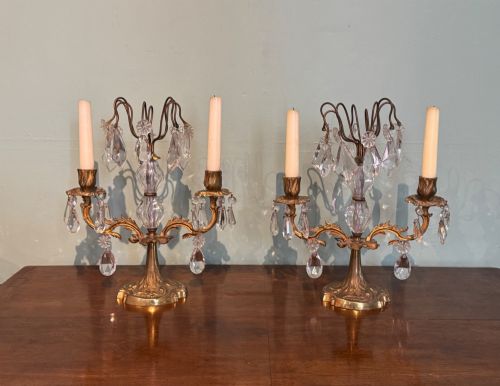
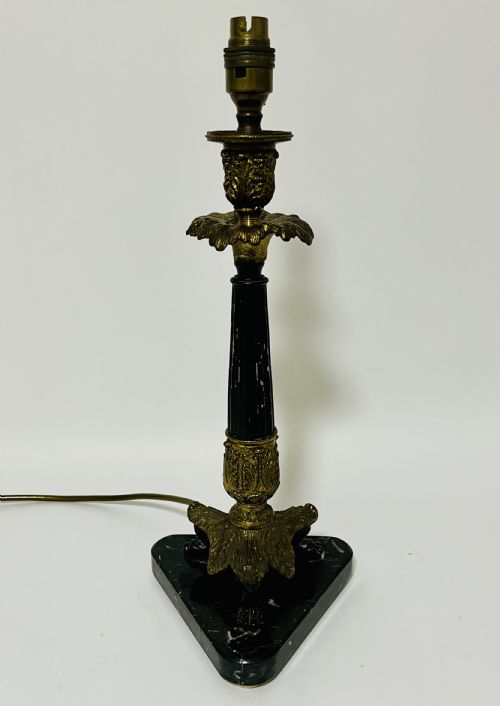
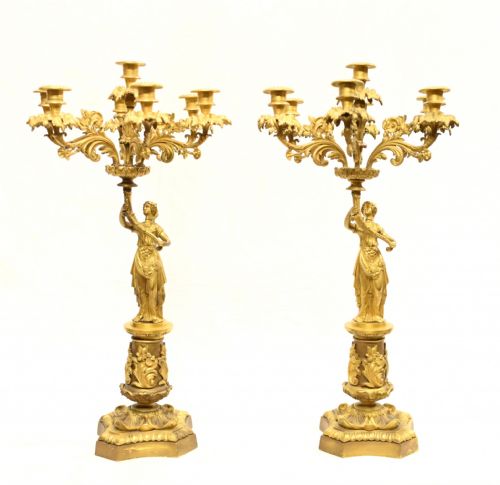
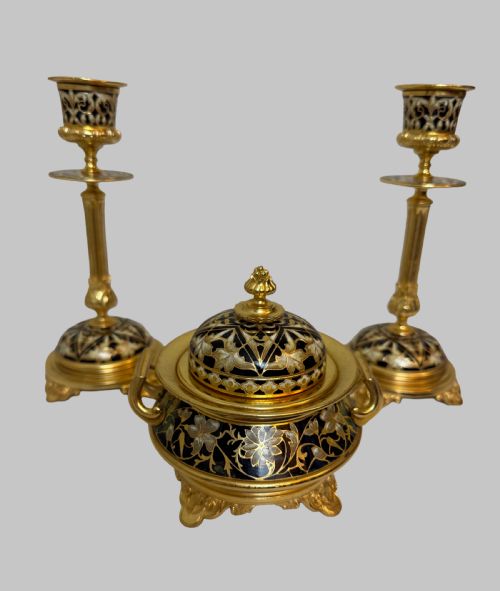
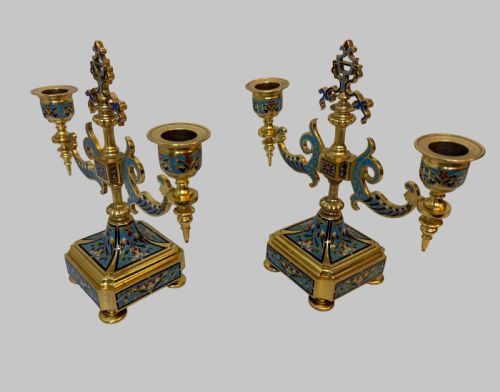
Vintage ormolu candlesticks span the nineteenth century and the early twentieth century, taking forms such as table lamps, candelabra, and desk accessories. The listings here show substantial French influence, including Rococo Revival, Louis XVI style, and Empire designs.
Most pieces encountered on this page pair gilt bronze or ormolu with contrasting materials like marble, glass, onyx, or patinated bronze. Buyers select these items for their decorative presence and historical character.
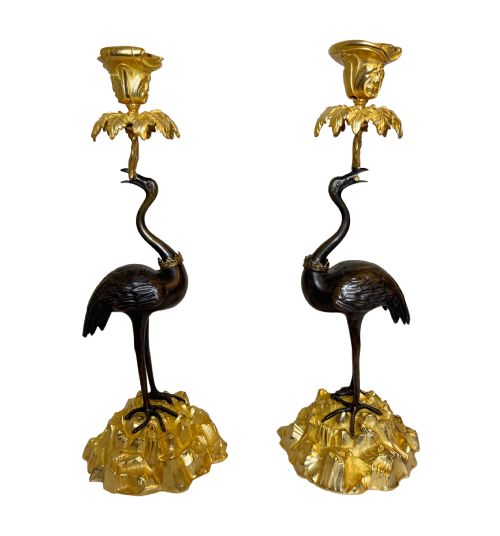
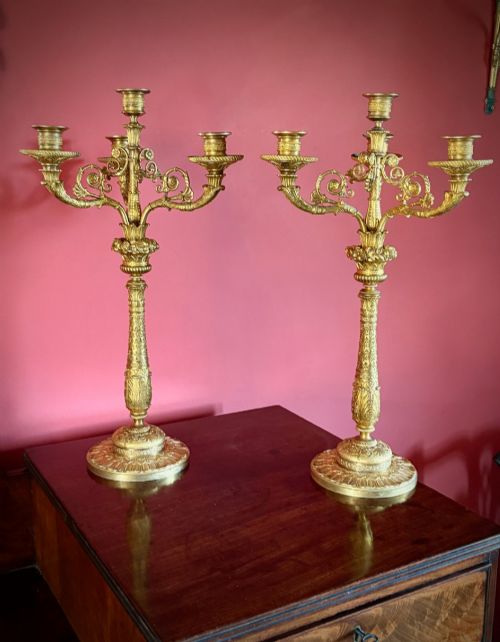
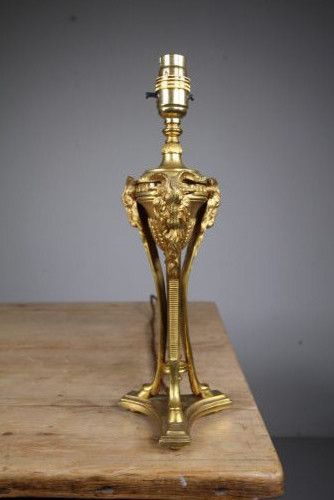
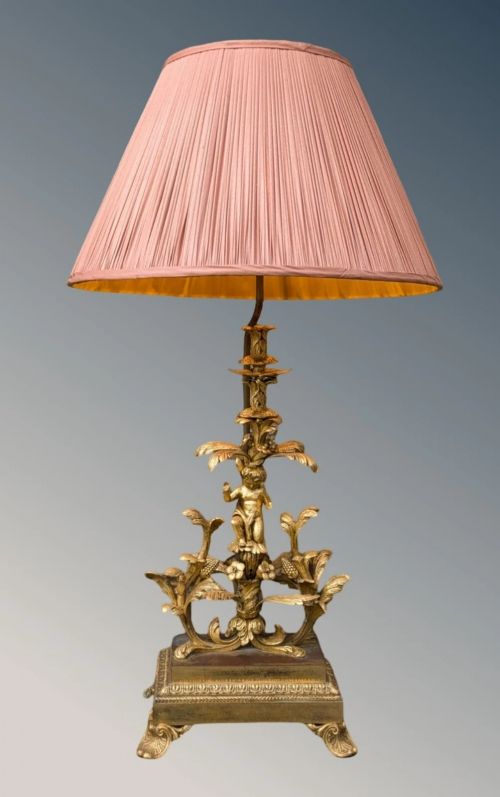
Pairs dominate the selection, frequently featuring figural motifs like cherubs, maidens, rams' heads, and animals. Forms range from simple single-branch candlesticks to grand multi-arm candelabras and converted lamps.
How they were made
Maker workshops produced these pieces primarily through metal casting in bronze or brass, applying mercury gilding or modern electroplating to achieve the characteristic bright ormolu surface. Chaser craftsmen then refined surface details by hand.
Many examples incorporate carved marble bases, onyx plinths, or coloured glass components. Fabric elements such as silk appear on pieces adapted into table lamps.
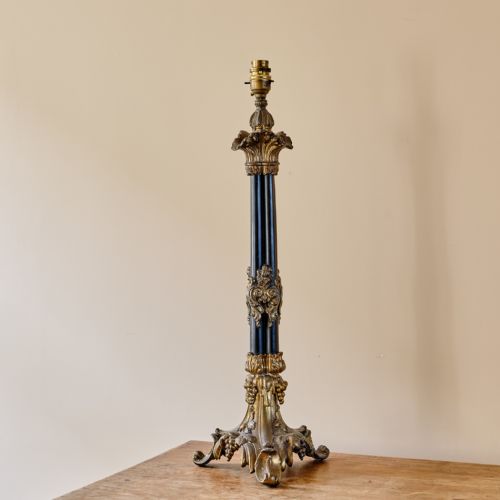
Makers integrated patinated bronze sections to create colour contrast against the bright gilt metal work.
Listings feature items from the Regency period through to the 1930s, constructed in gilt bronze, marble, and glass.
What varies in quality
The crispness of the cast ornamentation separates standard items from finer works. Master craftsmen achieved sharp relief in acanthus leaves, figures, and scrollwork, whereas lesser castings appear soft and rounded.
Durability and depth of the gilding differ across periods, with heavier gold layers retaining a richer lustre over time. The quality of associated stones, such as veined marble or onyx, also influences the piece.
Casting weight and structural balance indicate the standard of production, particularly in multi-arm candelabras where stability matters.
Jean-Démosthène Dugourc
The Vintage Ormolu Candlesticks Glossary
- Ormolu
- Gilded bronze, where a layer of gold is applied to a base metal. This technique creates a durable golden finish characteristic of decorative metalwork.
- Candelabra
- A branched candlestick holding multiple candles or lamp fittings. These large items often feature removable arms.
- Champleve
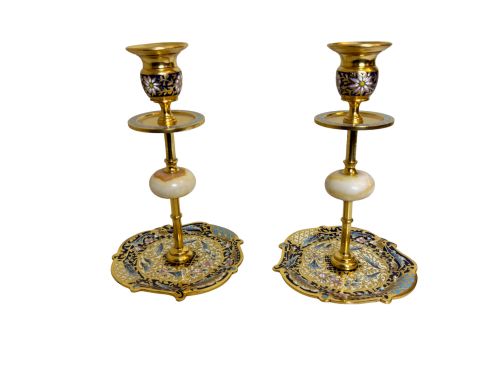
- An enamelling technique where troughs are dug into the metal surface and filled with vitreous paste before firing. It appears on several nineteenth-century pieces in this selection.
- Lustre
- Glass pendants hung from a candlestick to reflect candlelight. They add sparkle to Regency and Victorian designs.
- Patinated bronze
- Bronze treated to produce a dark, weathered, or coloured surface. This finish frequently contrasts with bright ormolu mountings.
Vintage Ormolu Candlesticks: Frequently Asked Questions
How do I clean vintage ormolu candlesticks?
Dust gently with a soft dry cloth to protect the delicate gilt surface. Avoid harsh chemical cleaners and metal polishes that strip the gold layer.
Water can damage integrated stone bases or fabric components. Professional conservation is advised for heavily soiled pieces.
Are these candlesticks wired for electricity?
Many items listed as table lamps or candlestick lamps are wired for modern electrical use. Other pieces remain strictly for holding wax candles.
Conversion is often reversible depending on how the original fitting was secured. Check individual listings for wiring details.
How do I identify French Rococo Revival pieces?
French Rococo Revival items feature asymmetrical scrollwork, C-scrolls, and naturalistic motifs like flowers and foliage. They reflect eighteenth-century aesthetics revived during the nineteenth century.
These designs often incorporate playful figural elements such as cherubs or animals.
What is the difference between ormolu and brass?
Ormolu consists of a bronze base covered in a layer of gold, providing a rich, warm metallic lustre. Brass is an alloy of copper and zinc throughout the entire object.
Ormolu generally displays finer chisel work and a deeper golden hue than standard brass.