





Vintage Oriental Console
A vintage oriental console brings enduring character to a room through traditional craftsmanship and rich historical surfaces.
Vintage Oriental Console
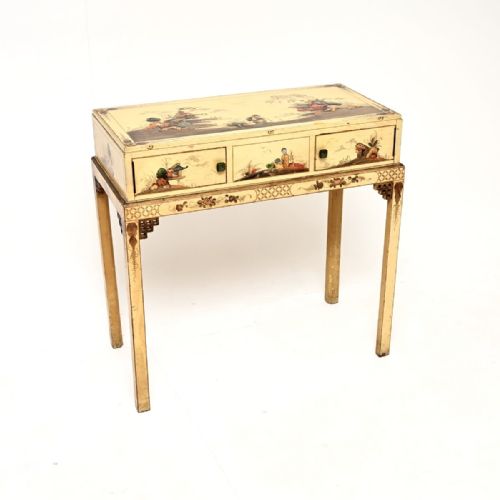
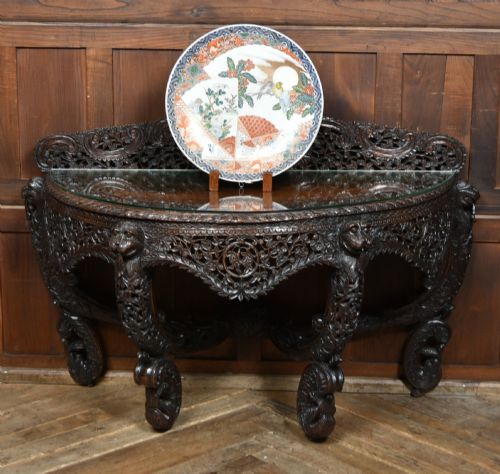
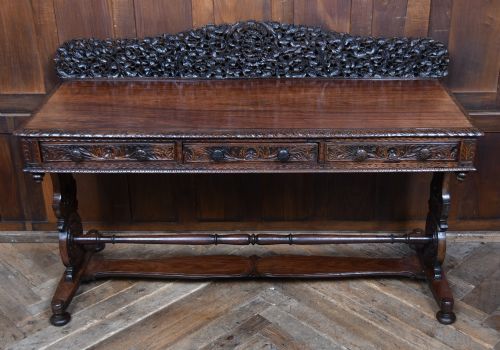
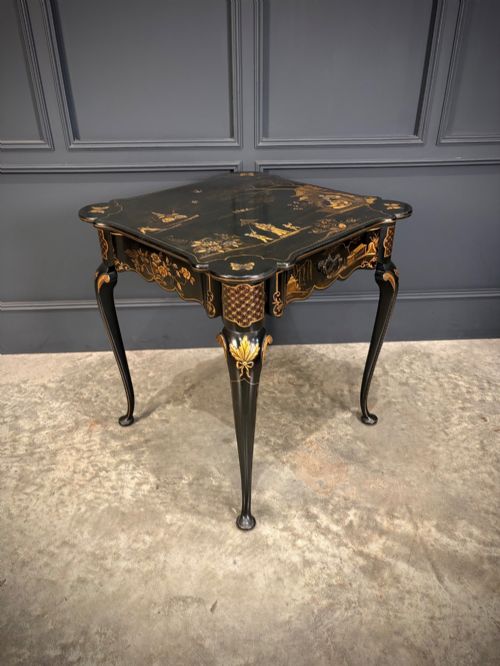
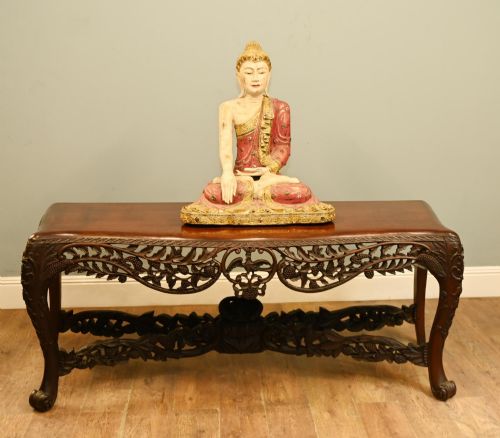
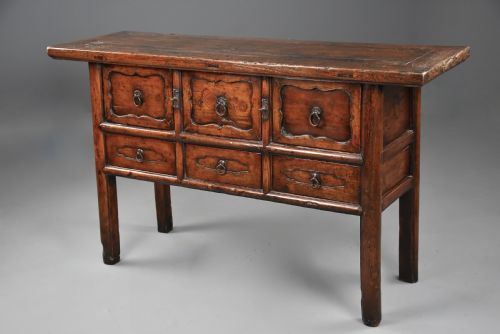
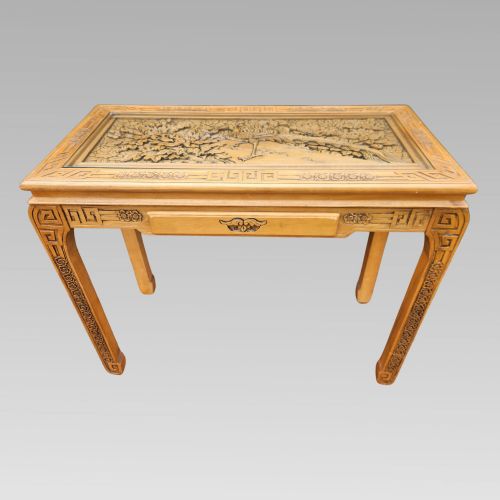
A vintage oriental console encompasses a diverse range of tables and low cabinetry originating from Chinese, Indian, and Burmese traditions, spanning the eighteenth to the twentieth centuries. When searching for a vintage oriental console, buyers encounter forms that include altar tables, sideboards, and occasional tables designed for domestic use.
Most examples date across the nineteenth and early twentieth centuries, reflecting both native regional workshops and export markets. Buyers select these items to anchor hallways, living rooms, and dining spaces with functional historical surfaces.
Materials and construction methods
Makers utilised native hardwoods such as elm, teak, and padouk for structural integrity, often relying on traditional joinery that accommodated wood movement over decades of use. These timbers provided a dense foundation capable of supporting heavy surface decoration and daily domestic demands.
Surface finishes involved multiple layers of natural lacquer, red or black paint, and applied brass mounts to create durable, lustrous sheens. Carved elements were hand-chiseled directly into the solid timber or applied through detailed wooden reliefs.
Vintage Oriental Console Retail Price Guide 2026
Typical asking prices for vintage oriental console among the pieces listed under this phrase on Sellingantiques today, from the lower quarter to the upper quarter. They describe what is for sale here now, not the wider market.
Several tables retain traces of daily life in their worn lacquered surfaces, reminding us of centuries of hands opening drawers and gathering around them.
Factors of distinction
Quality rests in the crispness of hand-carved details and the depth of the lacquer or patina developed over centuries of use. Superior examples display balanced proportions, integrated joinery, and minimal structural intrusion from later restorations.
The choice of primary timber also dictates the grade of the piece, with dense hardwoods like padouk and well-figured elm commanding greater attention than simpler utility woods. Original hardware, such as brass lock plates and drawer pulls, further separates standard regional items from finer workshop productions.
The Vintage Oriental Console Glossary
- Altar table
- A long, narrow table traditionally used for ceremonial purposes in Chinese households, characterised by upturned flange ends or recessed legs. These pieces now serve as striking console tables in contemporary interiors.
- Chinoiserie
- European interpretations and imitations of Chinese and East Asian artistic traditions, popular during the eighteenth and nineteenth centuries. This style employs lacquered finishes and gilt motifs on furniture.
- Elm
- A resilient, durable timber native to China, frequently utilised for provincial furniture due to its attractive grain pattern and strength. It forms the primary structure of many rustic tables and sideboards.
- Padouk
- A heavy, dense exotic hardwood known for its rich reddish-brown colour and excellent carving properties. It appears frequently in fine nineteenth-century Asian furniture.
- Lacquer
- A durable finish made from the sap of trees native to East Asia, applied in multiple coats and polished to a smooth sheen. It often incorporates red or black pigments for decorative impact.
Vintage Oriental Console: Frequently Asked Questions
Where should I place an altar table?
Altar tables work exceptionally well against hallway walls or behind sofas where their narrow profile preserves walking space. Their elongated surfaces also suit entryways for displaying lamps or decorative objects.
Ensure the height matches surrounding furniture to maintain visual balance within the room.
How do I care for lacquered wood?
Dust surfaces regularly with a soft, dry cloth to prevent abrasive particles from scratching the delicate lacquer finish. Avoid placing these items in direct sunlight or near heat sources to prevent cracking.
Keep humidity levels stable within the room to preserve both the wood substrate and the traditional finish.
What is the difference between provincial and Qing furniture?
Provincial pieces prioritise utilitarian function and rustic charm, utilising local elm with straightforward construction and minimal ornamentation. Qing Dynasty pieces exhibit formal court aesthetics, featuring intricate carvings, dense hardwoods, and refined proportions.
Examining the complexity of the joinery and the selection of timber clarifies the distinct origins of each piece.
Can I use a side table as a writing desk?
Certain oriental side tables and work tables feature shallow drawers and adequate surface depth to function comfortably as writing desks. Check the knee clearance beneath the apron to ensure comfortable seating.
Pairing the table with a simple chair creates a functional workspace with historical character.