


Vintage Oriental Art
Vintage oriental art brings together diverse objects like cloisonne vases, silk paintings, and carved wooden sculptures spanning the nineteenth and twentieth centuries.
Vintage Oriental Art
Vintage oriental art encompasses a broad selection of decorative objects and furnishings originating from various Asian traditions. Buyers encounter items ranging from miniature ritual vases and large porcelain plates to woven carpets and embroidered panels.
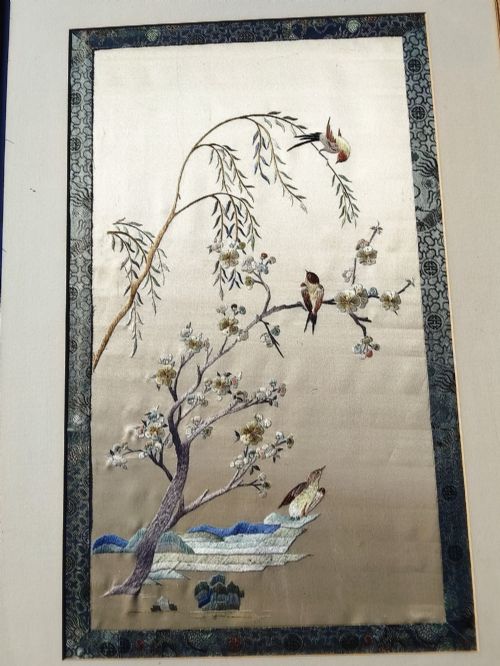
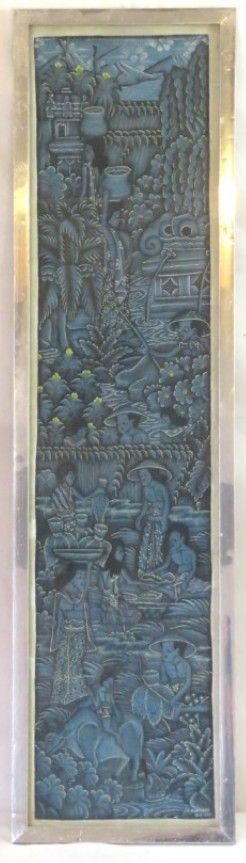
The objects span multiple decades and centuries, incorporating periods such as the Meiji era, Qing dynasty, and the 1920s Art Deco movement. Forms include framed silk pictures, carved wooden figures, and bronze pairs.
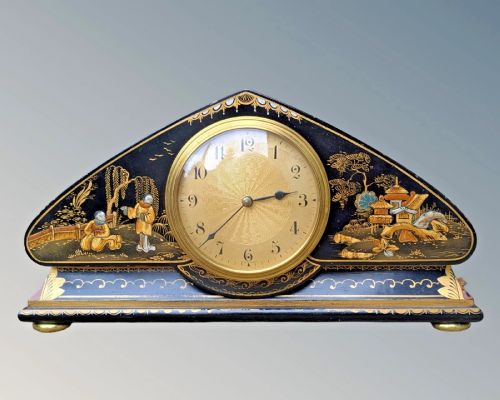
Origin points across the listings include Japan, China, Persia, Bali, and the Ottoman Empire. Domestic items like lacquer table lamps and Chinoiserie mantle clocks sit alongside traditional tribal rugs and scroll paintings.
How they were made
Materials utilised across the selection include porcelain, glass, wood, silk, wool, enamel, lacquer, and paper. Craftsmen applied these substances to create both delicate table objects and large floor coverings.
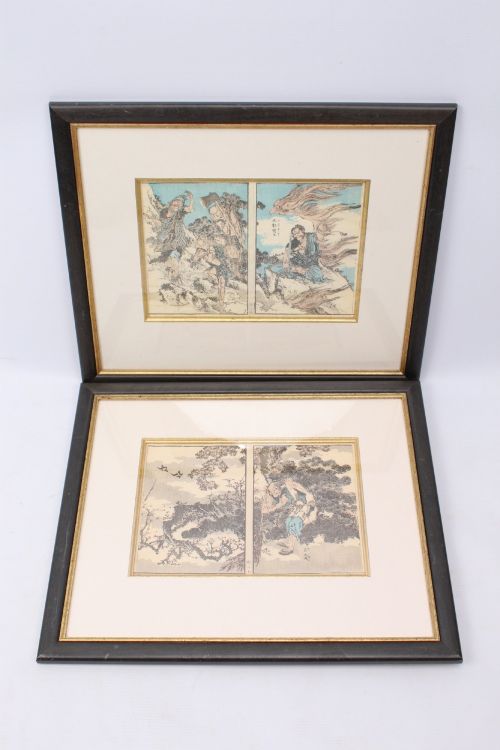
Techniques recorded in the pieces involve hand painting, woodblock printing, embroidery, bronze casting, and cloisonne enamelling. Metalwork items frequently incorporate patinated iron with gold and silver inlay.
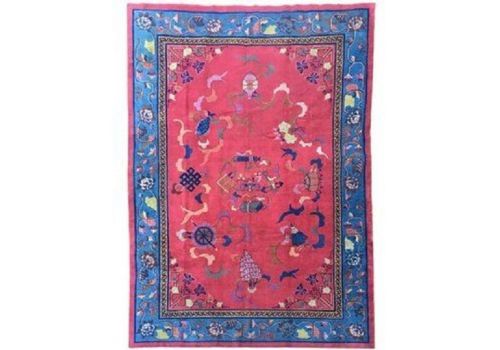
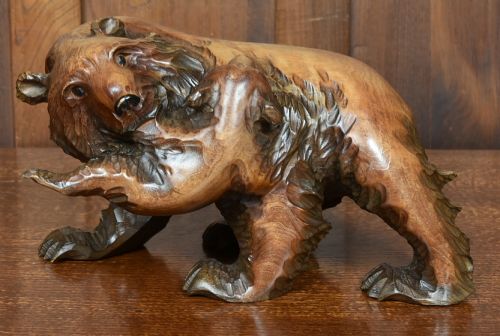
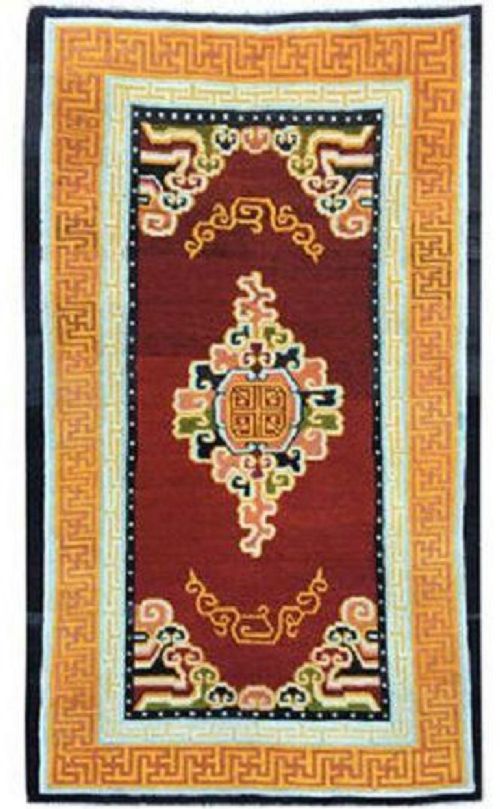
Weaving methods appear in the Persian carpets, Turkmen bags, and Tibetan rugs using traditional wool and textile assembly. Woodworking is visible in carved animal figures, hibachi tables, and jade mountain stands.
Vintage Oriental Art Retail Price Guide 2026
Typical asking prices for vintage oriental art among the pieces listed under this phrase on Sellingantiques today, from the lower quarter to the upper quarter. They describe what is for sale here now, not the wider market.
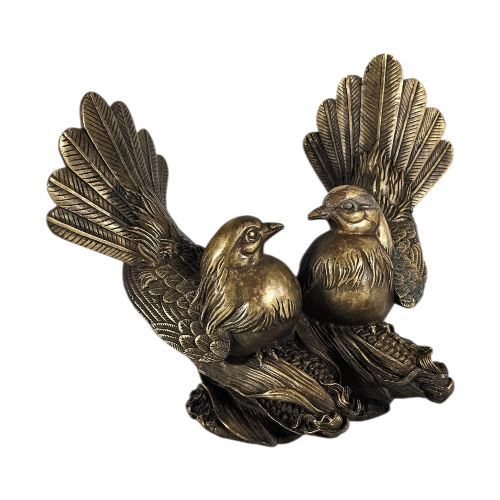
A carved wooden bear with a cub shares space with a snow leopard scroll and a bronze pigeon dove pair.
What varies in quality
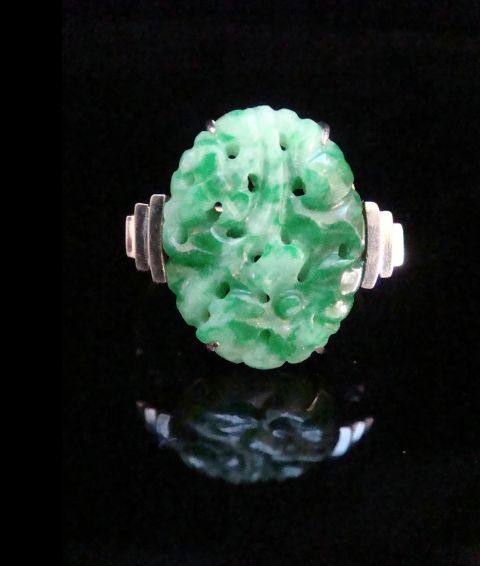
The standard of execution separates everyday decorative items from finer examples in materials like cloisonne enamel, carved jade, and hand-painted silk. Precision in brushwork and metal inlay dictates the visual impact of each piece.
Preservation of original surfaces, such as lacquer finishes, glazes, and textile dyes, influences the integrity of older works. Items retaining their original stands, frames, or accompanying documentation hold greater historical consistency.
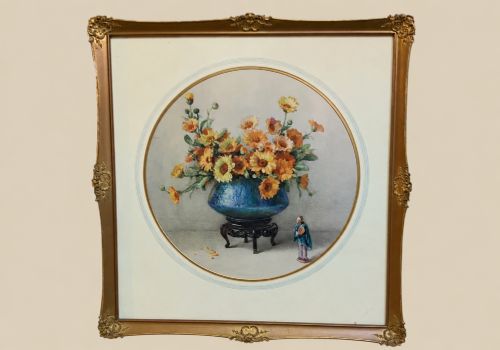
Warwick Goble·Royal Doulton
The Vintage Oriental Art Glossary
- Cloisonne
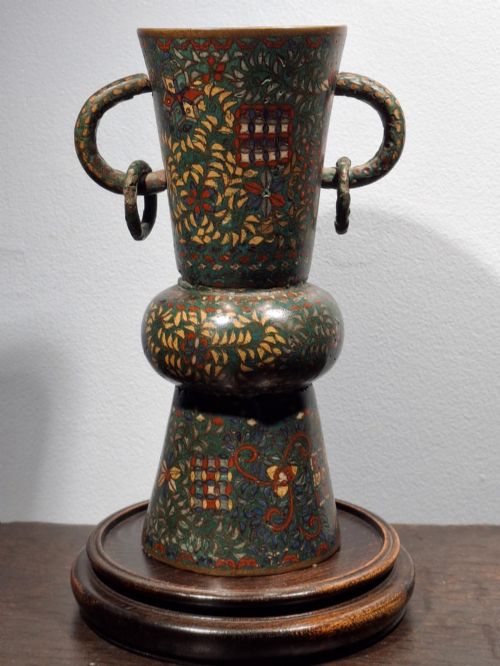
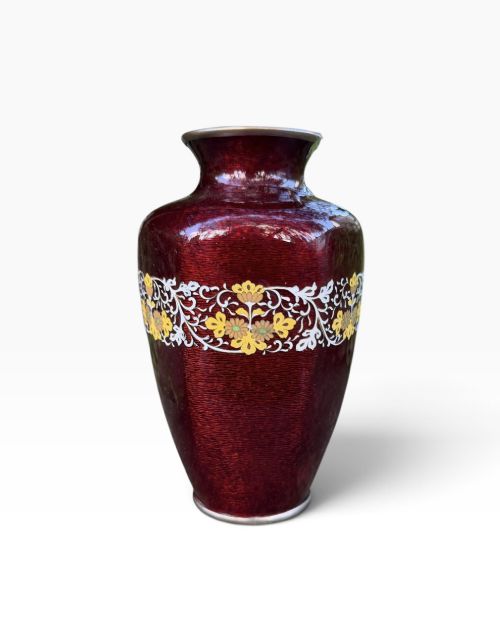
- Enamelwork created by pouring coloured glass pastes into compartments formed by soldered metal wires on a base. This technique produces detailed surface patterns on miniature vases and lidded jars.
- Chinoiserie
- European artistic style reflecting Chinese motifs and decorative techniques, applied to furniture and clocks during the twentieth century. It reinterprets traditional Eastern aesthetics through Western manufacturing methods.
- Imari
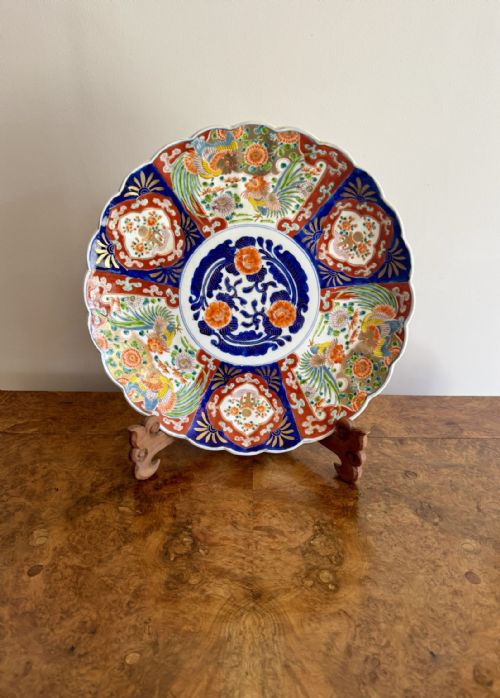
- Japanese porcelain decorated in underglaze blue and overglaze red, gold, and green. Plates and vessels produced in this style display dense, colourful geometric and floral arrangements.
- Okimono
- Japanese decorative statue designed for display in a household alcove or room. These carved porcelain or wooden figures often depict historical or mythological subjects.
- Shan Shui
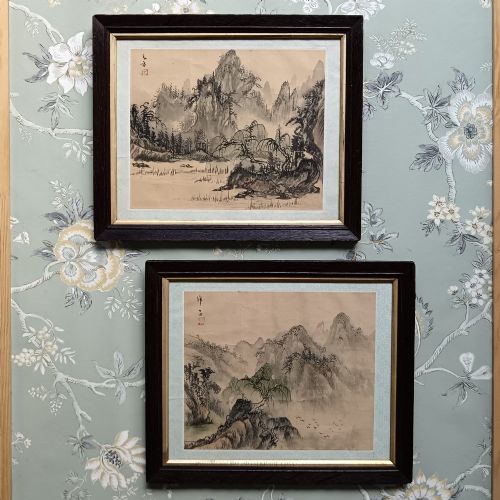
- Traditional Chinese style of painting featuring scenery or natural landscapes using brush and ink. These silk artworks focus on mountains, rivers, and trees.
- Pith paintings
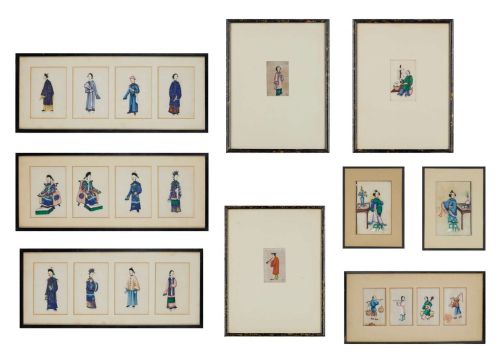
- Watercolours painted on thin sheets of pith plant material originating in nineteenth century China. They frequently depict figures and daily activities.
Vintage Oriental Art: Frequently Asked Questions
What is vintage oriental art?
Vintage oriental art refers to decorative objects, textiles, and fine art created in Asian countries or inspired by Eastern traditions during the nineteenth and twentieth centuries.
The category includes items such as cloisonne vases, woodblock prints, silk paintings, and woven carpets from regions including Japan, China, and Persia.
How were cloisonne vessels made?
Cloisonne vessels are made by applying thin metal wires to a metal base to create partitioned cells, which are then filled with enamel paste and fired.
This intricate technique produces durable, colourful surface designs seen on miniature vases and lidded ginger jars.
Where should I place a textile?
Textiles such as Tibetan rugs, embroidered panels, and tribal salt-bags add texture and warmth when displayed on floors, walls, or furniture surfaces.
Protecting older fabrics from direct sunlight preserves the natural wool and silk fibres over time.
How do I identify a period?
Periods are identified by examining material composition, manufacturing techniques, stylistic motifs, and any accompanying artist marks or stamps.
Comparing construction methods across Meiji, Qing, and Art Deco examples helps establish the likely era of creation.