
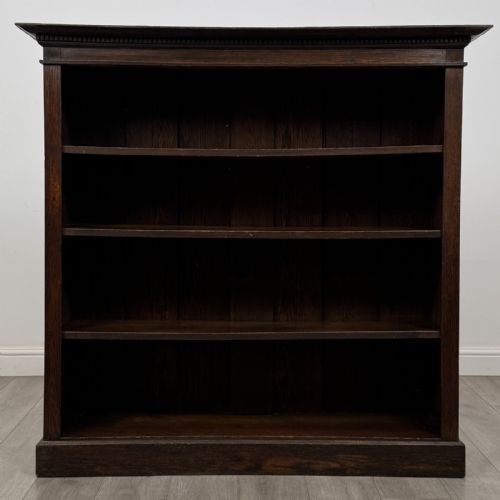
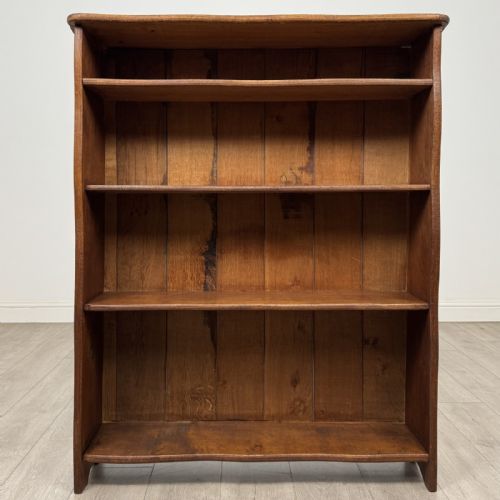
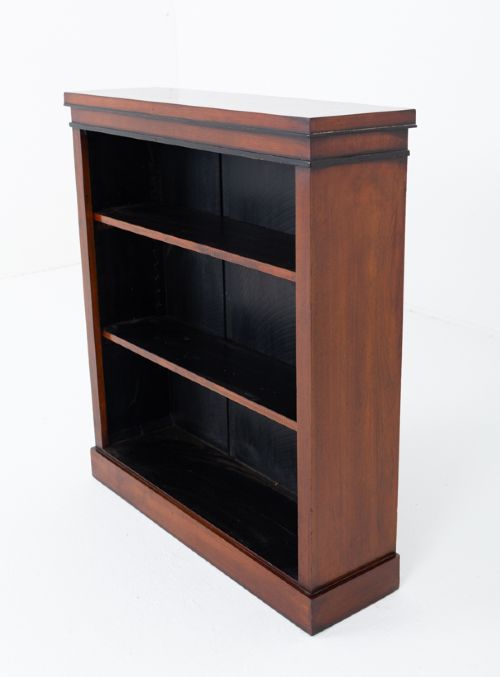
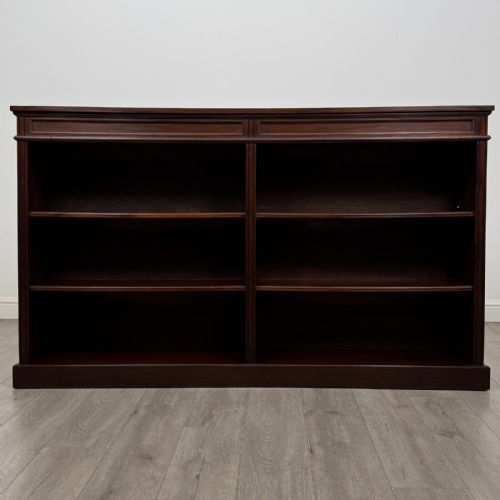
Vintage Open Shelving Unit
A vintage open shelving unit offers practical display space, and buyers find these pieces in oak and mahogany across Edwardian and Victorian styles.
Vintage Open Shelving Unit
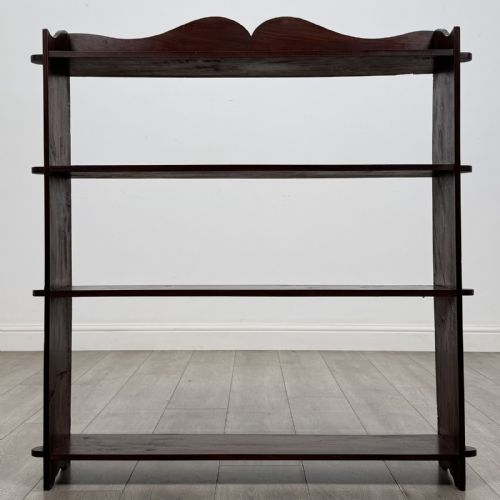
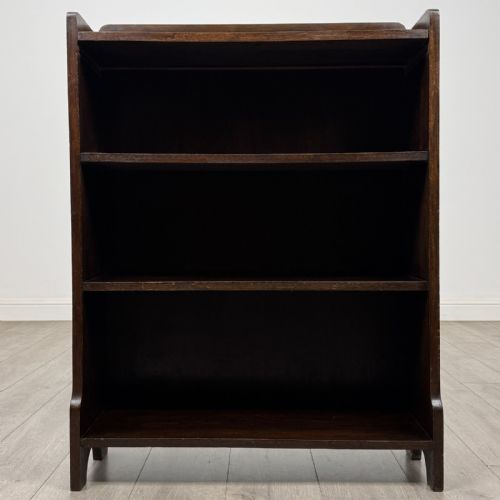
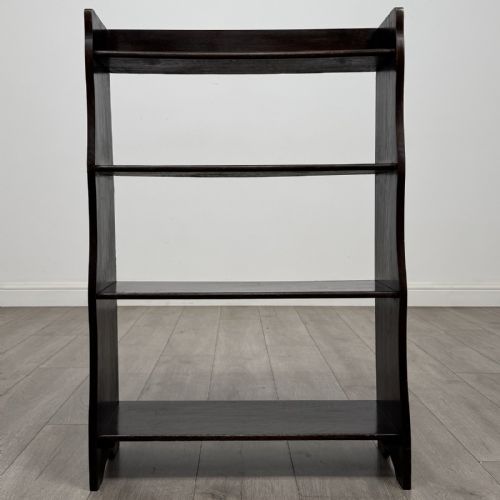
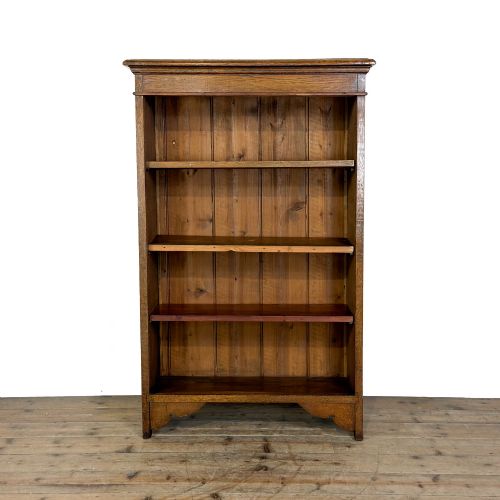
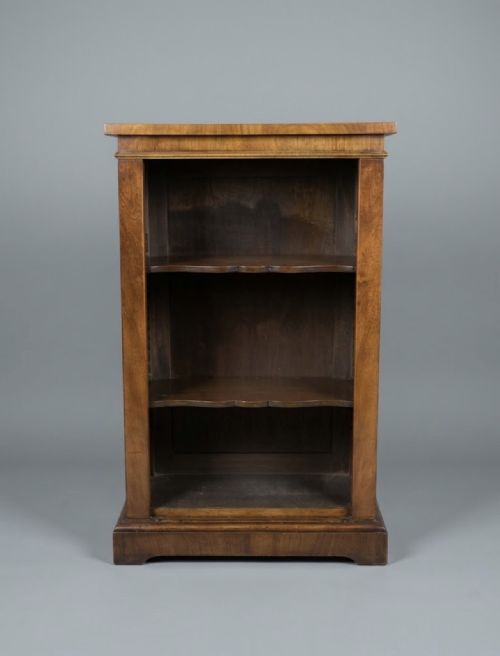
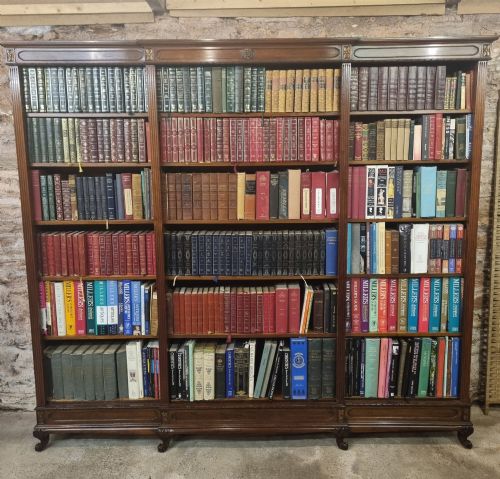
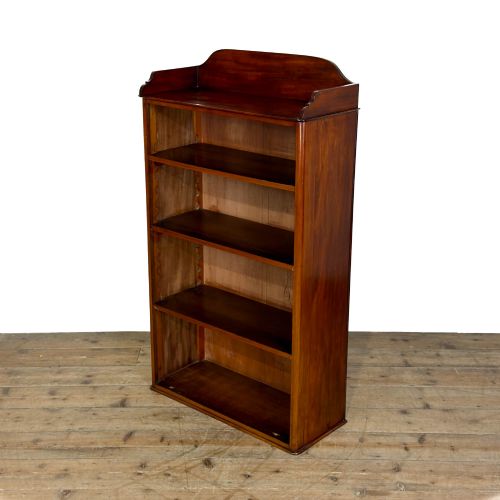
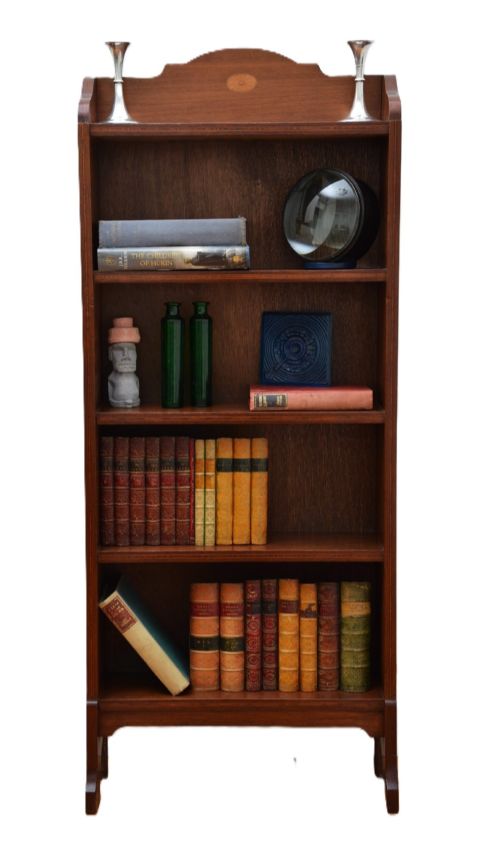
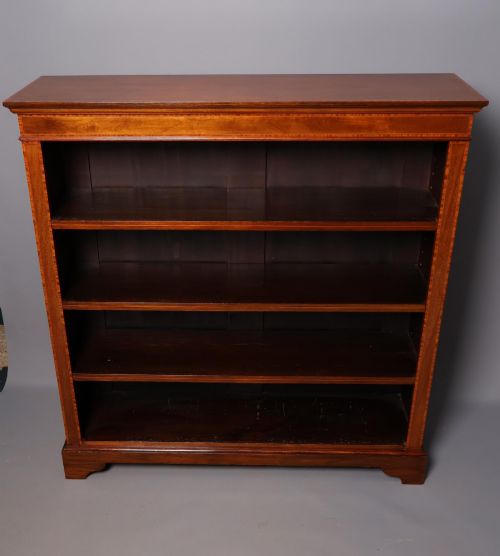
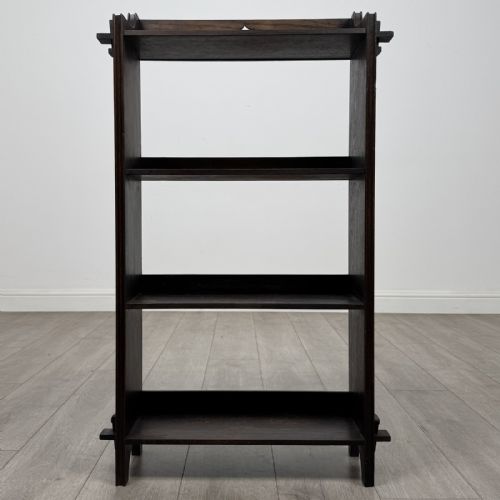
A vintage open shelving unit serves to display books and objects without doors blocking the view, taking forms such as bookcases, whatnots, and wall shelves. The pieces appearing most frequently on this page span the Edwardian period and the early twentieth century, constructed chiefly in oak and mahogany.
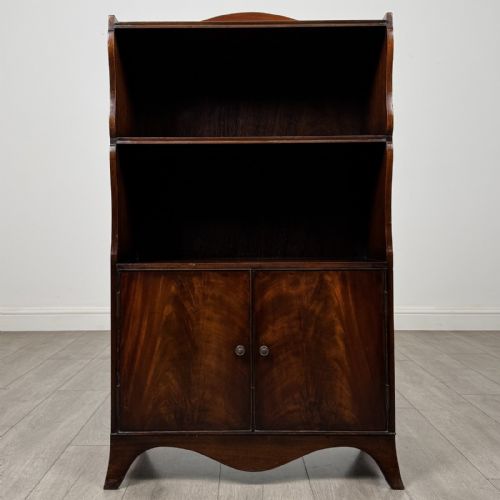
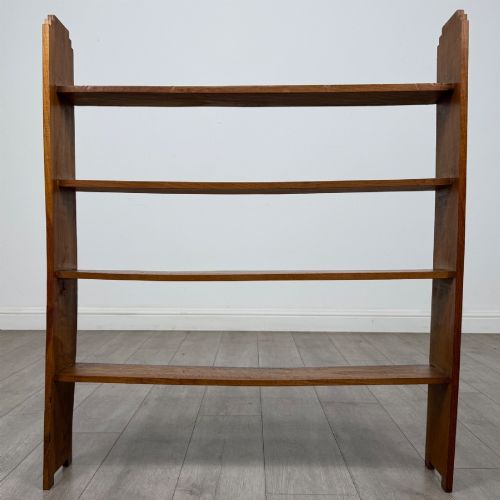
Makers designed these items for domestic living spaces, ranging from simple rustic pine bookshelves to refined burr walnut and satinwood pieces. Buyers encounter low bookcases, tall waterfall configurations, and angled variants designed to fit specific corners or walls.
How they were made
Cabinetmakers utilised solid timbers such as oak, mahogany, walnut, and pine, often incorporating brass fittings for adjustable shelving mechanisms. Surfaces show polished wood grains, beaded edges, or painted finishes as seen on French models.
Joinery techniques focus on sturdy construction to support heavy volumes, utilising solid back panels, pegged joints, and tiered shelf tiers that step back progressively in waterfall designs.
Some Victorian whatnots come in matching pairs, proving that even stray books appreciate having a companion.
What varies in quality
Quality rests upon the selection of timber figures, such as burr walnut or figured mahogany, and the crispness of inlaid details like satinwood stringing. Superior examples display thoughtful proportions, refined mouldings, and maker attributions.
Simpler rustic pine or utility oak units rely on honest joinery and practical proportions rather than decorative veneers, offering different charm suited to informal interiors.
Heals
The Vintage Open Shelving Unit Glossary
- Waterfall bookcase
- A tiered shelving unit where each successive shelf is set back from the one below, creating a stepped profile.
- Whatnot
- A multi-tiered open piece of furniture designed for displaying ornaments, books, or curiosities.
- Inlaid
- The technique of embedding contrasting pieces of wood or metal into a solid timber surface to form decorative patterns.
- Adjustable shelves
- Shelves fitted with internal ratchets, pegs, or slots allowing the height between tiers to be altered.
Vintage Open Shelving Unit: Frequently Asked Questions
How do I style a vintage open shelving unit?
Balance books placed vertically and horizontally with ceramics, framed photographs, and small decorative objects to create visual interest. Leave some space empty to maintain an uncluttered appearance.
Vary the heights of objects across different tiers to draw the eye naturally through the arrangement.
Are these shelves suitable for heavy books?
Many period pieces feature solid hardwood construction in oak or mahogany designed to support substantial library collections. Units with adjustable shelves provide flexibility for larger volumes.
Check that the internal shelf supports and backboards remain sturdy before loading heavy items onto upper tiers.
How do I identify an Edwardian bookcase?
Edwardian pieces often utilise light oak or inlaid mahogany, reflecting the transition from heavy Victorian styles towards lighter domestic furniture. Clean lines and subtle stringing are typical characteristics.
Many examples from this era incorporate adjustable shelving and simple bracket feet.
Where should I place an open shelving unit?
These units suit living rooms, studies, and hallways where accessible storage and display space are required. Low models function well beneath windows or along partition walls.
Avoid positioning timber furniture in direct sunlight or close to heat sources to protect the wood grain.