


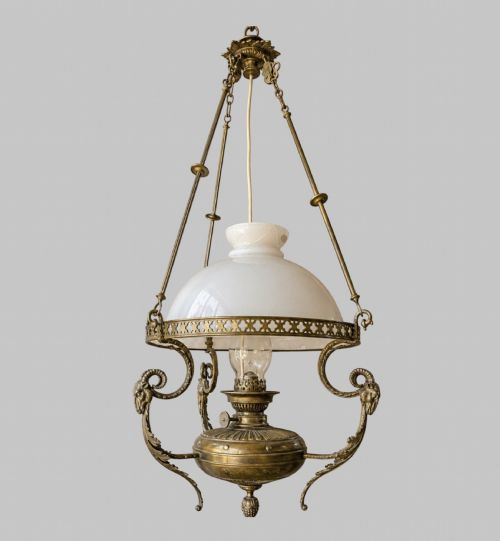


Vintage Opaline Glass
Vintage opaline glass brings a milky, diffused radiance to interior lighting and small vessels, prized for its dense opacity and soft colour palette.
Vintage Opaline Glass
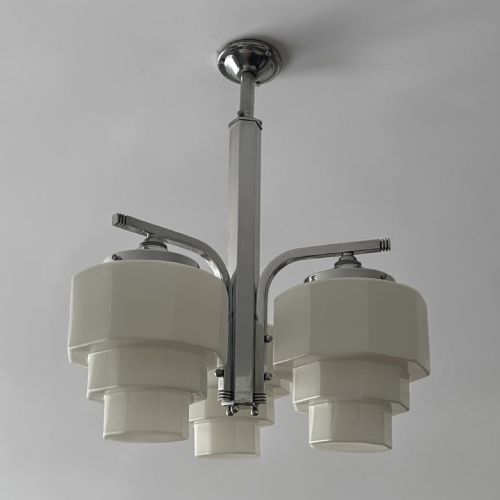
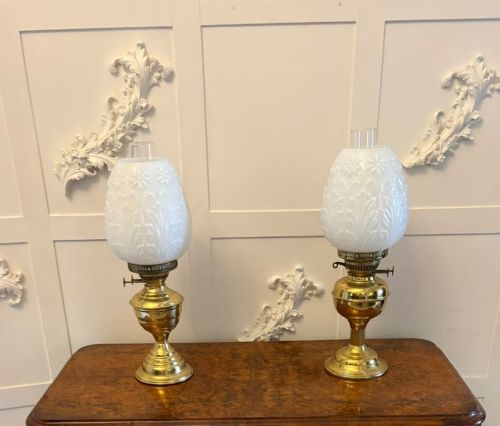
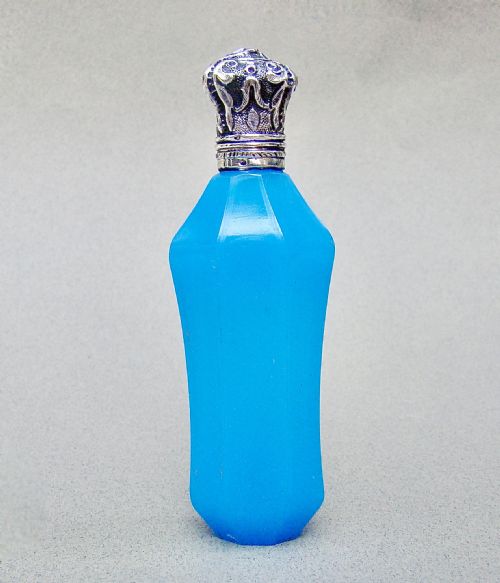
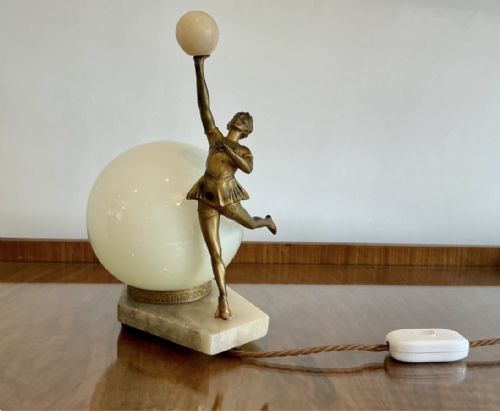
Vintage opaline glass encompasses decorative objects and functional lighting spanning from the nineteenth century into the mid-twentieth century. The material forms lighting fixtures, scent bottles, and table lamps that capture and soften light through their dense, milk-like body.
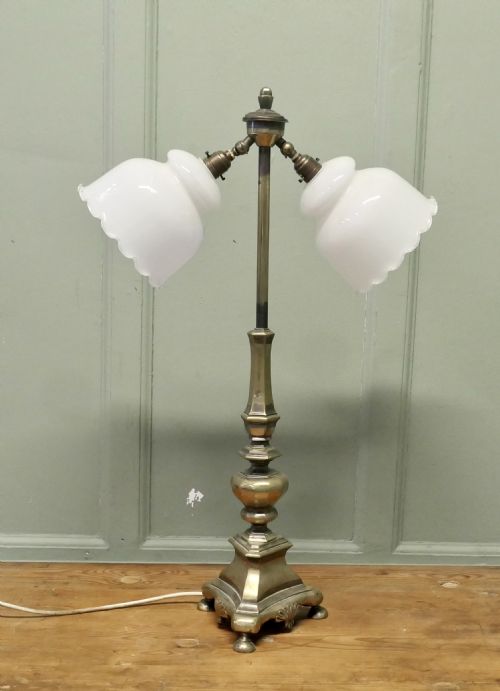
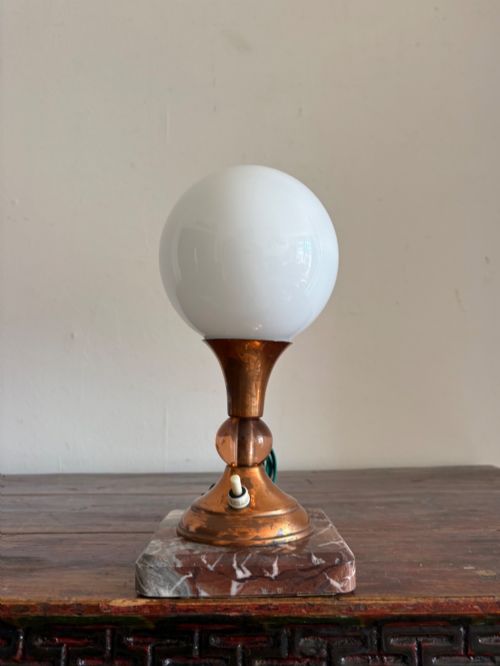
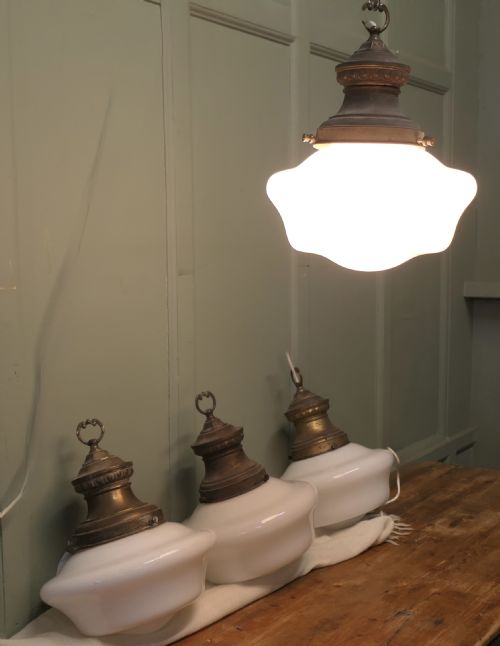
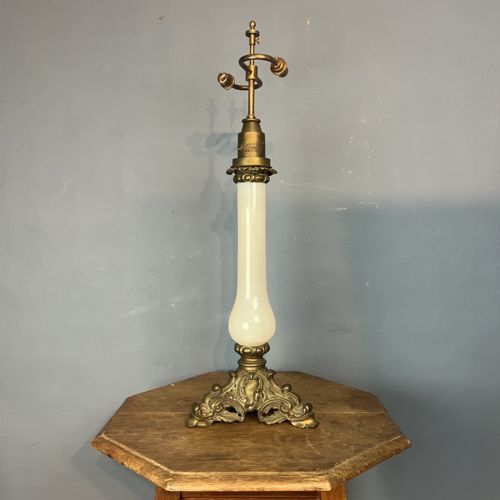
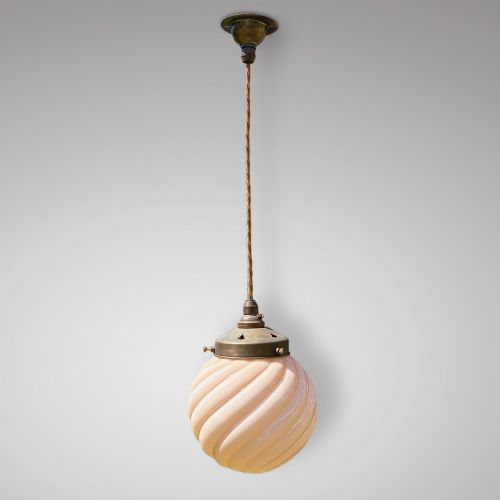
Pieces frequently emerge in pendant lights, ceiling fixtures, and oil lamps, often paired with brass, bronze, or chrome mounts. Victorian and Edwardian examples sit alongside Art Deco and industrial designs, reflecting changing domestic illumination needs.
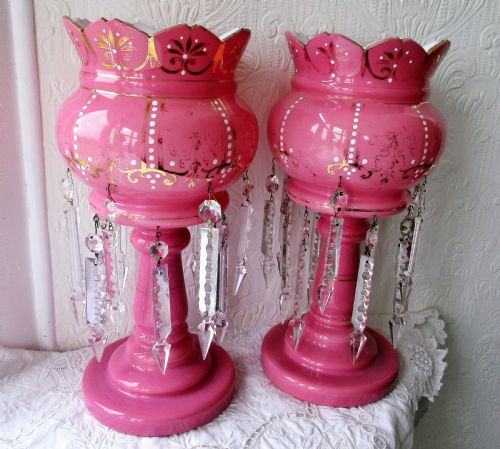
Origin points span English and French workshops, encompassing delicate scent bottles with silver mounts alongside heavy factory chapel lights and utilitarian shades. Collectors encounter both plain white vessels and tinted iterations in pink, turquoise, green, and blue.
Materials and Construction
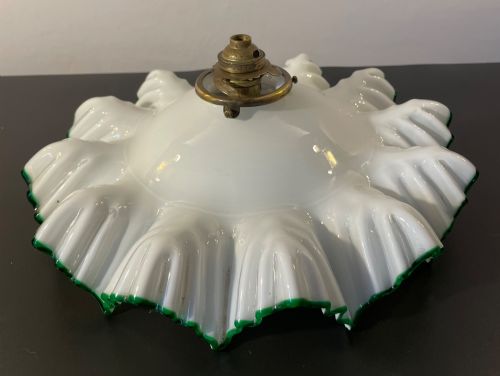
Opaline glass relies on bone ash, arsenic, or tin oxide added to the molten batch to achieve its characteristic opacity, which ranges from translucent milkiness to solid pastel hues. Craftsmen blew or pressed this glass into moulds or shaped it by hand into globes, pear shapes, and fluted shades.
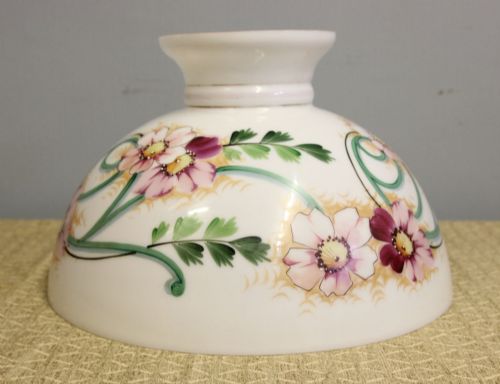
Metal fittings in brass, bronze, or copper often accompany the glass elements, secured via collars, screws, or ormolu mounts. Surface decoration occasionally incorporates gold leaf, hand-painted floral motifs, or raised enamel details applied directly to the glass body.
Vintage Opaline Glass Retail Price Guide 2026
Typical asking prices for vintage opaline glass among the pieces listed under this phrase on Sellingantiques today, from the lower quarter to the upper quarter. They describe what is for sale here now, not the wider market.
Listings span periods from the early nineteenth century through the Edwardian era and into Art Deco and mid-century modern designs.
Judging Quality and Execution
Quality rests in the purity and density of the glass body, alongside the crispness of any moulded or reeded design. Superior pieces display an even distribution of colour and opacity without swirling impurities or unintended bubbles.
The integration between the glass and its metal mounts dictates overall execution, particularly in lamps and scent bottles where brass, silver, or ormolu components must fit securely. Maker stamps and patented burner mechanisms, such as Hinks or Wild & Wessel fittings, elevate the standing of functional lighting.
Joseph Hinks·Wild & Wessel·Portieux Vallerysthal·Baccarat
The Vintage Opaline Glass Glossary
- Opaline Glass
- A dense, translucent or opaque glass developed in pastel colours to imitate porcelain. It diffuses light gently and takes various moulded forms.
- Plafonnier
- A ceiling-mounted light fixture with a bowl-shaped shade positioned flat against the ceiling. These distribute ambient light downward.
- Oil Lamp
- A domestic lighting device burning paraffin or oil through a wick, usually regulated by a metal burner. Many period examples now convert to electricity.
- Ormolu
- Gilt bronze mounted onto decorative objects or lamps. It provides a bright metallic contrast to the matte surface of opaline glass.
- Lustre
- A decorative table ornament featuring hanging crystal prisms or pendants around a central glass vase. These scatter candlelight or daylight.
Vintage Opaline Glass: Frequently Asked Questions
How do I clean opaline glass?
Wash the glass gently in lukewarm soapy water using a soft cloth, avoiding abrasive pads that might scratch the surface.
Dry thoroughly with a lint-free towel, taking care around delicate brass mounts or hand-painted enamel details.
Are these lamps safe to use?
Period lamps and pendants generally require rewiring by a qualified electrician to meet current safety standards before domestic installation.
Retaining original burners and brass collars preserves historical integrity while allowing modern internal wiring.
What colours did opaline glass come in?
Production spanned dense white, soft pink, turquoise, green, blue, and occasionally uranium glass which glows under ultraviolet light.
Colours derived from metallic oxides added during the melting process to create solid or shaded tints.
How do I date an opaline piece?
Dating relies on stylistic clues, metal hardware patents, burner types, and mounting techniques typical of Victorian, Edwardian, or Art Deco periods.
Maker stamps on metal components or registry marks on the glass itself provide precise chronological anchors.