


Vintage Opal Gold Necklace
A vintage opal gold necklace brings together the shifting play of colour in the stone and the warm weight of gold.
Vintage Opal Gold Necklace
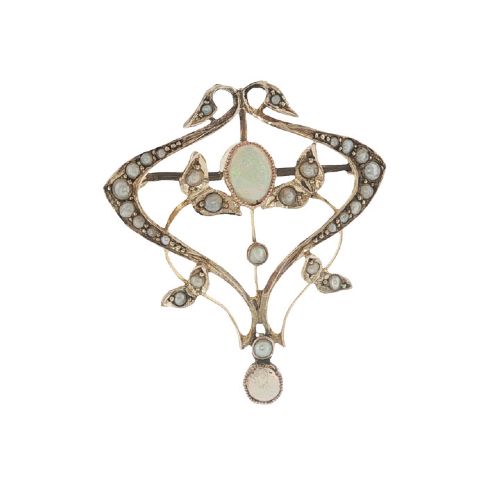
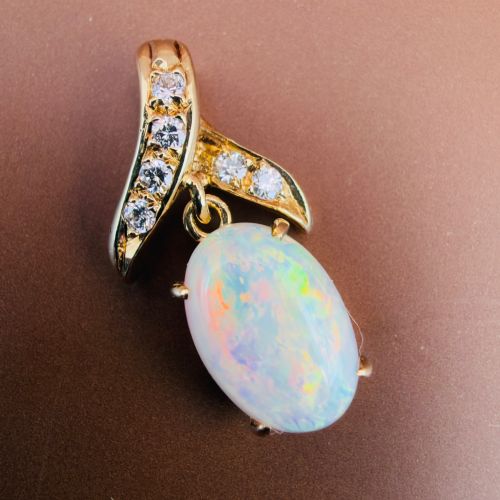
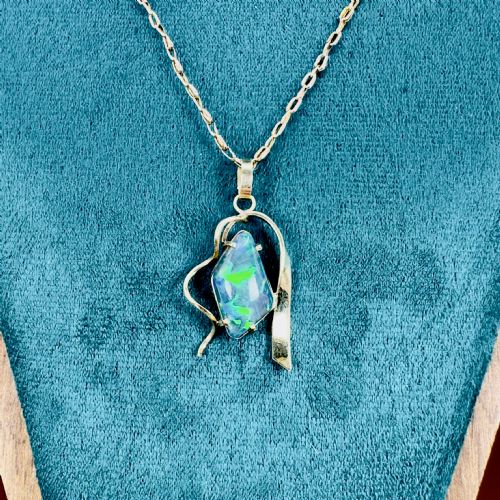
A vintage opal gold necklace centres on pendants and necklaces featuring opals set in various purities of gold, spanning the Edwardian era through the mid-twentieth century. When searching for a vintage opal gold necklace, buyers encounter pieces ranging from delicate Edwardian filigree work to bold mid-century clusters.
The selections on this page showcase distinct periods including the 1900s, 1910s, Art Deco 1920s, 1930s, and 1950s. Forms vary from simple solitaires and heart shapes to elaborate pendant brooches and diamond-accented clusters.
Originating across multiple decades, these pieces highlight the enduring appeal of combining iridescent stones with yellow and white gold settings.
Materials and construction methods
Gold forms the structural foundation of these pieces, utilising 9ct, 10ct, 14ct, 15ct, and 18ct yellow and white gold, alongside platinum in select Art Deco designs. Stones are meticulously set into bezels, clusters, or delicate filigree frameworks.
Opals including black opals, fire opals, and doublet variants are paired with diamonds, pearls, rubies, garnets, and rock crystal. Goldsmiths employed traditional casting, hand-assembly, and fine wirework to secure the stones while maximising light entry.
The inventory spans the Edwardian period through the 1950s, encompassing solitaires, clusters, and convertible pendant brooches.
Distinguishing quality across pieces
Quality rests in the optical performance of the opal and the execution of the surrounding metalwork. Stones displaying vibrant play-of-colour across the spectrum elevate a piece above those with subdued or static flash.
Mastery in the mount matters deeply, where crisp Edwardian or Art Deco metalwork, secure stone settings, and balanced proportions distinguish finer examples from standard production.
The Vintage Opal Gold Necklace Glossary
- Play-of-colour
- The optical phenomenon where internal diffraction of light causes spectral colours to shift across the stone as the angle of view changes. This dynamic property is the primary driver of an opal's visual appeal.
- Doublet
- A composite gemstone consisting of a thin slice of natural opal glued to a darker backing material such as ironstone or onyx to enhance body tone and perceived colour intensity. These became prevalent in certain mid-century designs.
- Cabochon
- A gem cutting style featuring a convex, rounded upper surface with a flat or slightly curved base, lacking facets. This shape allows opals to display their internal fire most effectively.
- Filigree
- Ornamental work consisting of fine, twisted gold or silver wire soldered together in openwork patterns. It defines much of the delicate metalwork seen in Edwardian and Art Deco pendant designs.
- Cluster
- An arrangement of smaller gemstones grouped tightly around a larger central stone. In these listings, diamonds frequently surround a central opal in this formation.
Vintage Opal Gold Necklace: Frequently Asked Questions
How do I care for my opal necklace?
Opals contain water within their structure and require gentle handling to preserve their integrity. Avoid exposing them to harsh chemicals, ultrasonic cleaners, or sudden temperature extremes.
Store the necklace away from direct sunlight and dry environments. Wipe the gold and stone gently with a soft, damp cloth after wearing.
What is the difference between a doublet and a solid opal?
A solid opal consists entirely of natural opal material throughout its mass. A doublet layers a thin slice of natural opal over a dark backing to strengthen the stone and deepen the perceived play-of-colour.
Both forms appear in vintage jewellery, with doublets offering a larger visual presence at a different structural composition.
How can I date an Edwardian opal pendant?
Edwardian pieces typically feature platinum-topped gold, intricate millegrain edges, and delicate filigree work inspired by garlands and lace. The motifs lean toward light, airy designs executed around 1910.
Examining the purity marks and the specific style of the gold setting helps confirm the era of manufacture.
Can I wear my vintage opal necklace every day?
Opals are softer than diamonds or sapphires, rating around five to six on the Mohs hardness scale. Daily wear requires mindfulness to prevent knocks against hard surfaces.
Removing the necklace during physical tasks or sports ensures the claws and delicate gold settings remain secure.