




Vintage Opal Diamond Ring
A vintage opal diamond ring brings together the shifting play of colour in an opal and the steady flash of diamond.
Vintage Opal Diamond Ring
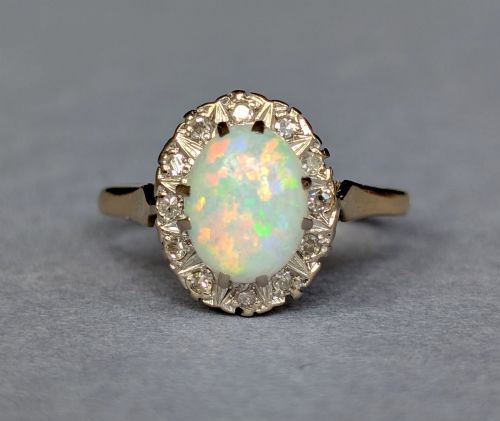
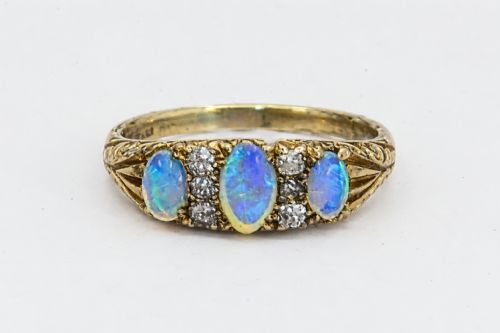
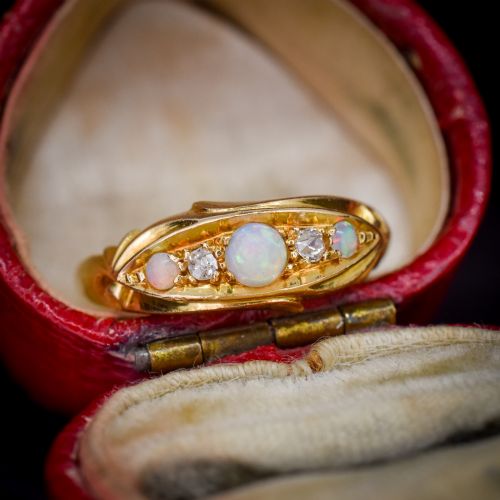
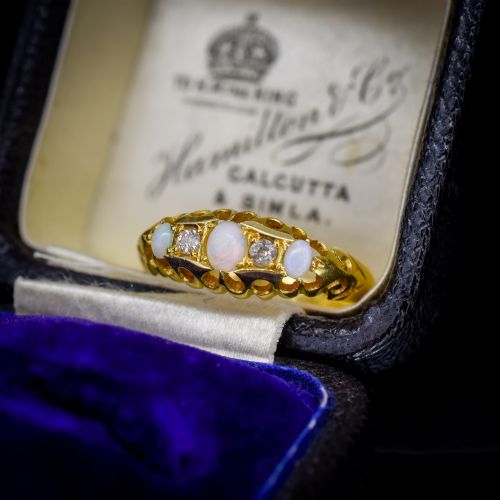
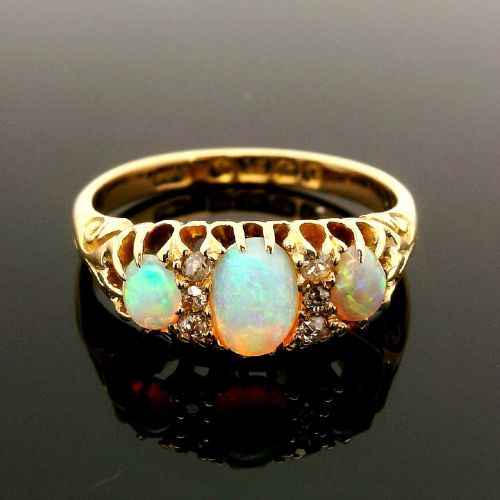
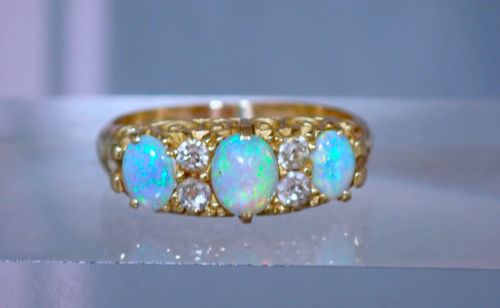
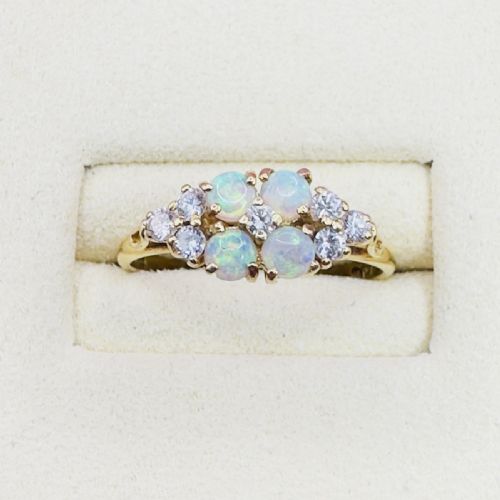
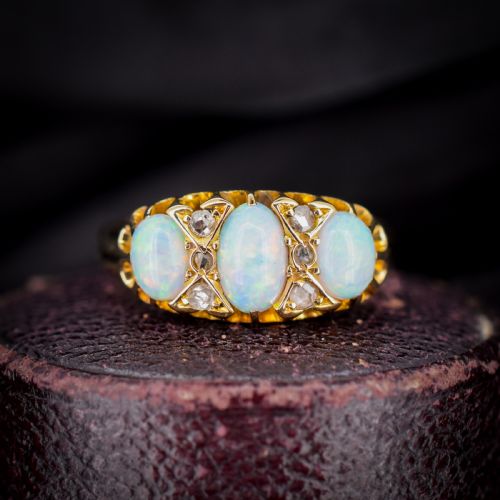
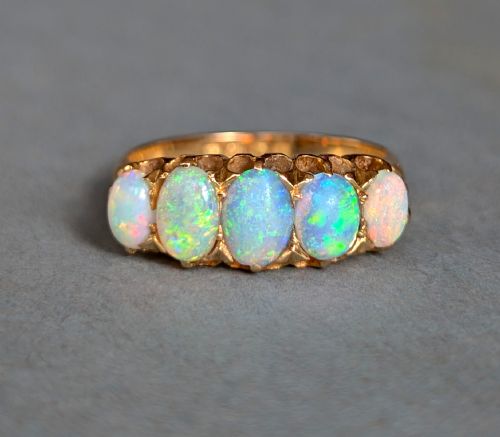
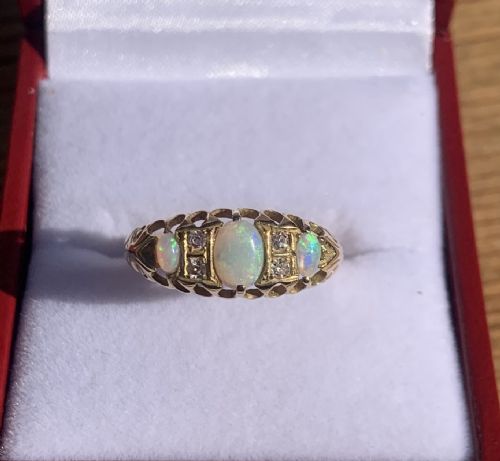
A vintage opal diamond ring brings together the shifting play of colour in an opal and the steady flash of diamond, forming a piece born for hand wear. You encounter these most often as boat rings, cluster configurations, or three-stone arrangements set during the Edwardian, Victorian, and mid-century decades.
The materials span yellow gold, white gold, platinum, and lower carat gold, reflecting the shifting tastes of the nineteenth and twentieth centuries. Makers arranged these stones into cocktail rings, dress rings, and traditional classic bands that sit low on the finger.
The selection ranges from nineteenth-century natural opal examples to later twentieth-century cluster designs. Each era brought distinct mounting styles, from platinum crossover wires to substantial yellow gold claws.
How they were made
Goldsmiths fashioned these mounts primarily in 18ct yellow gold, 18ct white gold, 9ct gold, and platinum, using hand-beaten sheet and cast elements to secure the gems. Stones were held by claws, grain settings, or low bezels designed to protect the softer opal from daily impacts.
Diamonds were cut as rose cuts or early brilliant cuts to scatter light around the central cabochon opal. Metals like platinum were often employed in Edwardian and Art Deco pieces to create fine, lace-like wirework without adding heavy weight to the hand.
The material record shows a strong preference for 18ct yellow gold and platinum mounts across Victorian, Edwardian, and mid-century examples.
What varies in quality
Quality rests primarily on the depth and spread of colour play within the opal, alongside the matching and clarity of the supporting diamonds. An opal with strong green, red, and blue flashes across the entire stone commands greater attention than one with dull or flat patches.
The integrity of the setting also shapes the piece, as secure claws and substantial shank walls protect the softer opal cabochon from wear over generations. Hallmarks stamped into the metal provide clear markers of origin and date.
The Vintage Opal Diamond Ring Glossary
- Cabochon
- A gemstone cut with a smooth, rounded, convex top rather than faceted planes. This shape is essential for opals to display their internal play of colour.
- Boat ring
- A ring setting shaped like the hull of a boat, curving upward toward the centre to hold a row of stones. This silhouette appeared frequently in Edwardian and Victorian workshops.
- Trilogy ring
- A ring featuring three main stones set in a row, often symbolizing past, present, and future. In these pieces, an opal typically sits flanked by two diamonds.
- Rose cut
- A vintage diamond cut featuring a flat base and a domed crown of triangular facets arranged in a star shape. It produces a soft, candlelit glow rather than sharp brilliance.
- Play of colour
- The optical phenomenon where spectral colours flash across an opal as the stone moves in the light. This effect arises from the diffraction of white light through microscopic silica spheres.
Vintage Opal Diamond Ring: Frequently Asked Questions
How do I clean my opal ring?
Clean your opal ring using warm water and a soft cloth, avoiding harsh chemical dips or ultrasonic cleaners that can dry out or fracture the stone.
Opal contains water within its structure, so prolonged soaking in water or exposure to extreme heat can cause permanent damage to the gemstone.
Can I wear an opal ring every day?
You can wear an opal ring daily provided you take care, as opals are softer than diamonds and prone to scratching against hard surfaces.
Removing the ring during manual tasks, gardening, or sleeping helps preserve the integrity of both the central stone and the surrounding gold or platinum setting.
How do I tell an Edwardian opal ring from a Victorian one?
Edwardian opal rings frequently utilise platinum settings combined with delicate openwork and lace-like wire patterns, often featuring white opals alongside small diamonds.
Victorian pieces tend to use heavier yellow gold mounts, sometimes incorporating rose-cut diamonds and rubies in robust cluster or boat configurations.
What is a cluster ring?
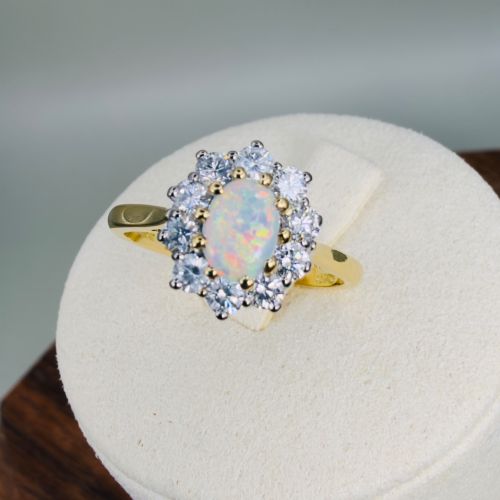
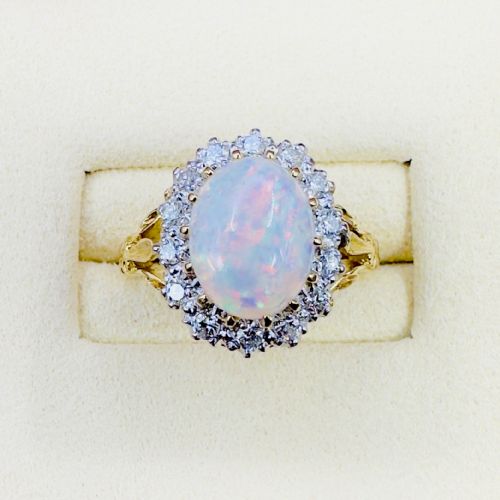
A cluster ring arranges a central gemstone, such as an opal, surrounded by a tight ring of smaller accent stones like diamonds.
This layout maximises overall visual impact on the hand by creating a larger focal area from a collection of distinct gems.