




Vintage Onyx Jewellery
Vintage onyx jewellery brings together deep black stones and bright precious metals across Victorian, Edwardian, and Art Deco designs.
Vintage Onyx Jewellery
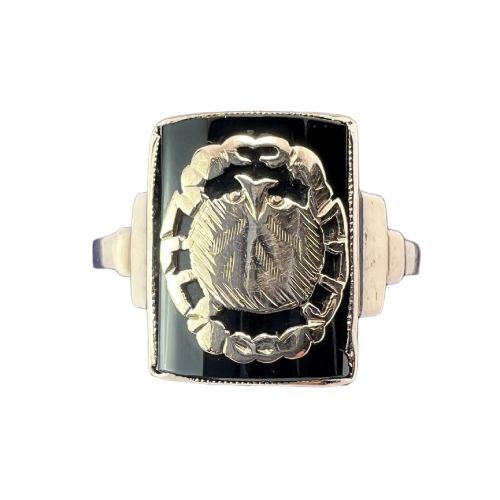
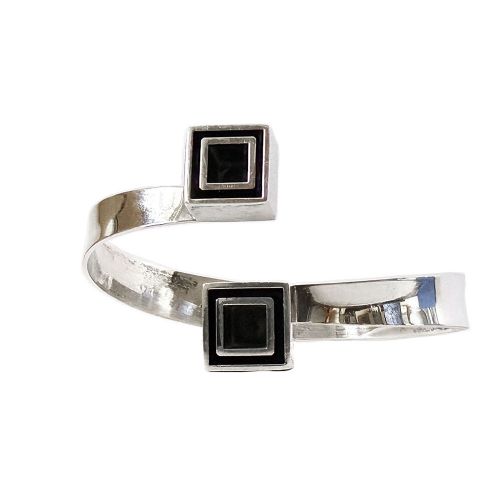
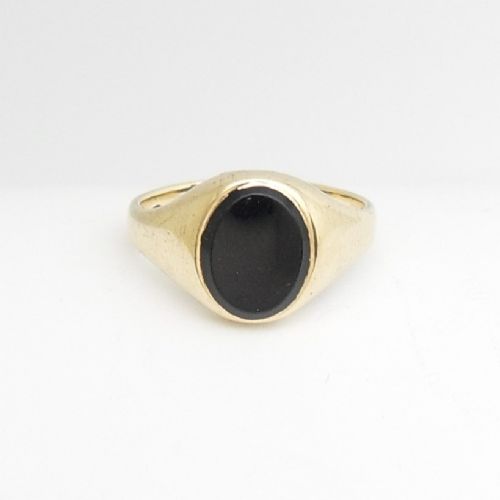
Vintage onyx jewellery encompasses rings, brooches, earrings, and necklaces featuring opaque black chalcedony set in gold, silver, or platinum. Buyers seeking this category encounter pieces stretching from the nineteenth century through the mid-twentieth century.
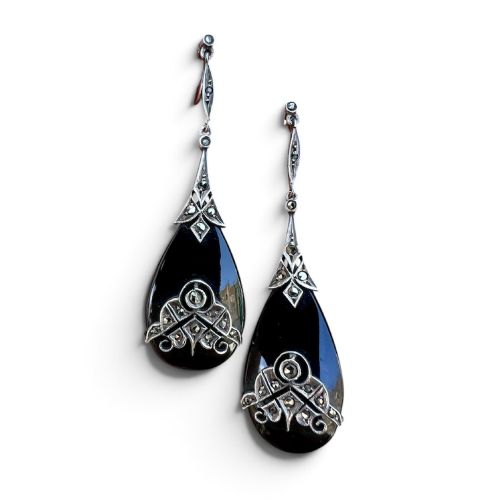
The Art Deco era dominates the selection, bringing geometric platinum and white gold mountings set with stark black onyx and contrasting diamonds. Alongside these sharp monochrome pieces, Victorian and Edwardian examples utilise yellow gold and softer carved forms.
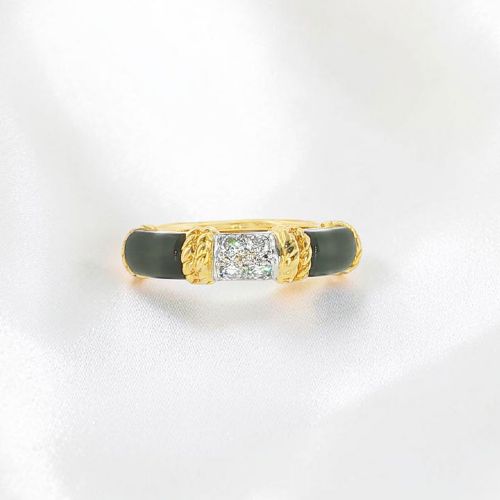
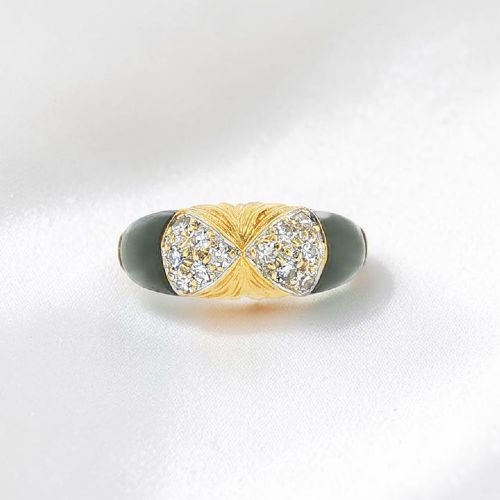
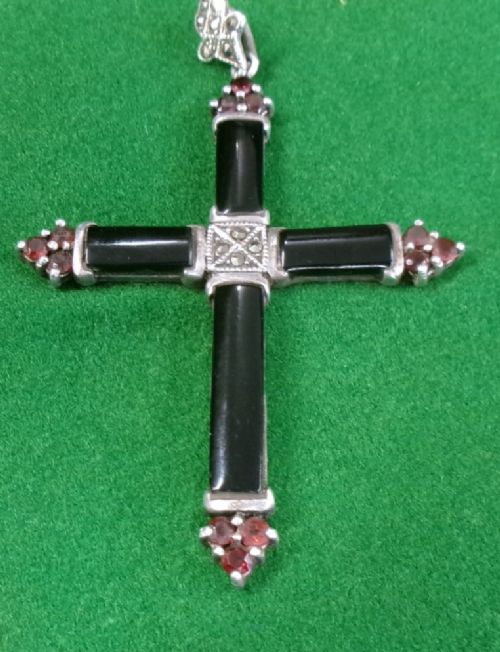
Earrings, signet rings, and target rings appear frequently alongside larger statement brooches and pendant necklaces. Each period brings a distinct structural language, shifting from ornate Victorian scrollwork to clean modernist lines.
Materials and construction
Goldsmiths and platinumsmiths shaped precious metals into intricate pierced filigree, heavy signet bands, and sharp geometric cluster settings. Black onyx served as both a primary structural plate and a dark contrasting inlay against sparkling diamond pavé.
Lapidaries cut the onyx into flat tablets, cabochons, and teardrop drops, often bevelating edges to fit flush within metal channels. Stones were securely bezel-set or held by delicate grain settings alongside pearls, spinels, and marcasite.
Listings span Victorian, Edwardian, and Art Deco periods, utilising platinum, white gold, yellow gold, and silver.
What separates the finest examples
Quality rests upon the precision of the stone cutting and the integrity of the metalwork. Superior pieces exhibit seamless stone-to-metal tolerances without gaps in the bezels.
The prestige of the workshop elevates certain items, particularly signed French and British creations from established makers. Gemstone selection also dictates standard, where high-colour diamonds and unblemished chalcedony mark out the exceptional pieces.
Kutchinsky·Kria Gioielli·Chaumet·Cartier Paris
The Vintage Onyx Jewellery Glossary
- Onyx
- A dense, opaque variety of chalcedony quartz that takes a high, glass-like polish. It provides the signature inky ground in monochrome jewellery designs.
- Target ring
- A concentric ring design featuring a central stone surrounded by one or more contrasting circular bands of gemstones. This style flourished during the Art Deco period.
- Cabochon
- A gemstone shaped with a smooth, rounded, convex upper surface rather than faceted planes. This cut highlights the deep, uninterrupted sheen of black stones.
- Filigree
- Delicate openwork jewellery formed from fine twisted threads of gold or silver soldered together. It creates lace-like patterns surrounding central stones.
- Marcasite
- Small, faceted pyrite stones polished and set closely together to resemble sparkling steel. They provide a dark metallic glitter in period brooches and earrings.
Vintage Onyx Jewellery: Frequently Asked Questions
How do I care for antique onyx jewellery?
Onyx is a relatively soft stone compared to diamond or sapphire, rating around six to seven on the Mohs scale. Clean pieces gently with a soft damp cloth rather than harsh chemical dips or ultrasonic cleaners.
Store items individually in lined boxes to prevent harder gemstones from scratching the polished black surface. Avoid wearing them during manual tasks to protect the delicate metal settings.
How do I date a piece of onyx jewellery?
Dating relies upon a combination of metal hallmarks, gemstone cuts, and overall design style. Victorian pieces often use heavy yellow gold and closed-back settings, while Art Deco items favour platinum, white gold, and geometric layouts.
Maker marks and registration numbers stamped on the shank or clasp provide precise chronological clues. Comparing the construction methods against known historical periods confirms the era of manufacture.
Is black onyx always natural?
Much of the historical black chalcedony used in jewellery underwent treatment to enhance its uniform colour. This historical practice involved soaking grey chalcedony in sugar solutions and acid.
Natural black stones exist, but treated varieties have been common since antiquity due to the stone's porous nature. Both historical treated stones and natural specimens hold equal place in antique collections.
Can I resize an antique onyx ring?
Resizing depends entirely on the construction of the shoulders and whether the onyx forms a continuous structural band. Plain signet rings and simple gold shanks usually allow straightforward adjustment by a skilled jeweller.
Complex Art Deco mounts with channel-set stones risk fracture or distortion if heated near the gems. Consult a specialist familiar with antique settings before attempting any alterations.