

Vintage Office Seat
A vintage office seat brings sturdy period character to a workspace, combining practical swivel mechanisms with traditional timber frames.
Vintage Office Seat
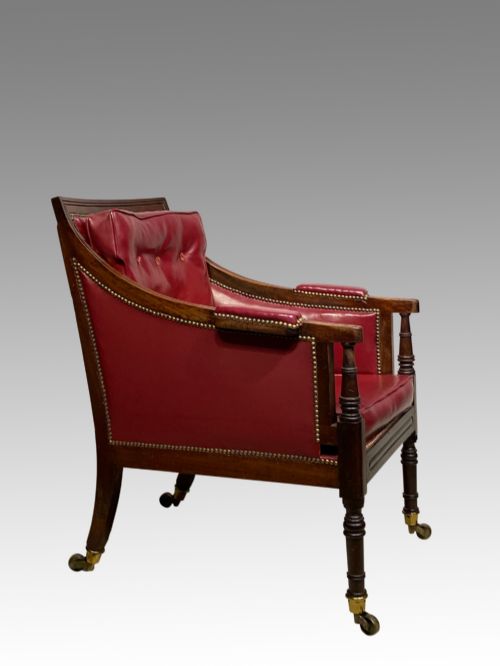
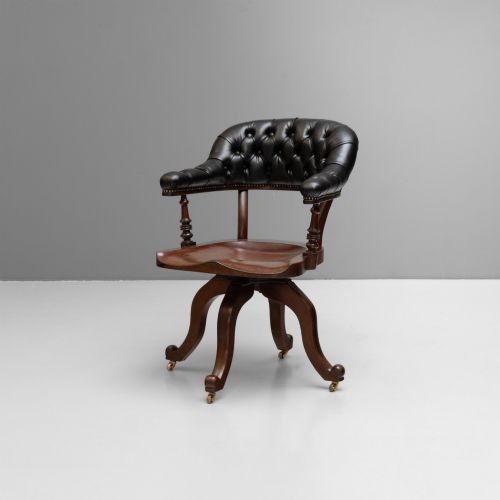
A vintage office seat covers a range of traditional seating designed for workspace utility, including revolving desk chairs, library chairs, and captain's chairs. These pieces originate from periods spanning the Victorian and Edwardian eras into the early twentieth century.
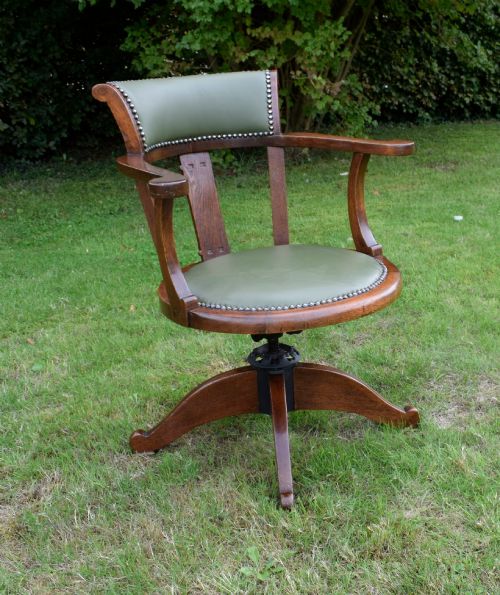
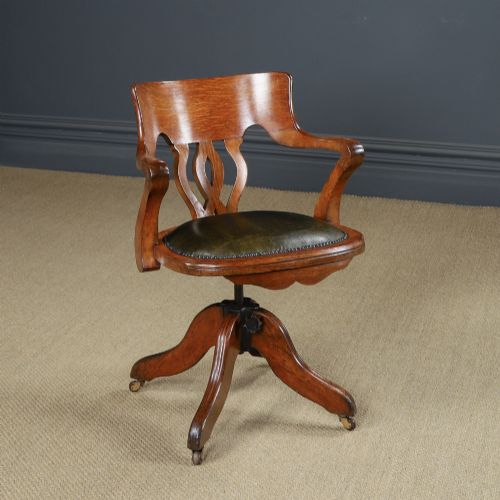
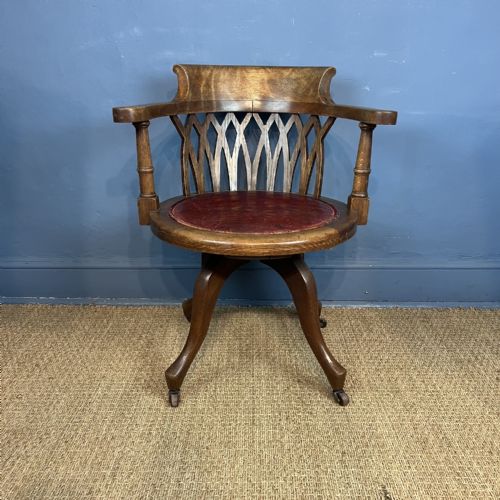
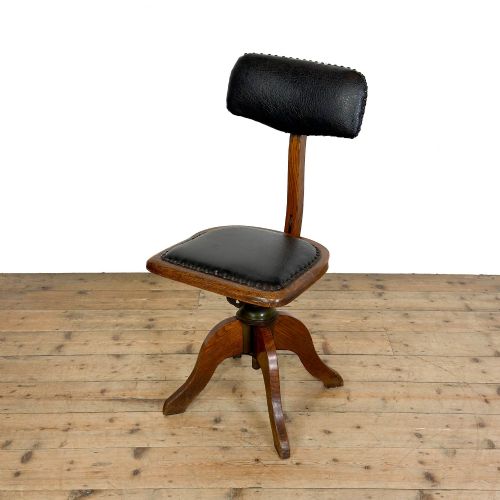
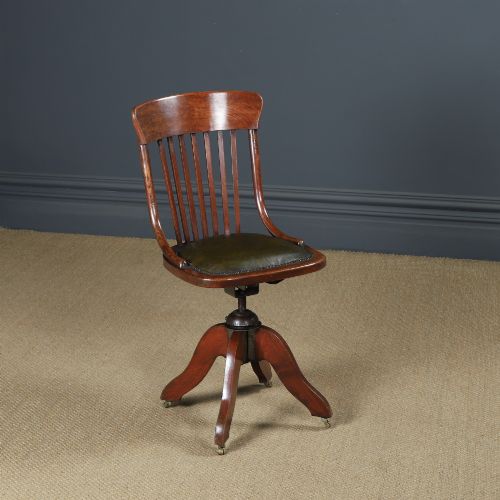
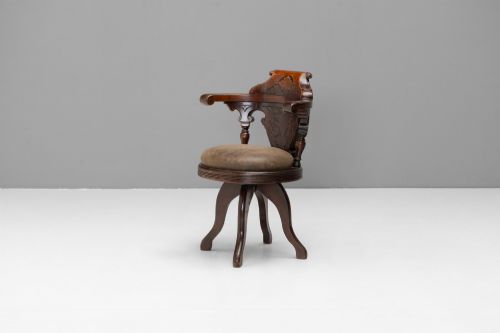
The most common form met here is the revolving oak desk chair, often featuring a swivel and tilt mechanism paired with leather upholstery. Other frequent types include mahogany armchairs and beech side chairs built for sustained daily use.
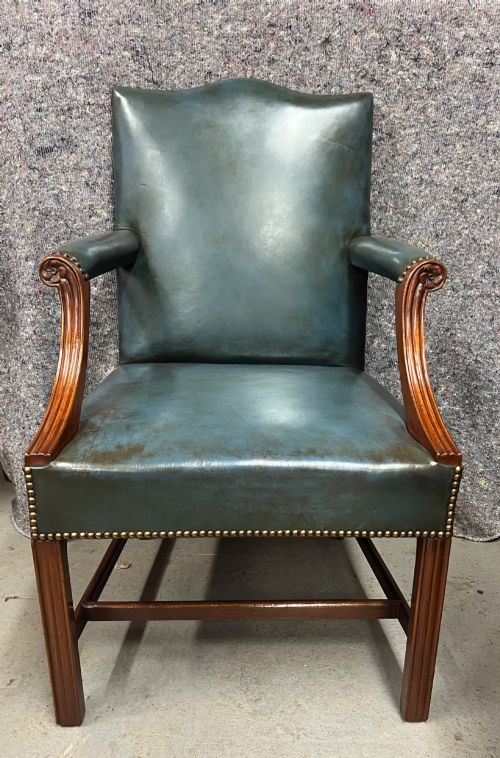
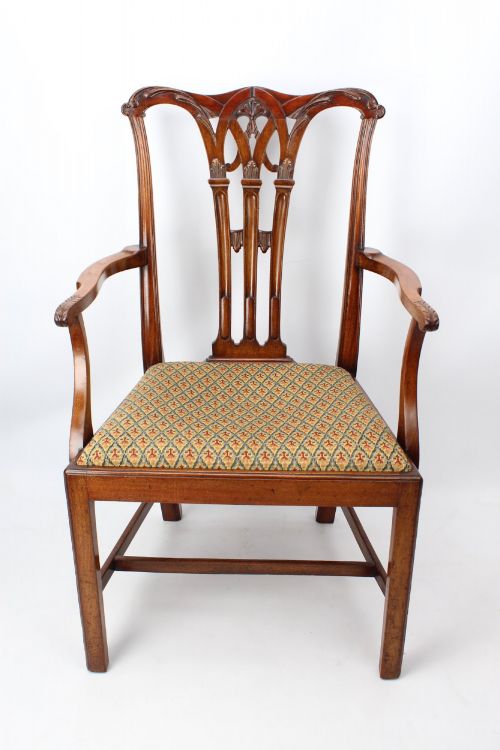
Makers drew on established cabinet-making styles such as Georgian, Chippendale, and Arts and Crafts to shape these working chairs. The selection ranges from robust oak constructions to refined mahogany library seating.
Materials and construction
Timbers form the core of these pieces, with oak and mahogany appearing most frequently alongside walnut, beech, elm, and rosewood. Solid wood frames provide the structural foundation necessary for mechanical swivel and tilt hardware.
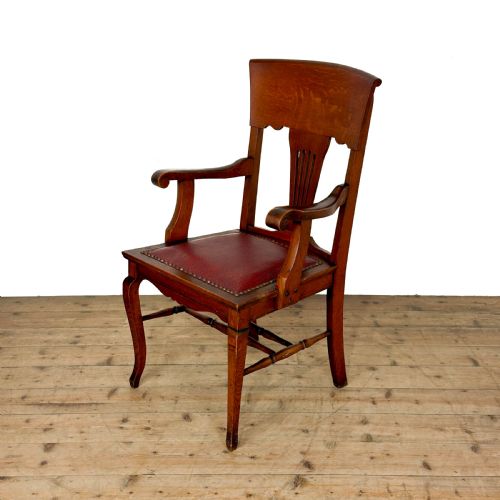
Upholstery typically employs leather or hide, secured with brass studs to seat pads and curved backrests. Metal and cast iron components appear in the adjustable swivel mechanisms and underframes that allow movement.
Ships and high seas travel contributed revolving chairs designed to keep sitters steady in transit.
Assessing quality and craftsmanship
Quality rests primarily in the timber selection and the integrity of the revolving mechanism. Solid oak and finely figured mahogany frames with smooth swivel and tilt actions stand above simpler beech or mixed-wood builds.
The finish of the upholstery and the subtlety of stylistic details further distinguish the range. Hand-tooled leather seats and inlaid mahogany woodwork separate standard utility seating from finer library and parlor pieces.
The Vintage Office Seat Glossary
- Swivel chair
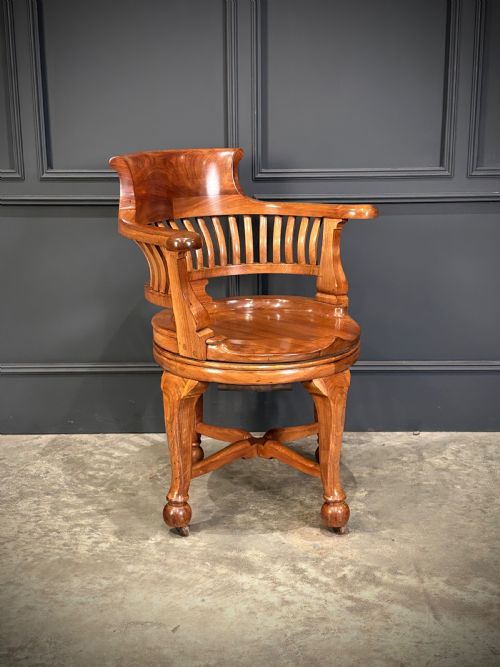
- A chair with a seat that can revolve horizontally on a central pivot. This mechanism is common in early twentieth-century desk chairs.
- Captain's chair
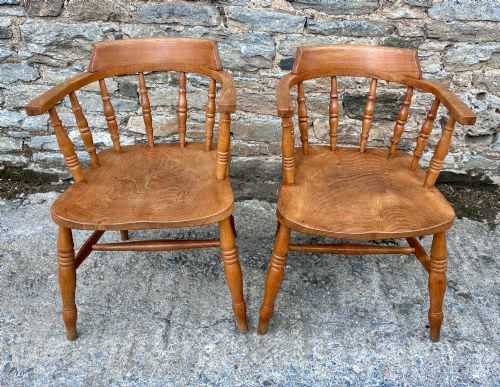
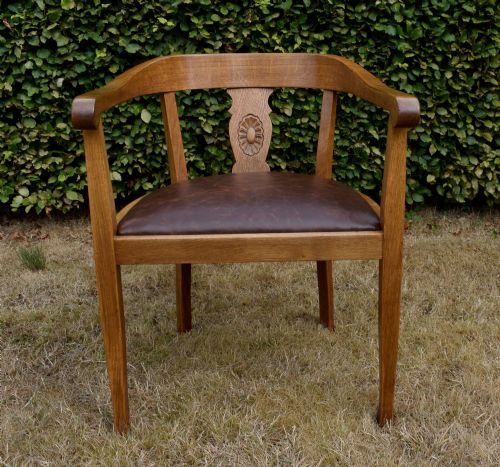
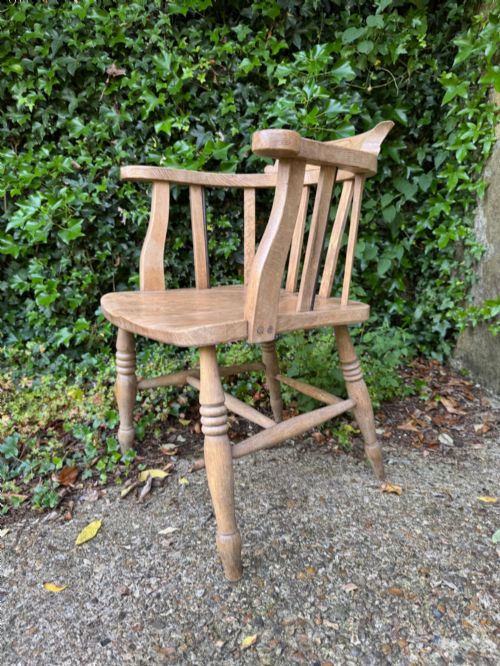
- A sturdy wooden armchair with a low, rounded back rail supported by spindles. These pieces offer comfortable support for prolonged sitting.
- Library chair
- An upholstered armchair designed for reading rooms and studies. They often incorporate mahogany frames and leather seating.
- Bergere
- A type of enclosed upholstered armchair with wooden framing. Examples in this category utilise woven cane or solid upholstered panels.
- Smokers bow
- A low wooden armchair with a rounded back, similar to a Windsor chair. They frequently serve as sturdy office or desk seating.
Vintage Office Seat: Frequently Asked Questions
How do I identify an Edwardian desk chair?
Edwardian desk chairs often combine oak or mahogany frames with lighter inlaid decoration and simpler lines than their Victorian predecessors.
They frequently incorporate revolving mechanisms and green or tan leather seats dating from the early twentieth century.
Are all vintage office chairs height adjustable?
Many examples feature rise and fall swivel mechanisms that allow the seat height to be altered.
However, some stationary library chairs and armchairs rely on fixed wooden frames without mechanical adjustment.
What is the difference between a captain's chair and a desk chair?
Captain's chairs typically feature solid wooden saddle seats and continuous curved back rails supported by spindles.
Desk chairs in this category more often include revolving bases, tilt actions, and leather upholstery designed for office use.
How do I care for leather desk chair upholstery?
Leather seat pads and backrests benefit from regular dusting and occasional conditioning to maintain suppleness.
Keeping the hide away from direct heat sources prevents drying and cracking over time.