



Vintage Oak Washstand
A vintage oak washstand brings practical timber character and period utility to a bedroom or bathroom.
Vintage Oak Washstand
A vintage oak washstand represents a utilitarian bedroom piece designed for washing before indoor plumbing became universal in every room. These items typically emerge from periods spanning the late Victorian era through the Edwardian years and into the 1930s, reflecting changing domestic habits.
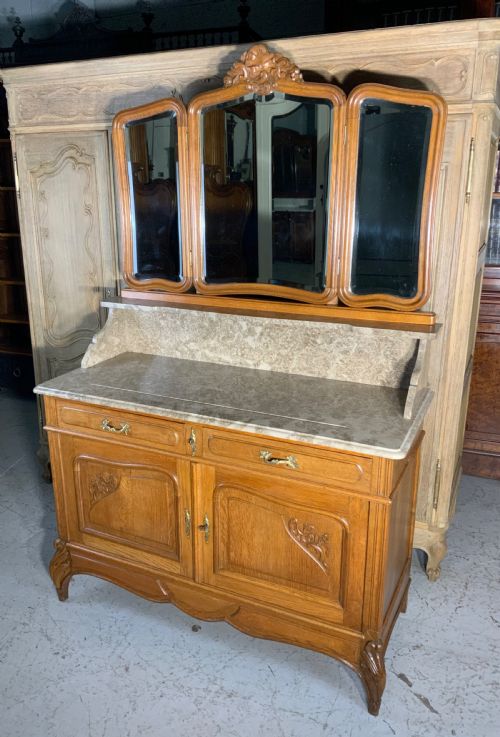
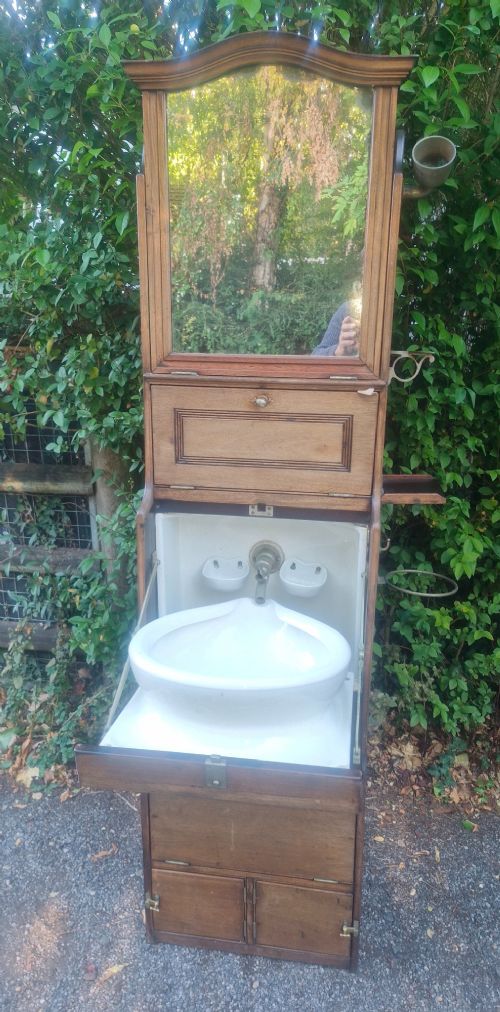
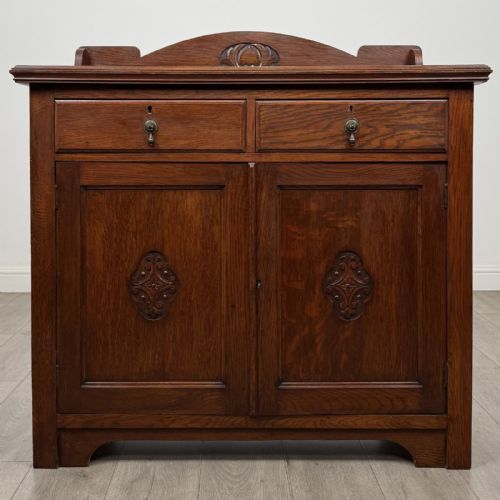
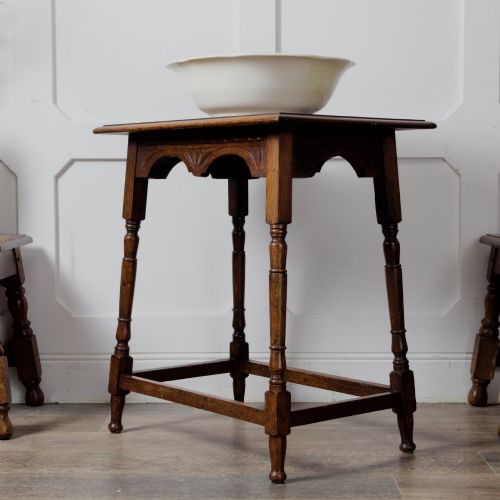
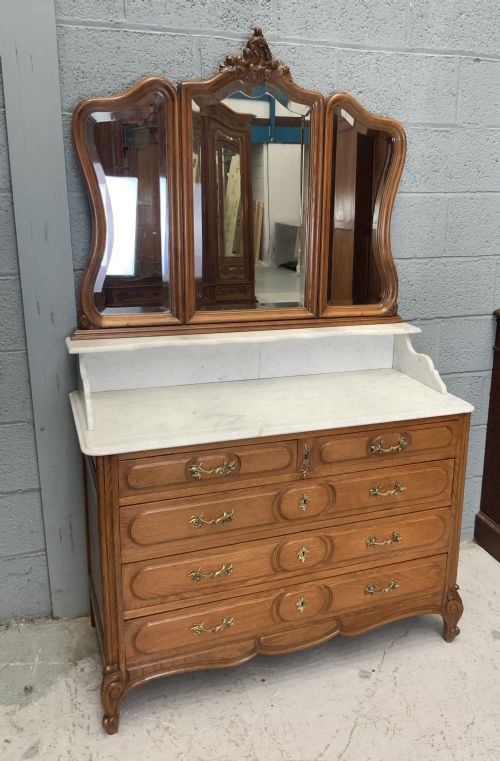
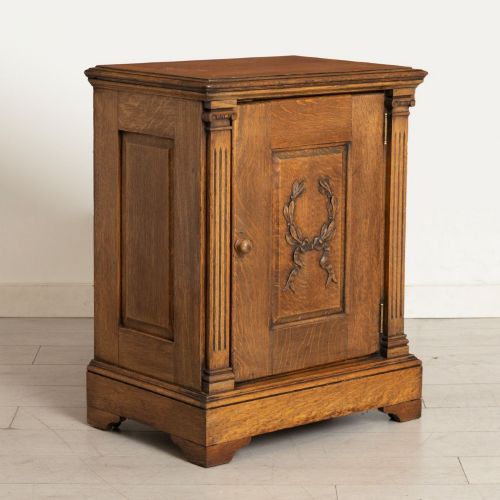
The most frequent examples on this page are constructed from solid oak or feature carved decorative details, often linked to Arts and Crafts designs. Alongside standard washstands, related forms include side tables, dressing stands, and gentlemen's shaving stands.
Origins stretch across English workshops and French provincial iterations, encompassing styles from Gothic Revival to Art Deco. Buyers encounter items that combine traditional timber frames with functional surfaces intended for daily personal care.
How they were made
Construction relies heavily on solid oak, shaped through period carpentry techniques that often incorporate hand carving on doors, panels, and frames. Joinery prioritises sturdy domestic utility to support daily use in bedrooms.
Many washstands incorporate contrasting materials into their timber frames, most notably marble tops, ceramic tiles, and granite surfaces designed to resist water. Brass fittings, glass elements, and ceramic basins complete the functional composition.
Vintage Oak Washstand Retail Price Guide 2026
Typical asking prices for vintage oak washstand among the pieces listed under this phrase on Sellingantiques today, from the lower quarter to the upper quarter. They describe what is for sale here now, not the wider market.
Materials recorded across the inventory include solid oak, marble, granite, brass, ceramic tiles, and glass.
What varies in quality
Quality depends upon the integration of superior materials, such as heavy marble or granite slabs fitted neatly into carved solid oak frames. Finer examples display crisp, deliberate carving rather than plain surfaces or later alterations.
Construction integrity separates standard utility pieces from high-grade workshop production, particularly in the tightness of the joinery and the selection of figured timber. The presence of original hardware, such as brass pulls and ceramic components, elevates the standing of an individual piece.
James Shoolbred
The Vintage Oak Washstand Glossary
- Arts and Crafts
- A design movement prioritising traditional craftsmanship, visible construction, and simple forms. This style often uses solid oak without excessive surface ornamentation.
- Marble Top
- A stone slab fitted to the upper surface of a washstand to provide a waterproof workspace. These slabs vary in colour and veining according to the geological source.
- Shaving Stand
- A specialised piece of bedroom furniture featuring an adjustable mirror and small surfaces for grooming equipment. These often date from the Edwardian period.
- Gothic Revival
- An architectural and decorative style drawing inspiration from medieval buildings. Pieces display pointed arches, heavy mouldings, and deep relief carving.
- French Provincial
- A regional styling approach applied to furniture outside major urban centres. These pieces frequently exhibit softer curves and carved motifs distinct from strict English cabinetry.
Vintage Oak Washstand: Frequently Asked Questions
How were washstands originally used?
These pieces served as washing stations before plumbed bathrooms became standard in homes. They held basins, pitchers, and toiletries for morning routines.
Today, buyers repurpose them as bathroom sink vanities or hallway side tables, making use of the durable wooden surfaces and storage cupboards.
Are marble tops original to the washstands?
Many marble and granite tops are original components designed to handle water splashes safely during daily washing. They sit loose within the wooden frame or are secured by gravity and weight.
Checking the fit against the oak surround helps confirm whether the stone belongs to the piece from its period of manufacture.
How do I date an oak washstand?
Dating relies on stylistic clues, hardware choices, and construction methods visible across different eras. Victorian and Gothic Revival examples show heavier carving, while Edwardian and Arts and Crafts versions lean toward simpler lines.
Makers' marks, brass lock mechanisms, and tile designs also offer chronological markers for narrowing down the decade of production.
Can I use a vintage washstand as a modern vanity?
Many owners adapt these cabinets to house modern plumbing by cutting holes in the wooden or stone tops for basins and pipes. Solid oak construction accommodates these alterations well when handled carefully.
Retaining the original internal shelf space while making room for modern plumbing requires careful planning by a skilled fitter.