




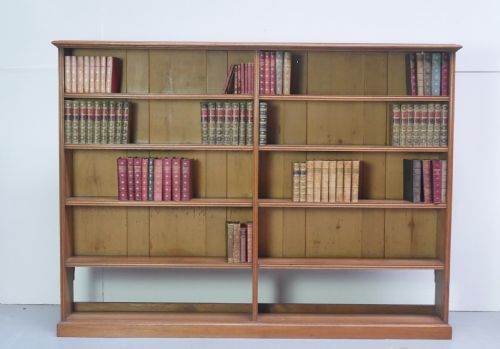
Vintage Oak Wall Shelf
A vintage oak wall shelf brings honest timber and simple utility to an interior, hanging close to the wall to hold plates, books or small belongings.
Vintage Oak Wall Shelf
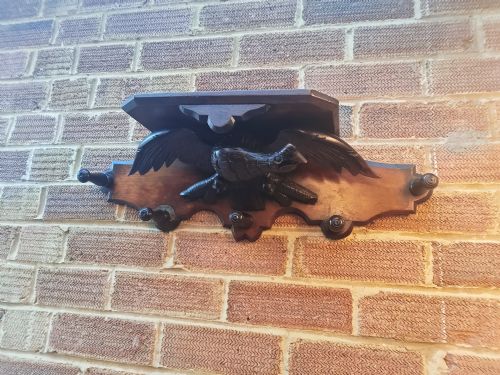
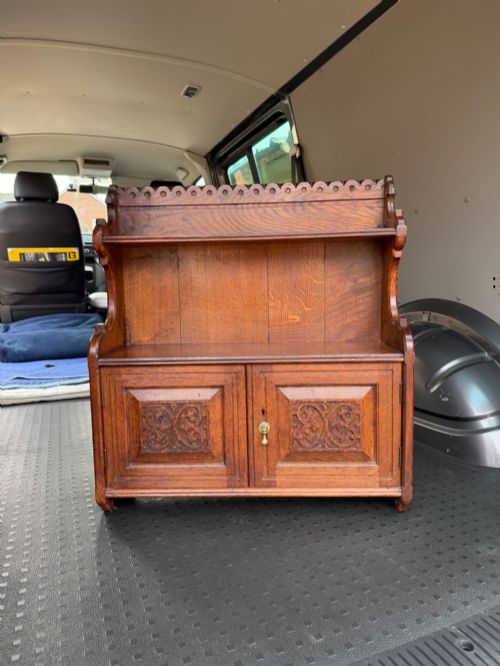
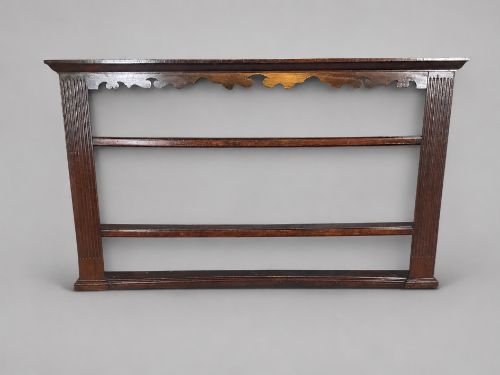
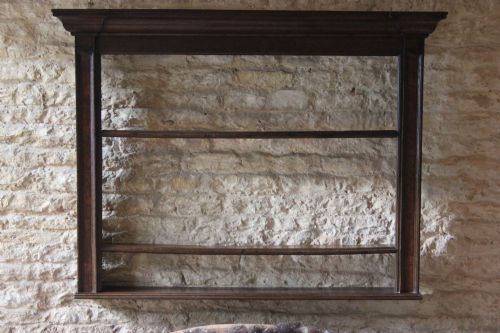
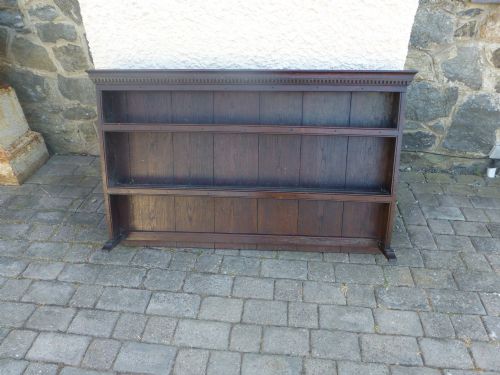
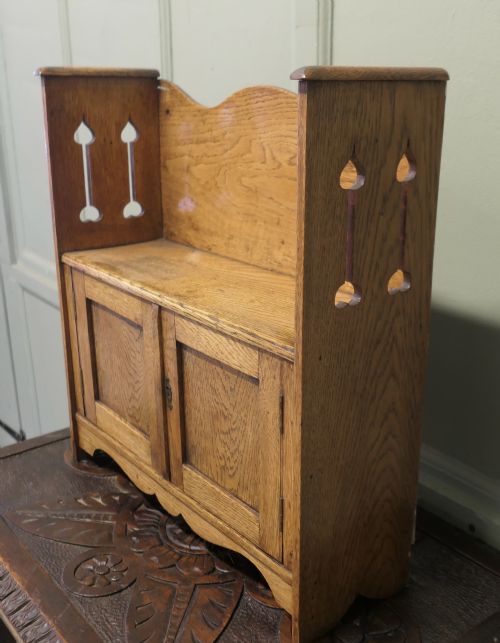
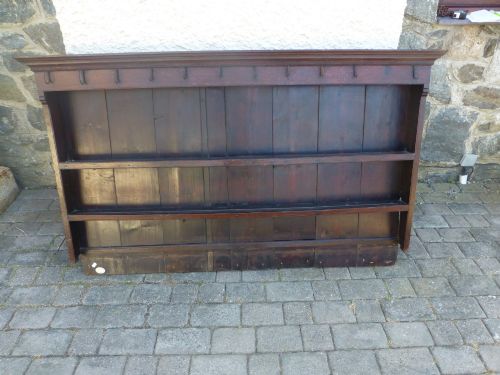
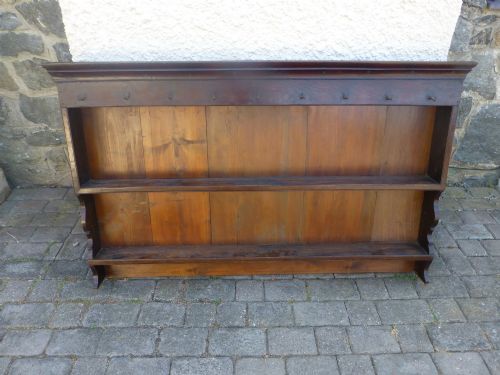
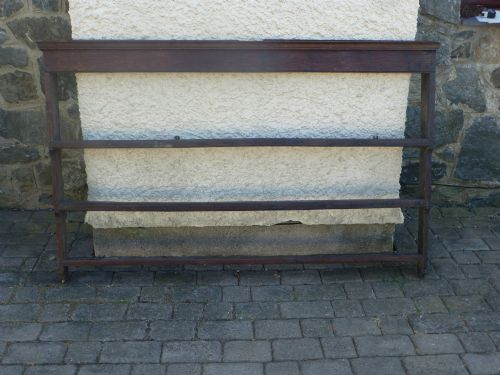
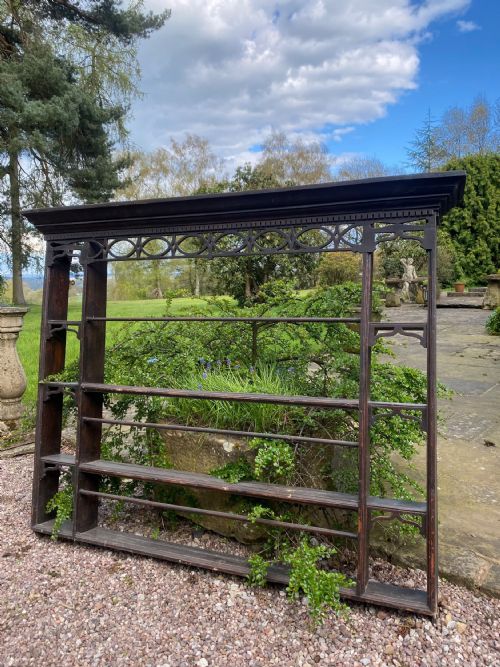
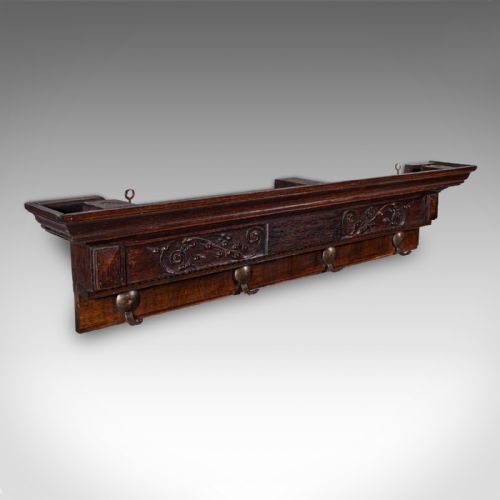
A vintage oak wall shelf spans several functional forms, appearing as eighteenth-century delft racks for displaying crockery, Edwardian coat racks with brass hooks, and Arts and Crafts hanging shelves with built-in magazine holders. These pieces provide practical storage while making use of vertical wall space in kitchens, hallways and living rooms.
The most common examples encountered on this page date from the eighteenth century through the Edwardian period, often taking the form of open plate racks or enclosed wall cabinets. They reflect domestic habits of earlier centuries, whether holding blue-and-white ceramics in a country kitchen or keeping hats and coats near a hallway entrance.
How they were made
Makers relied principally on solid oak, selected for its strength and prominent grain pattern, sometimes complemented by secondary timbers like plywood or wood veneer in later compartments. Structural elements were joined using traditional carpentry methods suited to hanging weight.
Metal fittings such as brass hooks, iron brackets and glass panels frequently accompany the timber framework, particularly on coat racks, mirrors and small wall cabinets. These fixtures provide both structural support and functional hardware for hanging items or securing doors.
Vintage Oak Wall Shelf Retail Price Guide 2026
Typical asking prices for vintage oak wall shelf among the pieces listed under this phrase on Sellingantiques today, from the lower quarter to the upper quarter. They describe what is for sale here now, not the wider market.
Object forms include plate racks, wall cabinets, mirrors, coat racks and bookcases designed for domestic interior spaces.
What varies in quality
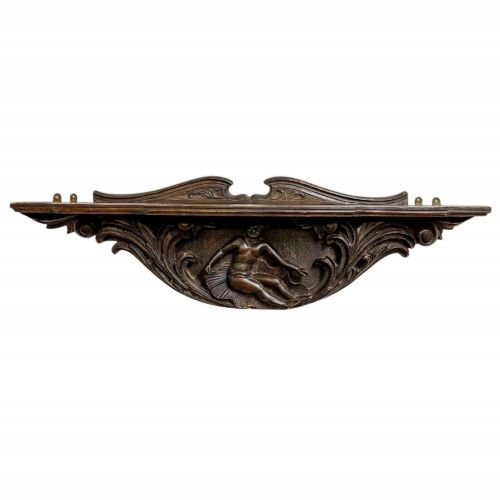
The standard of a vintage oak wall shelf depends on the crispness of any hand-carved ornamentation and the integrity of the timber joints. Pieces retaining their original hanging points and undisturbed surface patinas command greater interest than heavily altered examples.
Heals
The Vintage Oak Wall Shelf Glossary
- Delft rack
- A wall-mounted wooden shelving unit traditionally designed to display glazed earthenware plates and platters upright against grooves or wooden retaining rails. These racks form a significant portion of early oak listings.
- Arts and Crafts
- A design movement originating in the late nineteenth century that emphasised honest construction, visible joinery and simple materials. Pieces in this style often incorporate straightforward geometric lines and functional compartments.
- Overmantel
- A mirror or decorative shelf designed to be hung specifically above a fireplace mantelpiece. Edwardian and Victorian examples in oak often combine small display ledges with mirrored glass.
- Pediment
- The triangular or decorative architectural crown situated above a cabinet or shelf. Antique oak examples sometimes utilise carved pediments salvaged from larger architectural fittings.
Vintage Oak Wall Shelf: Frequently Asked Questions
How do I hang an antique oak shelf securely?
Most hanging shelves use traditional mounting points set into the vertical stiles or backboards. Fixing directly into solid wall studs or using heavy-duty wall anchors ensures the timber weight is supported safely.
Check the spacing of the original screw holes before installation to distribute the load evenly across the backplate.
How should I clean untreated oak furniture?
Dust the timber regularly with a dry, soft cloth to prevent particulate buildup in the grain. Avoid modern chemical polishes that can leave a sticky residue on historic wood.
Occasional application of microcrystalline wax helps nourish dry oak surfaces without darkening the historic patina.
Can I use an antique wall cabinet in a bathroom?
Many Edwardian and Victorian wall cabinets and mirrors were originally produced for cloakrooms, hallways or dressing rooms. Their enclosed shelving suits small personal items.
Ensure the room has adequate ventilation to protect historic oak timber and mirror silvering from excessive moisture.