




Vintage Oak Settle
A vintage oak settle brings centuries of sturdy utility and rich grain into a hallway, offering high-backed seating with built-in storage.
Vintage Oak Settle
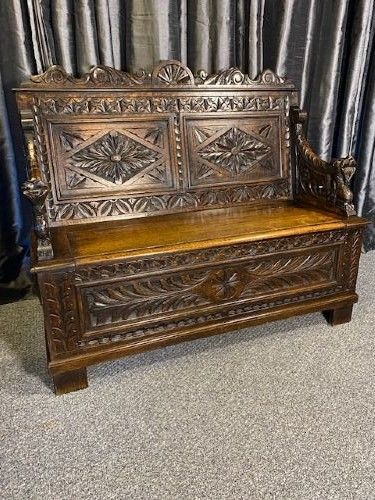
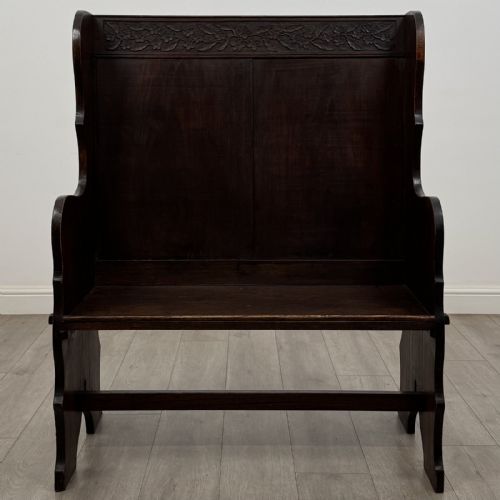
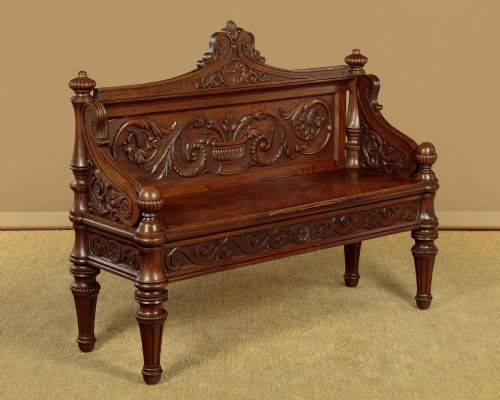
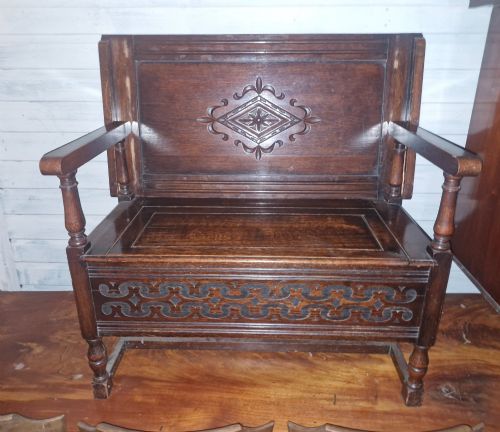
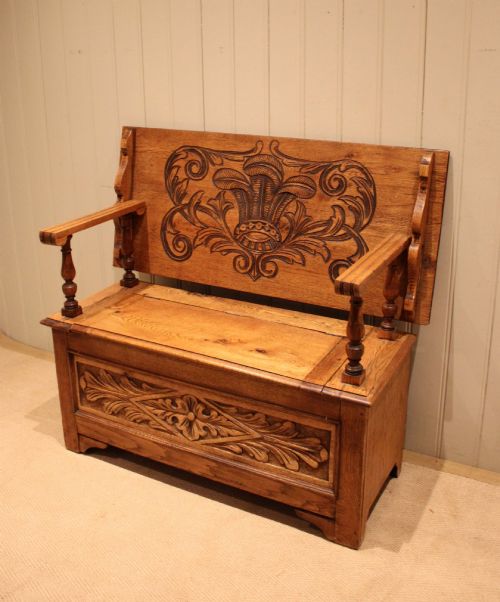
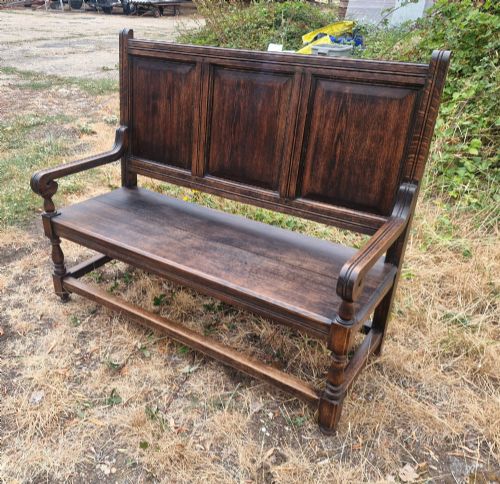
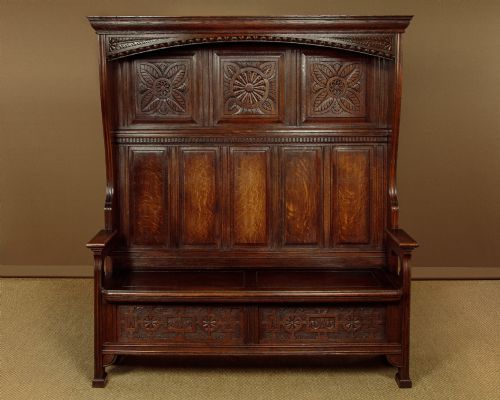
A vintage oak settle is a heavy wooden bench designed to block draughts in corridors or beside hearths, typically featuring a high panelled back and a box seat. You will frequently encounter forms adapted into monks benches, hall seats, and transformable table-top seating.
The selection spans periods from the nineteenth century through the Edwardian era into the nineteen-twenties and nineteen-thirties. Pieces often display Revival styles, Arts and Crafts movement influence, or simpler English country house characteristics.
Makers such as Liberty and Shapland and Petter appear alongside vernacular country pieces and larger salon suites. Most items are constructed from solid oak, occasionally complemented by iron or brass hardware and wool fabric upholstery.
Materials and construction methods
Makers built these benches primarily from solid oak, utilising traditional frame-and-panel construction to accommodate the natural movement of the timber over decades of use. Joinery relies on pegged mortise and tenon joints which provide the structural rigidity required for heavy seating.
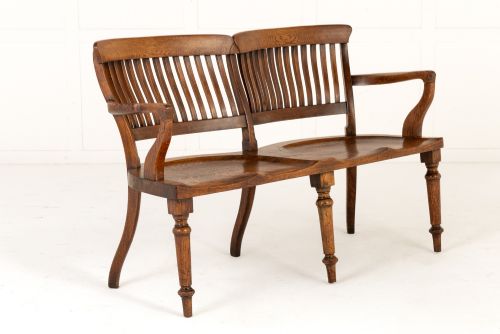
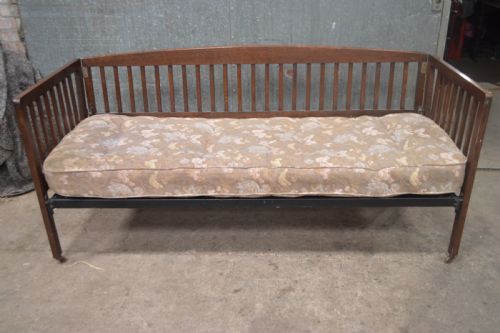
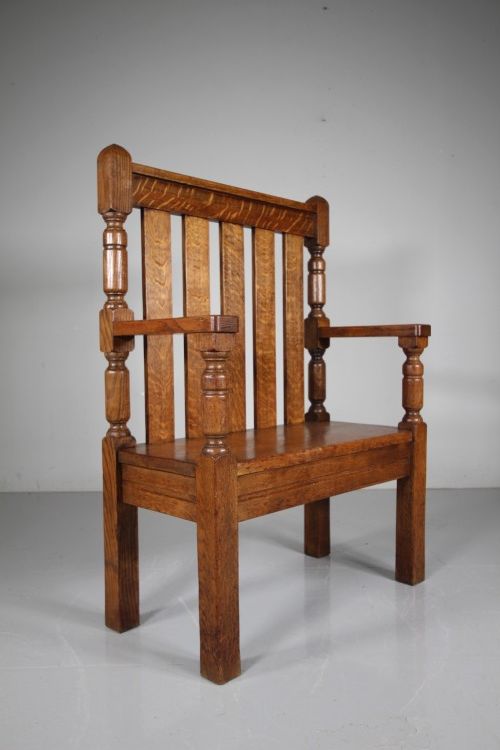
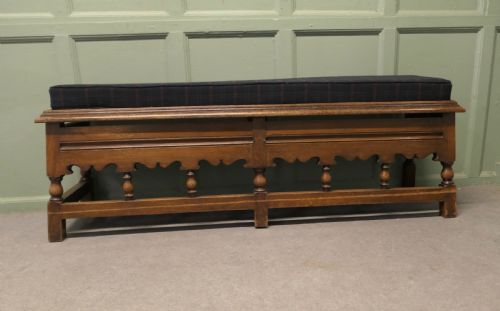
Decoration on these pieces ranges from carved panels and canopy tops to simple panelled backs and turned supports. Metal elements such as brass hinges, iron brackets, and textile additions like wool and tweed appear on specific hall seats and convertible day beds.
Vintage Oak Settle Retail Price Guide 2026
Typical asking prices for vintage oak settle among the pieces listed under this phrase on Sellingantiques today, from the lower quarter to the upper quarter. They describe what is for sale here now, not the wider market.
Some nineteenth-century oak settles doubled as impromptu indoor sledges when bored children found them unattended on polished hallway floors.
Judging the quality of a settle
Quality rests in the weight of the timber and the crispness of any carved detailing, as finer workshops employed skilled carvers for panel work. Pieces from recognised names like Liberty display superior proportion and joinery compared to standard utility workshop items.
The integrity of the lifting mechanism on monks benches and box seats determines everyday usability. Original hinges, uncompromised joints, and properly seasoned oak separate exceptional examples from heavily altered or later assembled pieces.
Liberty·Shapland and Petter·Emma Grant
The Vintage Oak Settle Glossary
- Monks Bench
- A convertible piece of furniture with a pivoting back that folds down to form a table top above a box seat. This dual-purpose form became particularly popular during the early twentieth century.
- Settle
- A wooden bench featuring a high back designed to shield occupants from cold draughts, usually incorporating a box compartment beneath the seat for storage. These items traditionally stood near fireplaces or in grand entryways.
- Arts and Crafts
- A design movement prioritising traditional craftsmanship, visible construction, and simple forms inspired by medieval and vernacular traditions. Pieces from this ethos often show hand-carved details and honest joinery.
- Jacobean Revival
- A nineteenth and early twentieth century style copying the heavy turned legs, geometric moulding, and deep panel carving of seventeenth-century English furniture. This aesthetic gives oak settles an antique appearance.
- Hall Seat
- A compact bench designed for entryways, frequently incorporating umbrella stands, coat hooks, or lift-up storage compartments for boots and textiles.
Vintage Oak Settle: Frequently Asked Questions
How do I use a monks bench?
A monks bench functions primarily as a high-backed hallway seat with enclosed storage beneath the hinged lid. By pivoting the upper back forward, the panel rests horizontally upon the armrests to create a table top.
This convertible design allows a single piece of furniture to serve as both a compact seating option and a convenient surface for resting items in narrow spaces.
Where should I place a settle?
Settles work well in entrance hallways, boot rooms, and large living spaces where their high panelled backs can anchor a room or create a defined seating zone. Because they were originally designed to block cold draughts near doors and fireplaces, they still function effectively in similar transitional areas.
Ensure you measure the depth of the box seat and the swing radius if you choose a model with a folding top or convertible table mechanism.
How do I date an oak settle?
Dating relies on observing the combination of construction techniques, hardware, and stylistic influences present in the wood. Pieces from the nineteenth century often display deeper patination and hand-planed surfaces, while Edwardian and nineteen-twenties examples may incorporate Revival carving or simpler machine-finished joints.
Checking for original iron or brass hinges and uniform timber ageing helps distinguish older vernacular items from twentieth-century interpretations.