
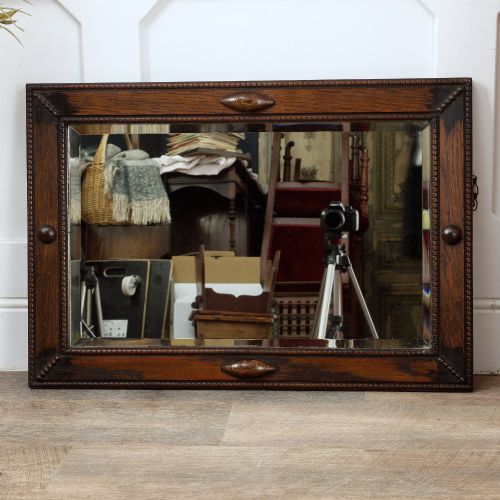
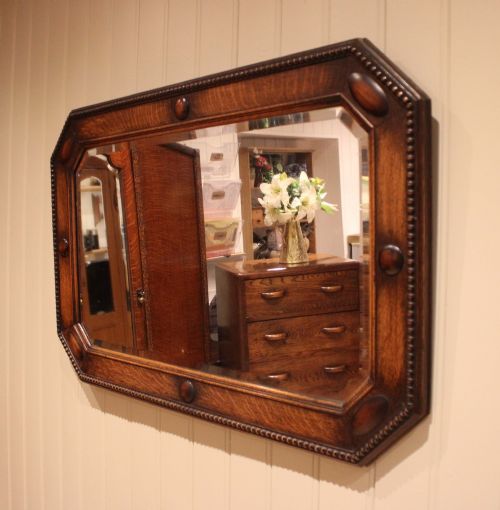
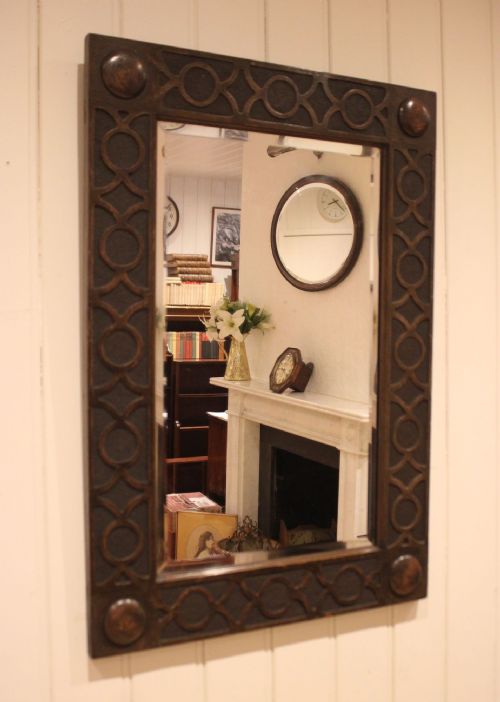


Vintage Oak Rectangular Mirror
A vintage oak rectangular mirror brings solid timber grain and honest utility to a wall, offering durability alongside period character.
Vintage Oak Rectangular Mirror
A vintage oak rectangular mirror provides a sturdy timber frame enclosing a glass plate for wall hanging. Buyers searching for a vintage oak rectangular mirror encounter wall mirrors spanning from the Victorian era through the Edwardian period and into the 1930s.
The pieces listed on this page showcase forms shaped by Edwardian, Victorian, Art Deco, Gothic Revival, and Jacobean Revival aesthetics. Dark oak and scrubbed oak finishes dominate the selection alongside variations incorporating gesso, gold leaf, and brass.
Most examples function as functional wall hangings designed for domestic spaces. The forms range from plain timber mouldings to cushion profiles and decorative frames influenced by Rococo and French brasserie styles.
How they were made
Frames rely principally on solid oak timber shaped through joinery techniques appropriate to each period, from simple mitred corners to heavier cushion mouldings. Some variants incorporate applied gesso and gold leaf details to create ornamental surface depth.
Mirror plates are secured within the timber framework, occasionally complemented by brass mounts or metal elements. The materials combine structural wood with reflective glass to form resilient hanging objects.
What varies in quality
Quality rests in the treatment of the timber and the integrity of the frame construction. Pieces finished in scrubbed oak or featuring thick brass mounts demonstrate deliberate craftsmanship distinct from simpler utility items.
The preservation of original elements, such as the mirror plate and surface gilding, separates standard domestic examples from finer decorative variants.
The Vintage Oak Rectangular Mirror Glossary
- Oak
- A durable hardwood native to temperate regions, prized for its visible grain and structural strength in furniture and framing.
- Gesso
- A plaster-like mixture applied to wood surfaces as a base for moulding decorative relief details or applying gold leaf.
- Cushion mirror
- A frame profile featuring a rounded, convex sweep that swells outward toward the outer edge.
- Brasserie mirror
- A utilitarian wall glass typically set within a heavy timber frame, often augmented by brass fixtures.
- Plate glass
- Flat sheet glass manufactured for optical clarity, used for the reflective surface of the mirror.
Vintage Oak Rectangular Mirror: Frequently Asked Questions
How do I hang a heavy oak wall mirror safely?
Heavy timber frames require secure fixings anchored directly into wall studs or masonry using appropriate wall plugs and screws. The hanging wire or brackets on the back must match the substantial weight of the oak and glass.
Check the structural integrity of the frame joints before mounting to ensure the timber supports the load securely over time.
What periods do these oak mirrors come from?
The selection spans the late nineteenth century through the interwar years, covering Victorian, Edwardian, and 1930s production. Styles range from Gothic and Jacobean revivals to clean Art Deco geometry.
Each period utilises distinct moulding profiles and finish treatments that reflect the prevailing interior design tastes of its era.
How should I clean a vintage mirror frame?
Dust timber frames regularly with a soft, dry cloth to prevent grime accumulation in the grain and carved details. Avoid commercial liquid polishes that can leave residues or soften original wax and gesso finishes.
Use a mild glass cleaner applied to a cloth rather than directly onto the mirror to protect the surrounding oak edge.
Are the mirror plates original?
Many surviving pieces retain their original glass plates, which often display subtle foxing or age spots. These natural signs of ageing confirm the long history of the object without diminishing its decorative utility.
Replacement plates appear where earlier glass suffered unrecoverable damage over decades of domestic use.