

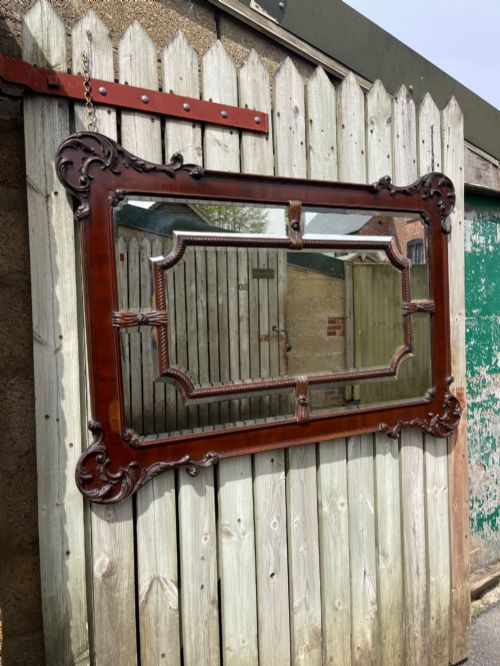


Antique Carved Cushion Mirror
An antique carved cushion mirror brings architectural depth to a room through its sloping, convex frame.
Antique Carved Cushion Mirror
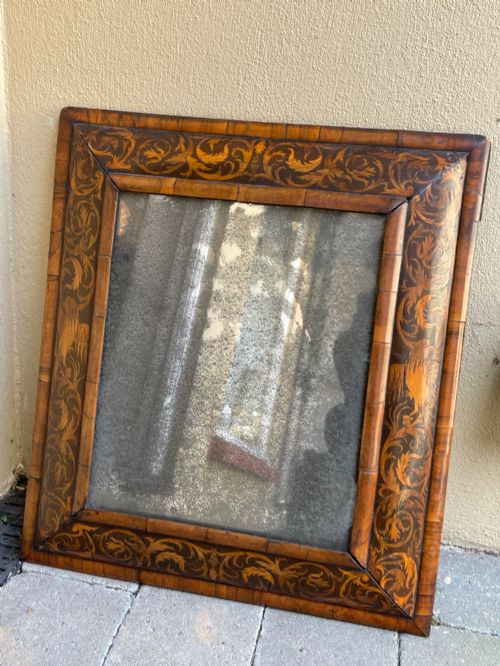
Beyond standard wall mirrors, the selection includes examples ranging from seventeenth-century William and Mary marquetry work to later revival styles. Makers utilised woods such as walnut, mahogany, and oak, alongside heavily gessoed and gilded surfaces that define the aesthetic of the period.
How they were made
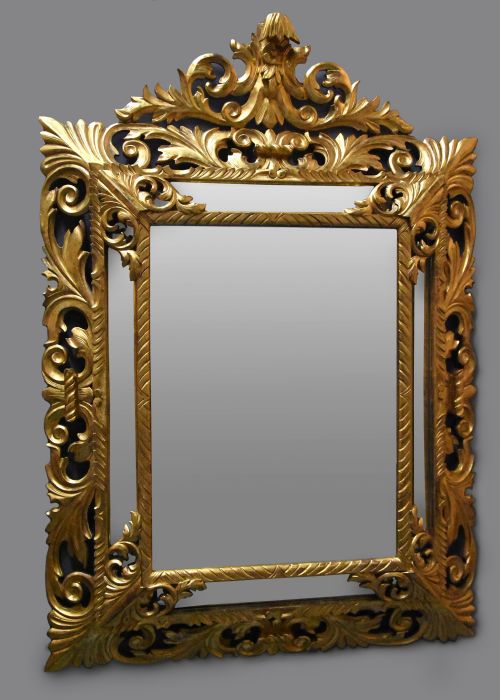
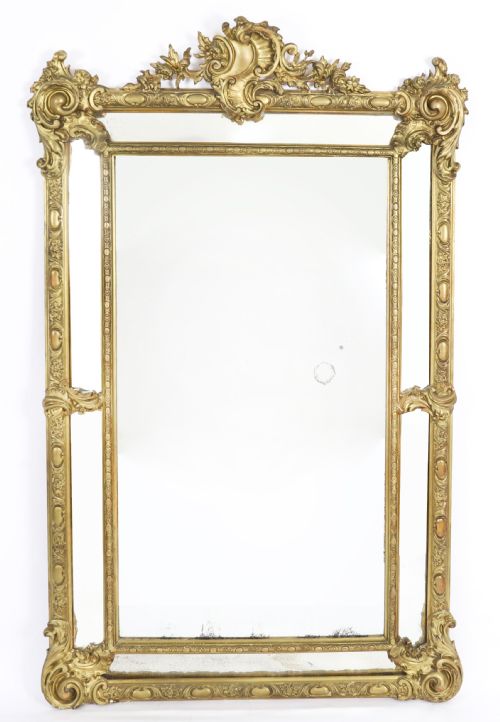
Carvers shaped timber bases from walnut, oak, and mahogany, frequently applying layers of gesso to build up intricate surface ornamentation before gilding with gold leaf. This combination of carved wood and gesso allowed craftsmen to achieve deep relief work, including rope twists and ornate crests.
Glass plates were set within the sloping frame channels, historically utilising mercury glass or bevelled mirror plates. Joinery techniques varied from pegged frame construction to specialised marquetry inlay on earlier seventeenth-century pieces.
Materials recorded across the inventory include giltwood, gesso, walnut, mahogany, scrubbed oak, and bevelled mercury glass.
What varies in quality
Quality rests upon the crispness of the wood carving and the depth of the gesso application beneath the gilding. Superior examples exhibit hand-carved detailing with sharp definition along the cushion slopes, whereas lesser items rely on simplified moulding.
The integrity of the original surface finish distinguishes finer survivals. Pieces retaining their original gold leaf, silver-gilt, or distressed paint without modern overpainting command greater interest from collectors.
The Antique Carved Cushion Mirror Glossary
- Cushion frame
- A sloping or convex frame profile that swells outward from the wall toward the central glass plate. This form gained prominence in the seventeenth century and returned in nineteenth-century revival pieces.
- Gesso
- A plaster-like mixture applied to wood bases to create a smooth surface for gilding or painting. Artisans carved intricate details directly into this layered medium.
- Giltwood
- Timber coated with a thin layer of gold leaf or metal leaf. It provides the bright reflective quality seen on many nineteenth-century frames.
- Marginal plate
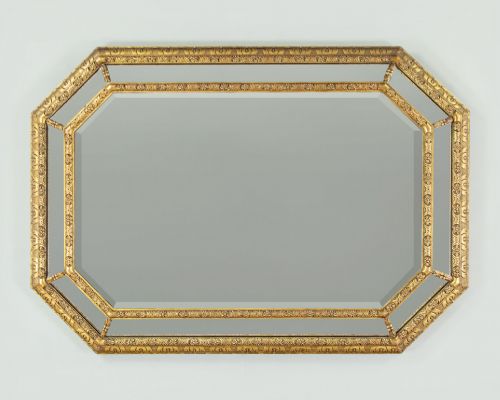
- A mirror arrangement featuring a central glass surrounded by smaller border plates held together by decorative corner clips or strips. This technique adds fractured light reflection.
- Mercury glass
- An early type of mirror glass created by pouring a mercury amalgam between two sheets of double-walled glass. It produces a characteristic mottled, deep reflection.
Antique Carved Cushion Mirror: Frequently Asked Questions
Where should I hang a cushion mirror?
These pieces suit positions above fireplaces as overmantels or as focal points on principal reception room walls. Their projecting frames bounce ambient light across large spaces.
Ensure the wall construction supports the considerable weight of carved wood and gesso frames, utilising appropriate fixings suited to period timber or masonry.
How do I date an antique cushion mirror?
Dating relies on examining the timber species, framing style, and mirror glass construction. Seventeenth-century examples often feature marquetry inlay and walnut, while nineteenth-century versions frequently employ gessoed and gilded pine or oak.
Inspect the reverse of the frame for original construction marks, hand-cut screws, and the condition of the plate backing to confirm the period.
What is the difference between French and Italian styles?
French nineteenth-century examples often incorporate painted and distressed gesso surfaces with rope twist or floral motifs. Italian pieces from the same era tend toward bolder Baroque revival carving and Florentine giltwood ornamentation.
Both regional variations utilise the characteristic sloping frame, but Italian versions frequently display heavier, more dramatic architectural elements.
How do I clean an antique mirror?
Dust the carved frame gently with a soft, dry brush to prevent disturbing fragile gesso or gold leaf layers. Avoid commercial chemical sprays that might seep beneath the frame edges.
Clean the glass plate sparingly using a cloth slightly dampened with distilled water, keeping moisture away from the vulnerable edges of the mirror plate.