

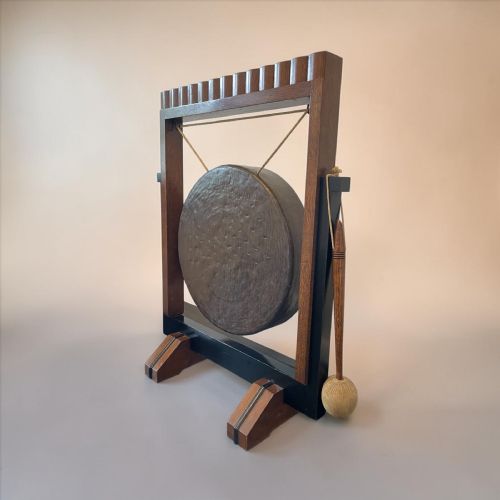


Vintage Oak Gong Stand
These vintage oak gong stands bring deep timber resonance and striking period character to a hall, dining room or study.
Vintage Oak Gong Stand
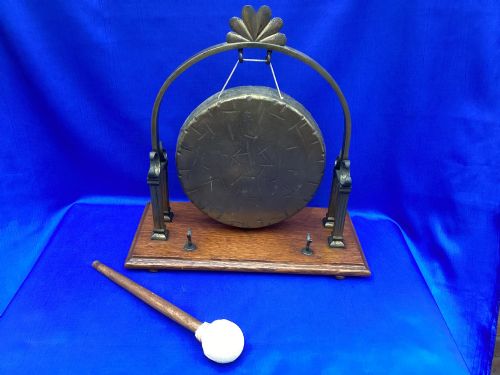
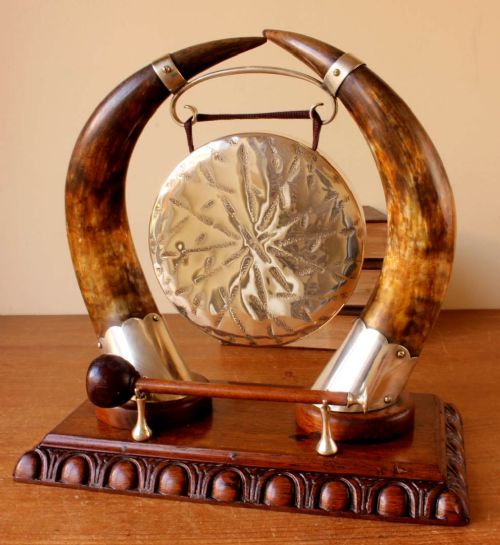
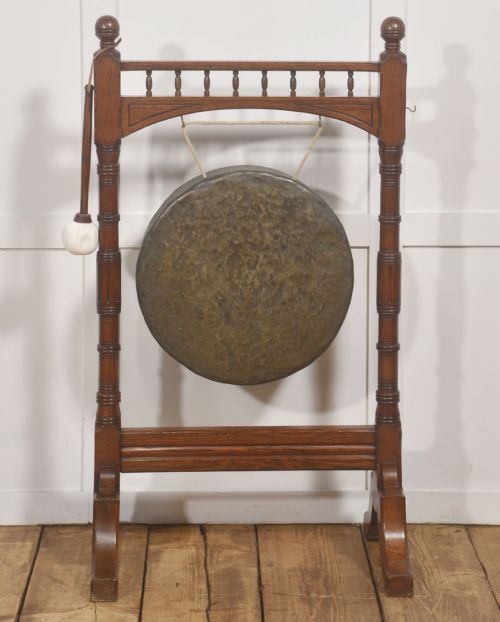
A vintage oak gong stand provides a sturdy and decorative wooden frame designed to suspend a resonant metal disc or bell, creating an imposing presence in a room. When buyers search for a vintage oak gong stand, they encounter architectural forms that range from compact table bells to monumental floor-standing pieces.
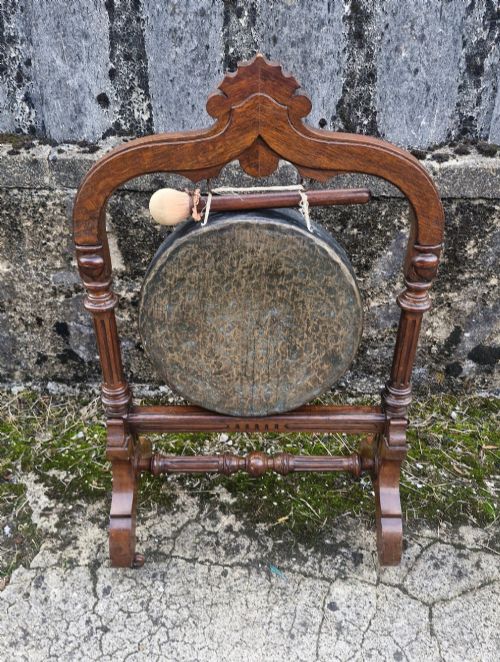
The selections span several distinct periods, showing the evolution of domestic design from Victorian Gothic Revival and Edwardian styles through to the clean geometric lines of Art Deco. These pieces served a practical domestic purpose in calling households to meals, yet their heavy timber frames and gleaming metal components made them decorative statements of status and taste.
How they were made
The primary construction relies on solid oak, frequently shaped with heavy carving, chamfered edges and arched framing to support the suspended weight. Workshops integrated brass and bronze for the hanging gongs and bells themselves, while stout cord, rope, leather and felt provided the suspension fixings and mallets.
Makers utilised traditional joinery techniques to ensure the vertical uprights and transverse beams could withstand the kinetic force and vibration of repeated striking. The juxtaposition of grained, dark timber against polished metal defined the tactile contrast of these domestic furnishings.
Vintage Oak Gong Stand Retail Price Guide 2026
Typical asking prices for vintage oak gong stand among the pieces listed under this phrase on Sellingantiques today, from the lower quarter to the upper quarter. They describe what is for sale here now, not the wider market.
Listings feature periods spanning the Victorian era, Edwardian years and the 1930s.
What varies in quality
Quality rests upon the ambition of the timber carving and the architectural proportion of the frame, moving from simple domestic utility items to monumental focal points. Finer examples display deeply carved Gothic tracery or sophisticated geometric Art Deco framing rather than plain, utilitarian bracing.
The metallurgy of the suspended gong or bell dictates the acoustic richness of the piece, with heavier bronze and brass castings producing a cleaner, more resonant tone. Superior stands integrate durable suspension materials like thick leather or stout cord that complement the substantial weight of the oak structure.
The Vintage Oak Gong Stand Glossary
- Gothic Revival
- A nineteenth-century design movement that revives medieval architectural forms, visible in pointed arches, quatrefoils and heavy carved oak. This style gives many stands their ecclesiastical weight and vertical drama.
- Dinner Gong
- A suspended metal disc or bowl struck with a mallet to announce meals in large Victorian and Edwardian households. They are typically hung within a sturdy wooden frame.
- Edwardian
- Pertaining to the reign of King Edward VII, spanning the early twentieth century. Pieces from this era often balance traditional solidity with slightly lighter decorative proportions.
- Art Deco
- A twentieth-century style characterised by streamlined geometric shapes and modern materials. In gong stands, this translates to cleaner lines and reduced ornamentation compared to Victorian antecedents.
Vintage Oak Gong Stand: Frequently Asked Questions
How do you date a vintage oak gong stand?
Dating relies on stylistic clues and construction methods visible in the timber framing. Victorian and Gothic Revival pieces show heavy carving and architectural motifs, while Edwardian and 1930s Art Deco examples tend towards simpler geometry.
Hardware details and the type of suspension cord or leather also offer chronological markers. Comparing the overall design vocabulary to documented period furniture helps narrow the manufacturing decade.
What were gong stands used for?
These pieces functioned primarily as domestic signal devices in large houses, where a resonant strike called family and guests to dinner. They were usually positioned in entrance halls or principal corridors so the sound carried effectively.
Beyond utility, they acted as decorative furnishings that demonstrated household substance. The imposing timber stands and polished metal gongs doubled as conversation pieces for visitors.
How do I maintain the oak and brass?
Maintenance requires gentle dusting of the carved timber and occasional treatment with suitable beeswax to nourish the oak grain. Avoid harsh chemical cleaners that might strip the historic finish or discolour the wood.
Brass and bronze components benefit from careful polishing only when necessary to remove active tarnish while preserving a warm historic patina. Check suspension cords periodically to ensure they remain secure and capable of supporting the weight.
Where should I place a gong stand at home?
An entrance hall or spacious landing provides a traditional setting where the architectural timber frame makes a strong visual impact. These locations also allow the acoustic resonance of the metal gong to carry clearly through the surrounding rooms.
Ensure the stand rests on a stable, level surface away from excessive moisture or direct heat sources that could dry out the historic oak. Allow sufficient clearance around the frame to swing a mallet comfortably without striking adjacent walls.