



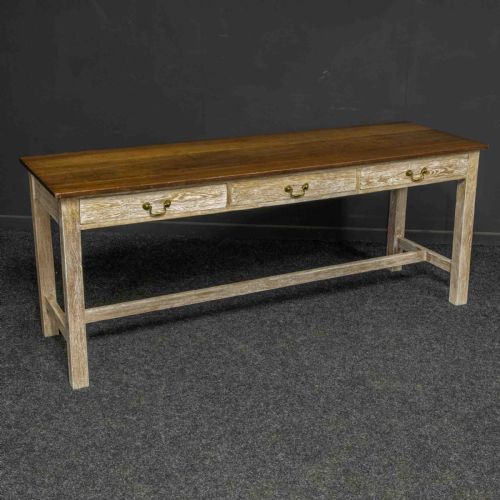
Vintage Oak Farm Table
A vintage oak farm table anchors a room with hard-wearing timber and honest construction, offering daily utility alongside centuries of character.

Vintage Oak Farm Table
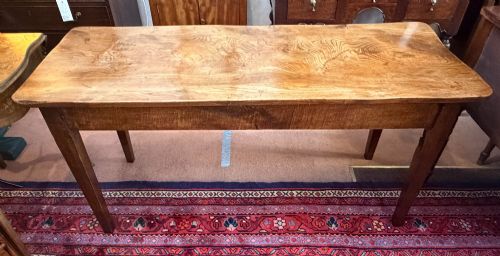
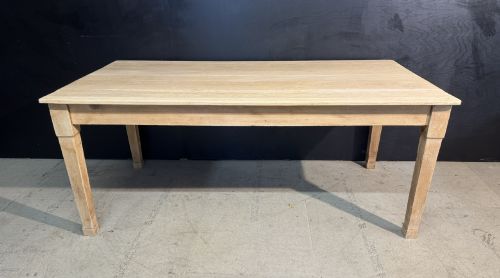
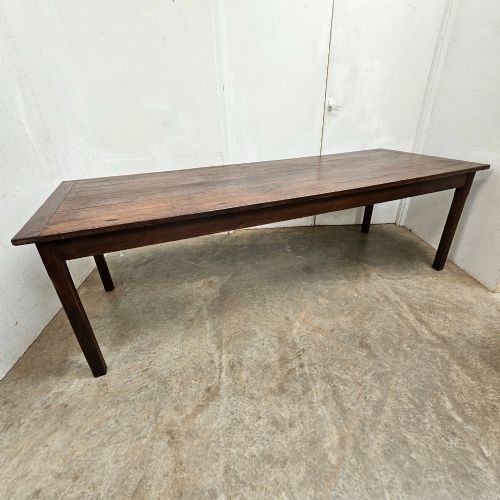
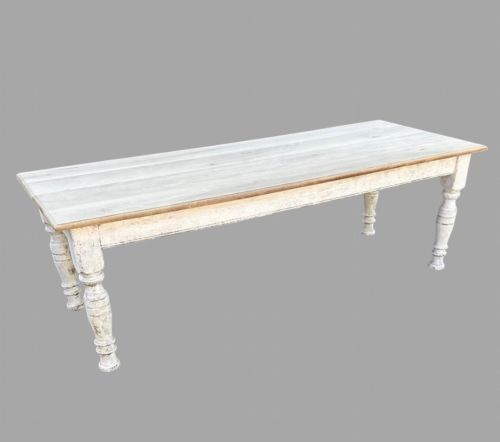
When you search for a vintage oak farm table, you encounter substantial dining and kitchen tables shaped by decades or centuries of domestic use. The examples gathered here span periods from the nineteenth century through the early twentieth century, taking forms such as refectory, trestle, and narrow coffee tables.
You are most likely to meet sturdy refectory and farmhouse formats built to seat large numbers for dining. These pieces draw on styles including rustic farmhouse, French provincial, and English country house, reflecting traditional utilitarian designs adapted for modern homes.
Construction and materials
These tables rely primarily on solid oak, frequently paired with elm, sycamore, or pine for secondary timbers and structural supports. Cabinetmakers utilised robust mortise and tenon joinery to ensure the framework withstood heavy daily demands in kitchens and dining rooms.
Surfaces display various finishes, ranging from pale bleached oak and natural grain to historic paint and polished golden tones. Brass hardware appears selectively on certain designs, while structural formats utilise trestles and substantial refectory legs.
One unusually narrow piece spent its earlier working life serving as a hardwood pig bench before finding a second career as a coffee table.
Assessing quality and character
Quality rests in the integrity of the timber selection and the honesty of the construction rather than pristine surfaces. Tables fashioned from thick, well-seasoned oak boards with minimal modern intervention command greater respect among collectors.
The distinction between standard utility and superior craftsmanship lies in the depth of patination and the stability of the frame. Well-proportioned refectory tables with balanced proportions and original stretchers demonstrate a higher grade of period manufacture.
Heals Of London
The Vintage Oak Farm Table Glossary
- Trestle table
- A table design consisting of two or more support frames connected by a horizontal beam. This construction allows maximum legroom along the length of the tabletop.
- Patina
- The surface sheen and colour developed through decades of handling, polishing, and natural ageing. It serves as a visual indicator of a piece's age and history.
- Mortise and tenon
- A traditional woodworking joint where a projecting tongue fits snugly into a corresponding cavity. This method provides immense structural rigidity without relying on metal fasteners.
Vintage Oak Farm Table: Frequently Asked Questions
How do I clean a vintage oak table?
Wipe surfaces using a slightly damp cloth followed by a dry cloth to remove daily dust and grime. Avoid harsh chemical cleaners that strip the historic finish.
Apply a traditional beeswax polish occasionally to nourish the timber and maintain a soft sheen without building up a heavy residue.
How do I date a farm table?
Examine the underside and joints for tool marks, fastener types, and timber shrinkage that indicate nineteenth or early twentieth-century manufacture. Hand-cut joinery and pegged joints often point towards earlier periods.
Compare the overall proportions and foot styles against documented regional vernacular furniture from the same era.
What is a refectory table?
A refectory table is a long, narrow dining format designed to accommodate large groups along its flanks. The style originated in monastic dining rooms before becoming a staple of country houses.
These pieces feature strong longitudinal stretchers running between the base supports to prevent the long legs from bowing outward.