

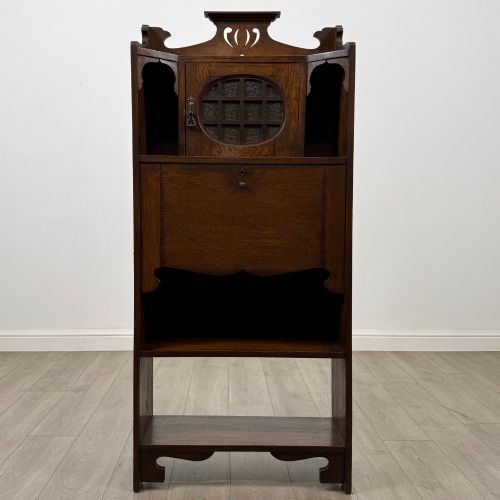
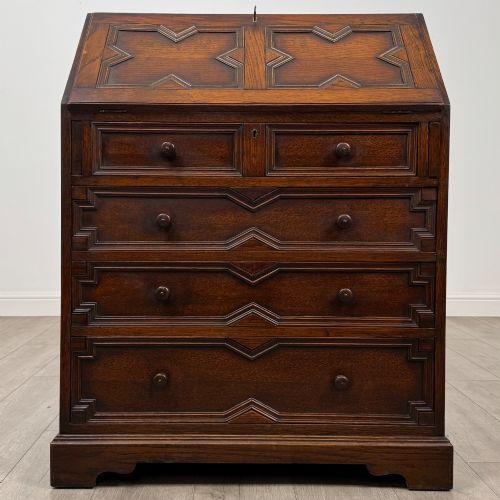
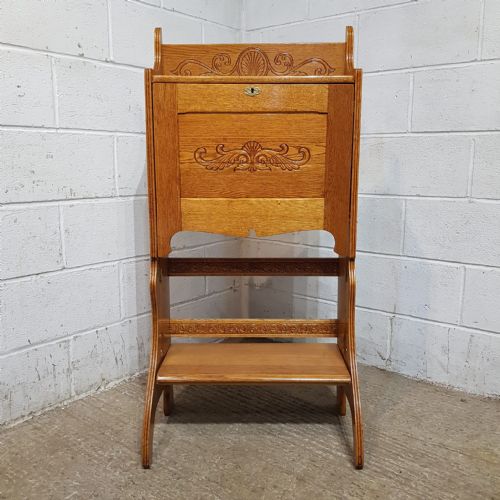
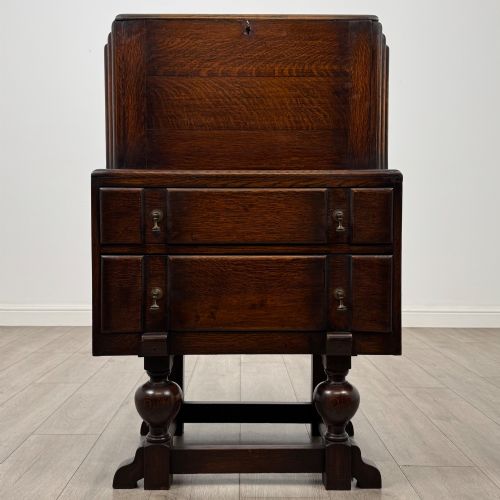
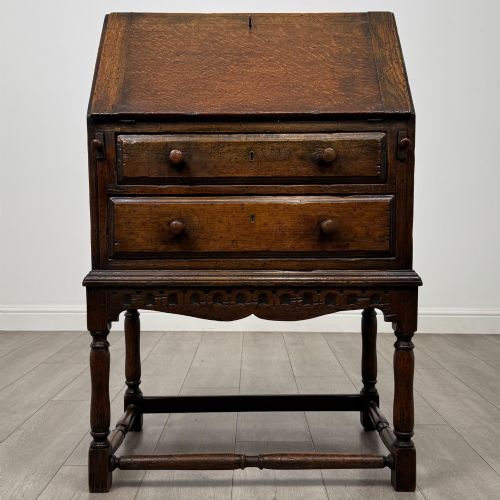

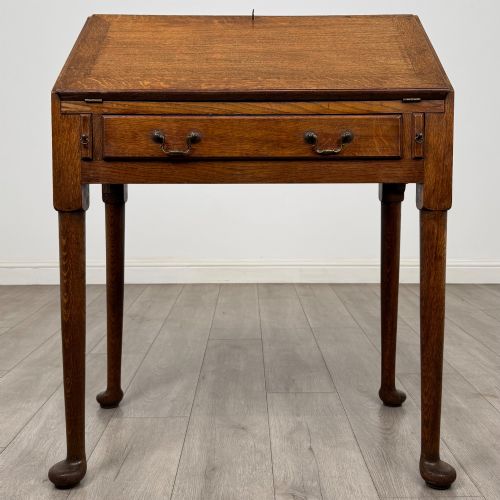
Vintage Oak Drop Front Desk
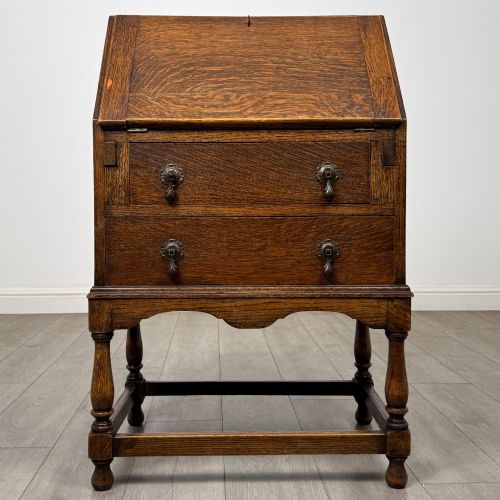
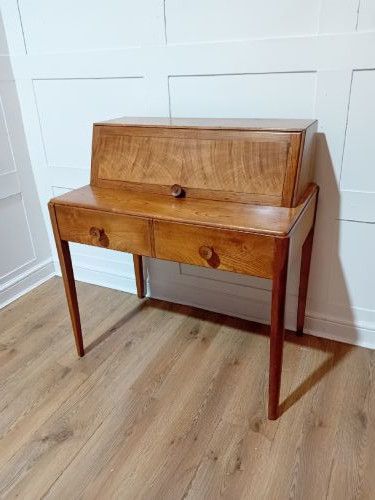
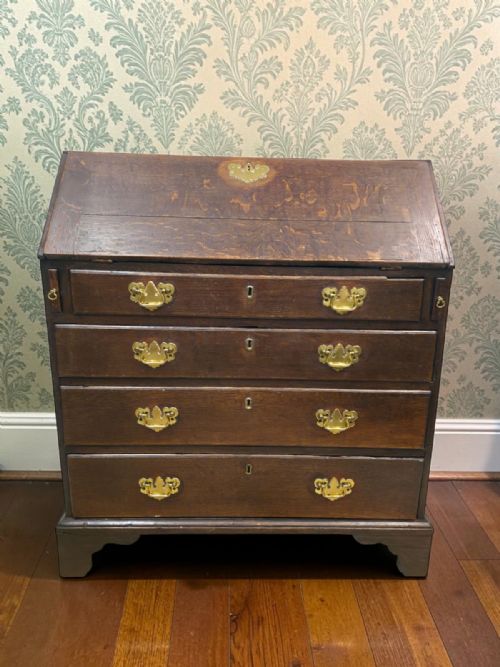
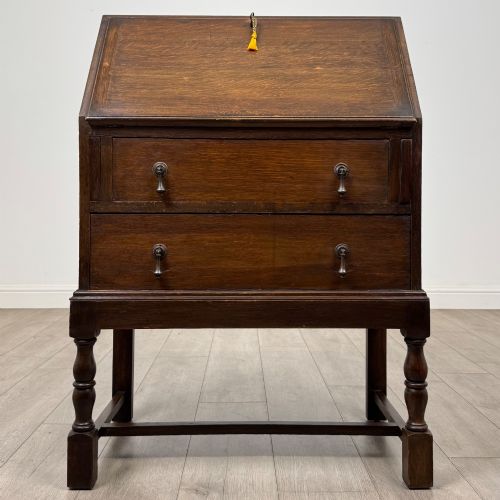
A vintage oak drop front desk is a practical writing companion built from sturdy timber, offering a concealed workspace that folds away neatly when not in use.
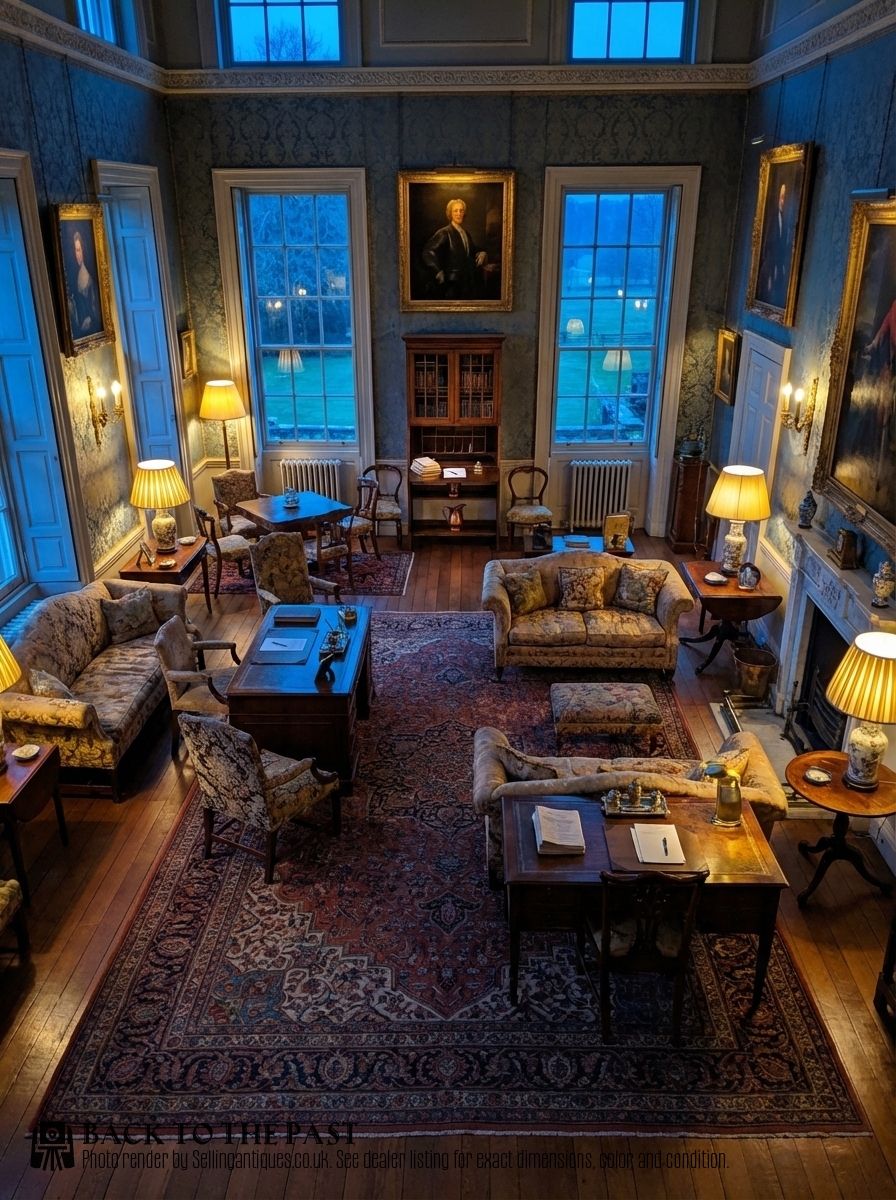
Vintage Oak Drop Front Desk
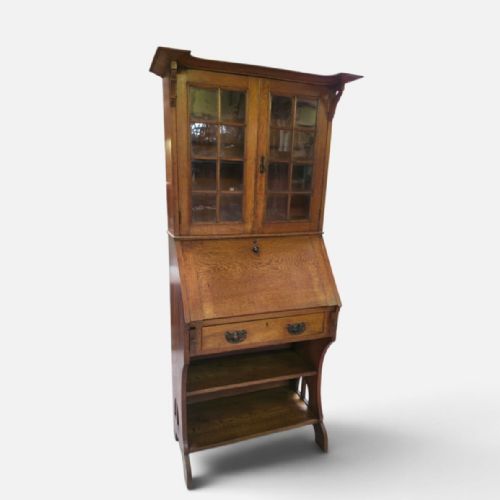
A vintage oak drop front desk serves as a dedicated writing station and storage unit combined into one substantial piece of furniture. When you search for this phrase, you encounter forms that range from compact Edwardian examples to taller bureau bookcases with glazed upper sections.
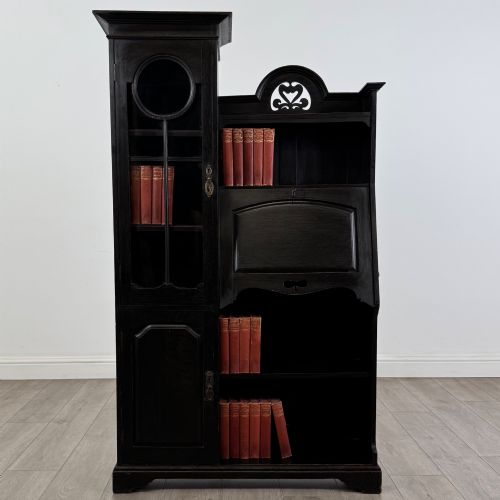
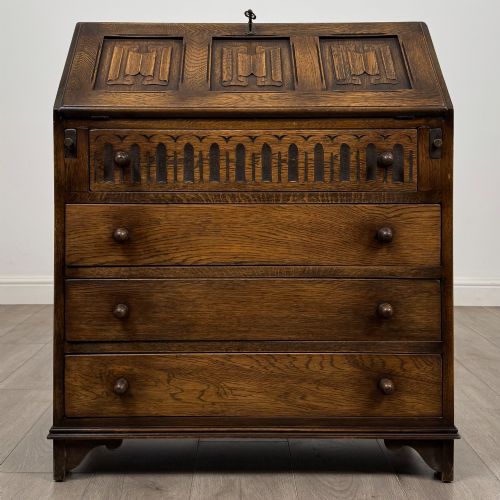
The pieces on this page lean heavily towards the Edwardian period and the 1920s, alongside Georgian and 18th-century interpretations. You will find styles spanning Jacobean Revival, Arts and Crafts, and Tudor Revival, showing how makers reinterpreted older traditions for domestic interiors.
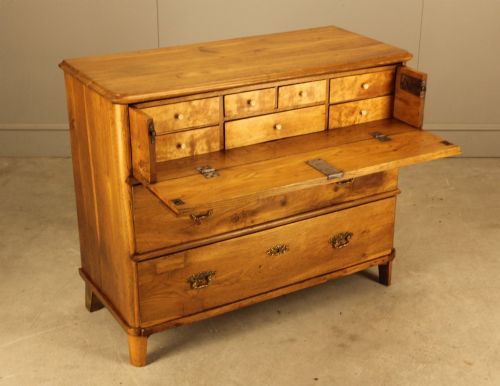
Most entries function as writing desks equipped with fitted interiors, pigeonholes, and small drawers behind the sloping fall front. Some variations incorporate additional lower drawers or open bookshelves above to maximise storage in smaller rooms.
Distinguishing Quality
Quality rests upon the selection of timber and the ambition of the interior arrangement rather than mere age alone. Pieces featuring finely figured golden oak or elaborate Cotswold School craftsmanship distinguish themselves from standard commercial production.
The integrity of the drop front mechanism and the complexity of the fitted interior dictate the standing of a desk. Superior examples maintain original brass hardware, working locks, and structurally sound writing surfaces that withstand daily use.
Materials across the selection range from solid English oak and golden oak to brass hardware, glass doors, and intricate parquetry inlay.
ARTHUR BASIL REYNOLDS·Stanley Webb Davies·ROBERT MOUSEMAN THOMPSON·HARRIS LEBUS
The Vintage Oak Drop Front Desk Glossary
- Bureau
- A desk featuring a sloping hinged lid that drops down to form a writing surface. This surface conceals a fitted interior of pigeonholes and small drawers.
- Fall Front
- The hinged panel on a desk that pulls down or folds forward to create the writing desk. It is also referred to as a drop front.
- Bureau Bookcase
- A combination piece comprising a writing bureau on the lower section and a shelving unit or cabinet enclosed by doors above.
- Linenfold
- A style of wood carving that imitates folded linen or parchment. It is frequently seen on panels of Edwardian and revival furniture.
- Parquetry
- A geometric mosaic of wood pieces used for decorative inlay on furniture surfaces. This technique adds visual texture to the primary timber.
Vintage Oak Drop Front Desk: Frequently Asked Questions
How do I use a drop front desk?
Lower the hinged front panel until it rests flat upon supporting brackets or pull-out lopers to create your writing surface. This reveals the internal pigeonholes and small drawers designed for stationery organisation.
When writing is finished, simply lift the front panel back into its vertical position and secure it with the lock to conceal your papers and maintain a tidy room.
What is the difference between a bureau and a desk?
In British antique terminology, a bureau specifically denotes a writing cabinet featuring a sloping lid that opens to reveal an internal arrangement of compartments. Standard desks often utilise flat writing surfaces with stationary drawers underneath.
Many examples listed here combine the enclosed writing slope with upper bookcase sections, offering dual functionality for storage and display.
How do I date an oak bureau?
Examine the hardware, construction methods, and stylistic revival cues such as Arts and Crafts influences or Jacobean carving details. Edwardian and 1920s pieces frequently show lighter golden oak finishes, whereas Georgian and 18th-century examples display deeper patination and hand-cut joinery.
Checking internal drawer construction, timber thickness, and any maker signatures helps narrow down the exact decade of manufacture.
How do I care for vintage oak furniture?
Keep oak furniture away from direct heat sources and strong sunlight to prevent the timber from drying out or splitting. Apply natural beeswax periodically to nourish the grain and maintain a soft protective sheen.
Dust regularly with a dry or slightly damp soft cloth, avoiding harsh chemical sprays that can strip the historic finish from the wood.