
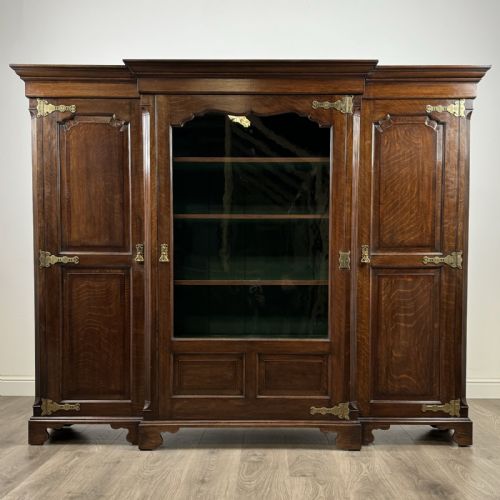
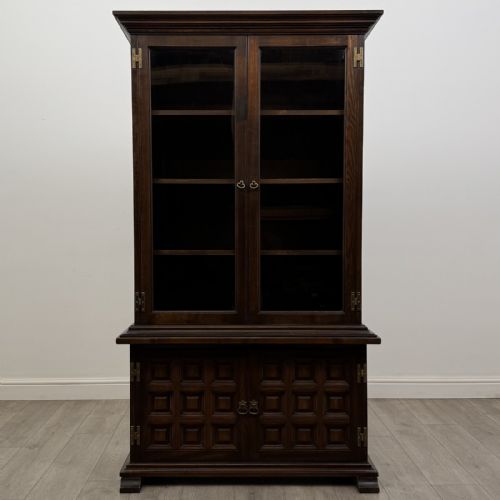
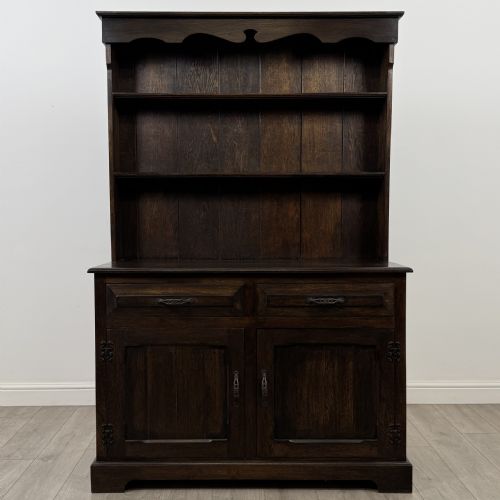
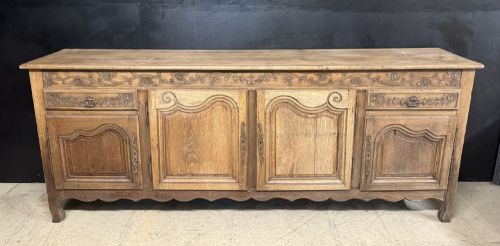
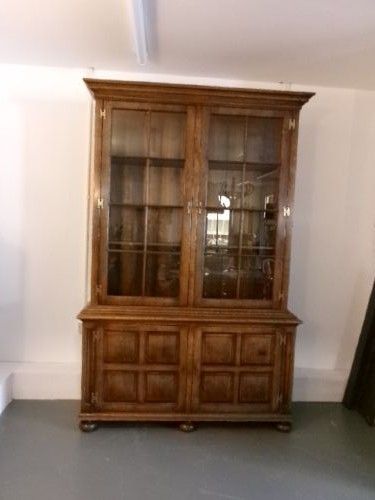
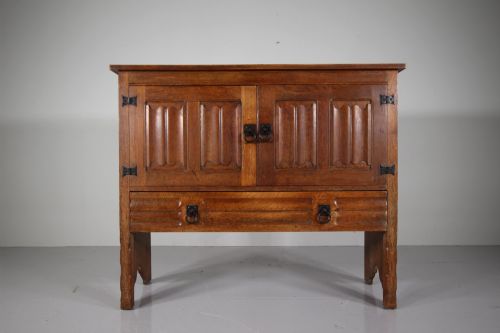
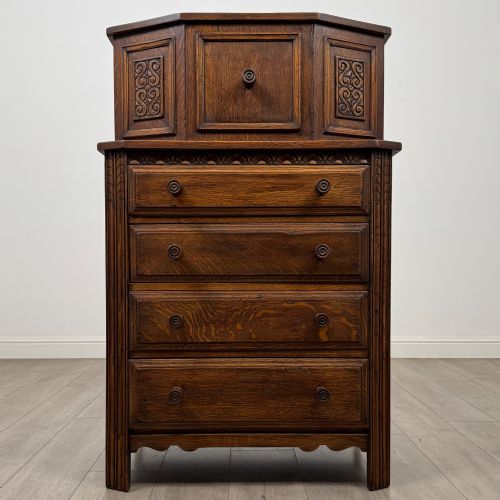
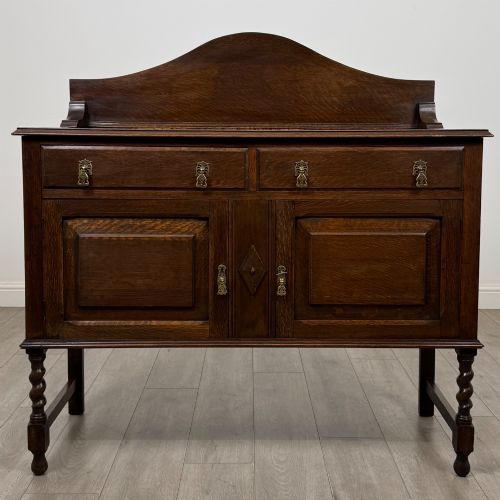
Vintage Oak Cupboard Dresser
A vintage oak cupboard dresser anchors a room with timber weight, offering deep storage and display space rooted in centuries of vernacular tradition.
Vintage Oak Cupboard Dresser
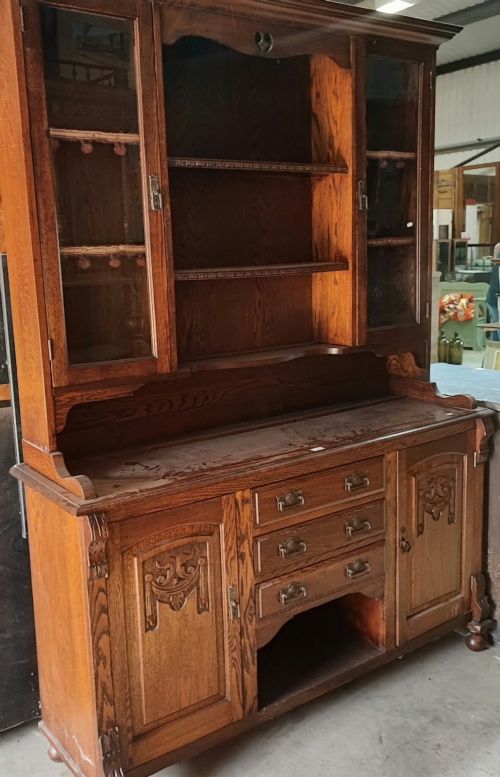
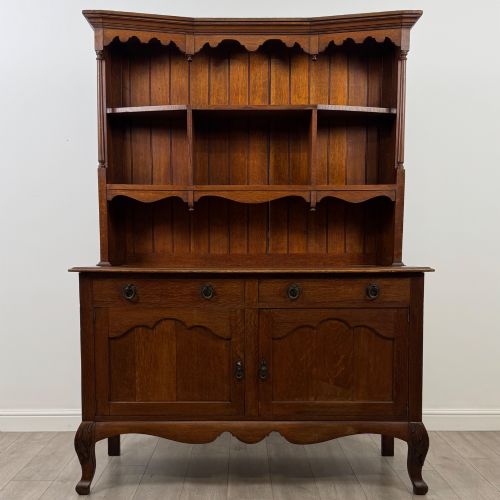
A vintage oak cupboard dresser combines lower storage compartments with upper shelving or display space, serving as a functional centrepiece for the home. These pieces emerge from a long lineage of British and European cabinet making, appearing in regional variations such as Welsh or West Country forms.
The pieces on this page span several centuries, reaching from substantial 18th-century dresser bases to Edwardian and 1930s interpretations. Buyers most frequently encounter 19th-century Welsh examples alongside early 20th-century Arts and Crafts or Jacobean revival editions built in solid oak.
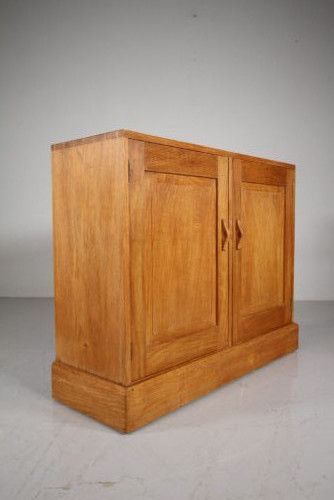
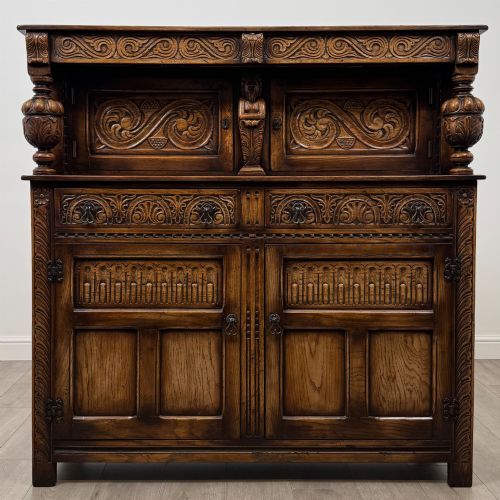
Beyond standard kitchen and dining storage, the category encompasses related forms like court cupboards, bookcases, and sideboards sharing the same primary timber. Their utility lies in the combination of closed cupboard doors and open display racks designed to hold household ceramics and provisions.
How They Were Made
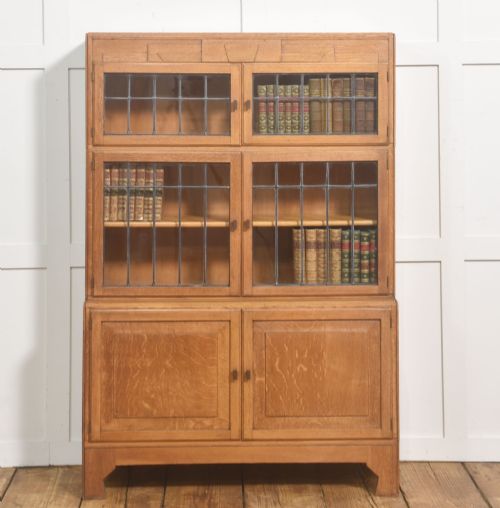
Craftsmen built these dressers primarily from solid oak, sometimes pairing it with secondary woods like mahogany or fruitwood, and accented them with brass or iron hardware. Glazed sections incorporate leaded glass panels to protect the contents while maintaining visual lightness in larger cupboard combinations.
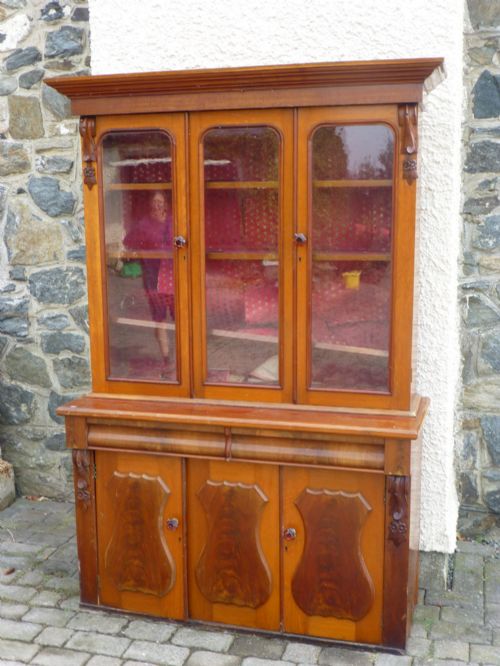
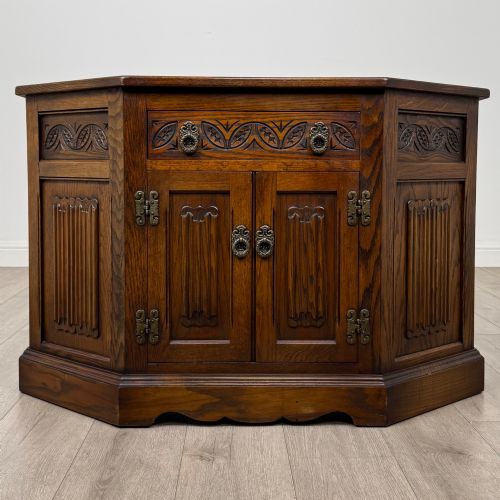
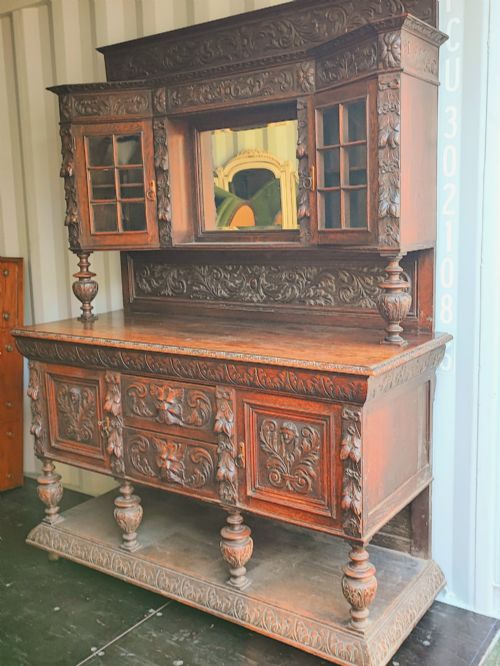
Construction techniques rely heavily on traditional joinery, panelled doors, and structural framing that give these heavy pieces their lasting stability. Surfaces often display hand-carved details, linenfold motifs, or barley twist turnings characteristic of specific stylistic revivals from the Victorian era onward.
Housemaid cupboards once stored household linens and cleaning supplies, holding decades of quiet domestic history behind their heavy oak panel doors.
What Varies in Quality
The distinction between standard utility items and exceptional pieces rests upon the depth of the cabinet work, the integration of hand carving, and the selection of figured timber such as tiger oak. Superior examples display thoughtful proportions, original brass fittings, and well-executed stylistic details like Cotswold School or Arts and Crafts framing.
Construction integrity separates masterwork from mass production, evident in how drawers run and how heavy cupboard doors hang true over decades of use. The treatment of the oak surface - whether left with a rich natural patina, limed, or finished with traditional wax - dictates the visual authority of the piece in an interior.
Peter Waals·Heals of London·Hudson Bros
The Vintage Oak Cupboard Dresser Glossary
- Dresser base
- A low cabinet featuring drawers and cupboards without the upper plate rack, commonly used as a sideboard. This form developed in regional workshops before appearing in formal dining spaces.
- Court cupboard
- An antique enclosed storage piece featuring a recessed upper section supported by pillars. These items date back centuries but heavily influenced later Victorian and Edwardian revival furniture.
- Linenfold
- A carved wooden panel motif designed to resemble folded cloth. This decorative technique appears frequently on the doors of 20th-century revival cabinets.
- Tiger oak
- Oak timber exhibiting strong, irregular medullary ray figuring resembling tiger stripes. Cabinet makers utilised this patterned wood to add dramatic visual texture to prominent surfaces.
- Welsh dresser
- A traditional vernacular furniture form featuring lower cupboards or drawers surmounted by open display shelves for plates. These pieces remain defining examples of regional cabinet making.
Vintage Oak Cupboard Dresser: Frequently Asked Questions
What is the difference between a dresser and a sideboard?
A dresser traditionally combines a lower storage unit with upper shelves for displaying ceramics, whereas a sideboard consists solely of a low cabinet surface with drawers and cupboards.
While both serve dining and living spaces, the dresser offers vertical display capacity that suits traditional kitchens and large dining rooms.
How do I care for vintage oak furniture?
Maintenance requires keeping solid oak pieces away from direct heat sources and sudden humidity shifts to prevent the timber from splitting. Regular application of a traditional beeswax polish feeds the grain and preserves the natural surface patina.
Avoid commercial silicone sprays which build up on the wood and dull the antique finish over time.
Where were most oak dressers made?
Many traditional pieces originate from regional British workshops, particularly in Wales and the West Country where local oak supply met domestic demand. Provincial French and American cabinet makers also produced parallel domestic storage forms using native oak.
Regional stylistic traits often point directly to the geographical origin of the workshop.
How do I identify a revival piece from an older one?
Revival furniture often bears the stylistic signatures of earlier periods, such as Jacobean carving or 17th-century proportions, but utilises manufacturing methods and hardware consistent with the late 19th or early 20th century. Examining the interior construction, drawer linings, and backboards reveals the true manufacturing era.
Stamps, maker labels, or timber characteristics help date these later interpretations accurately.