




Vintage Oak Barrel
A vintage oak barrel brings robust character and practical utility into a hallway or study.
Vintage Oak Barrel
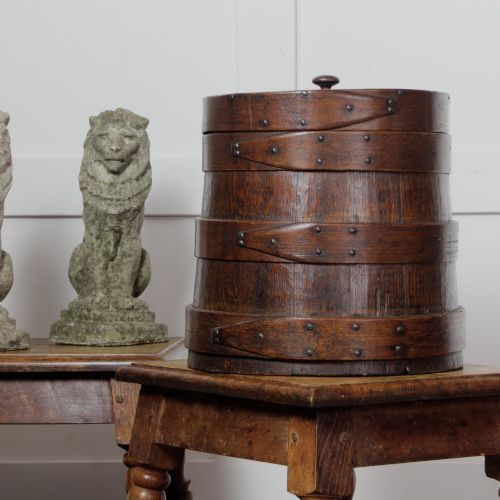
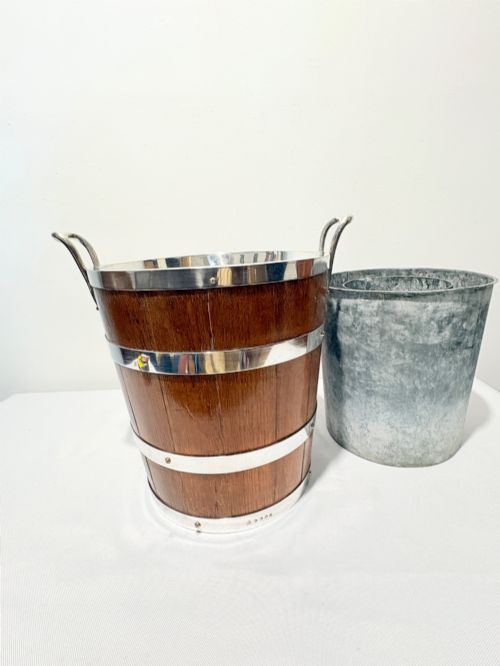
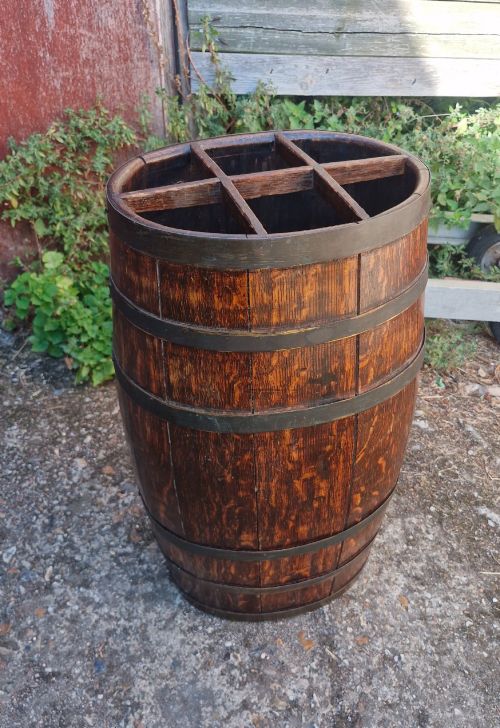
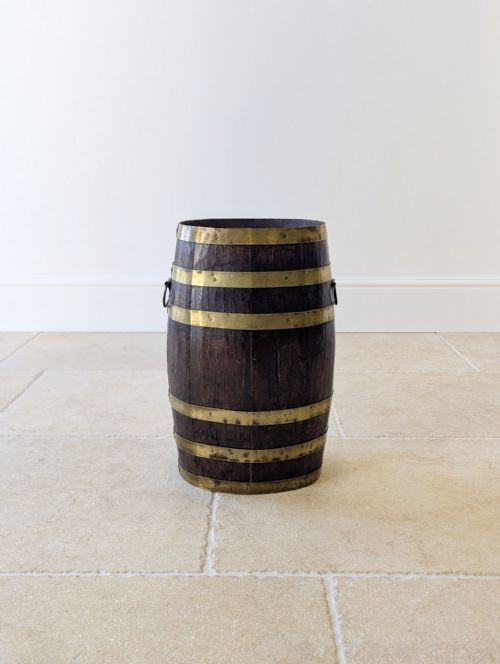
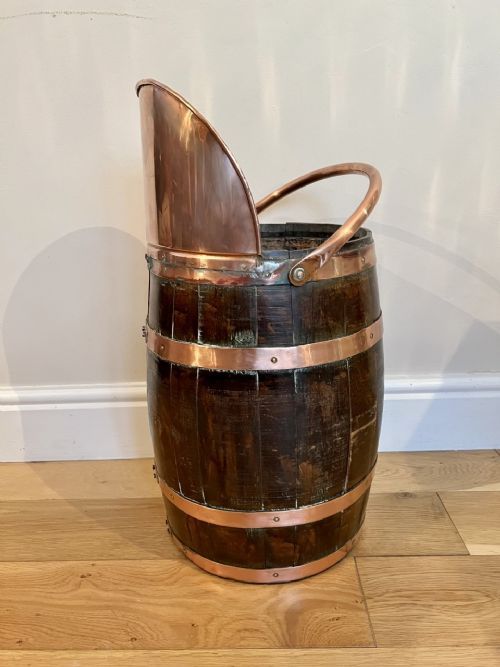
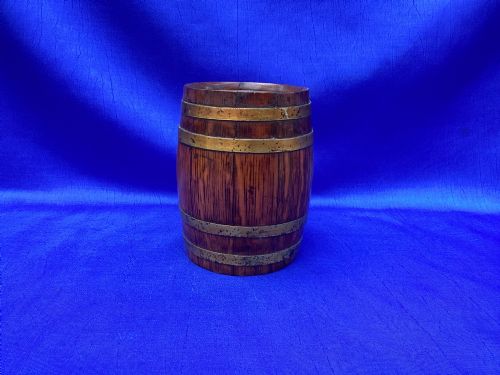
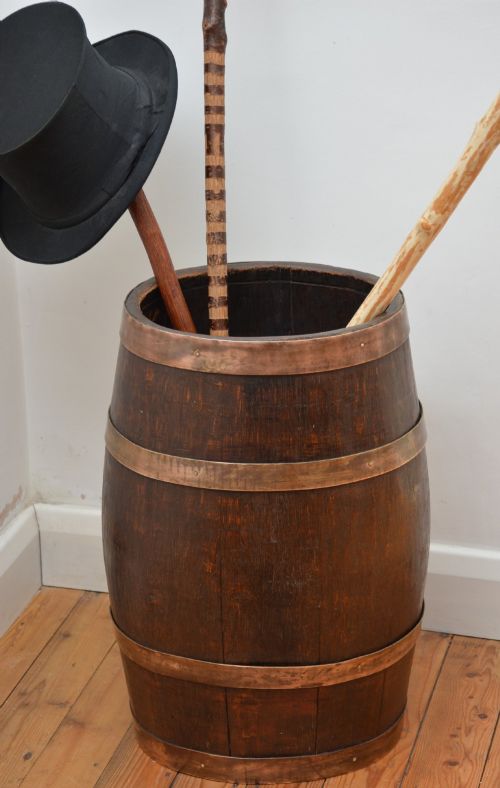
A vintage oak barrel encompasses coopered vessels, stick stands, umbrella holders, and wine coolers originating from the nineteenth century through the early twentieth century. Buyers seeking this phrase most frequently encounter coopered oak umbrella and stick stands secured with metal bands, alongside occasional smaller domestic vessels such as biscuit boxes and wine coolers.
The selection ranges from Victorian country house hall stands to Edwardian coal buckets and simpler twentieth-century forms. These objects bridge utilitarian origins and decorative interior styling, maintaining sturdy timber construction suited to daily domestic service.
Materials and construction
Makers constructed these pieces using solid oak staves shaped by hand or machine, bound together by tensioned hoops of brass, copper, or iron. Coopers fitted wooden bases into channeled grooves within the staves, creating liquid-tight vessels or stable umbrella stands without modern adhesives.
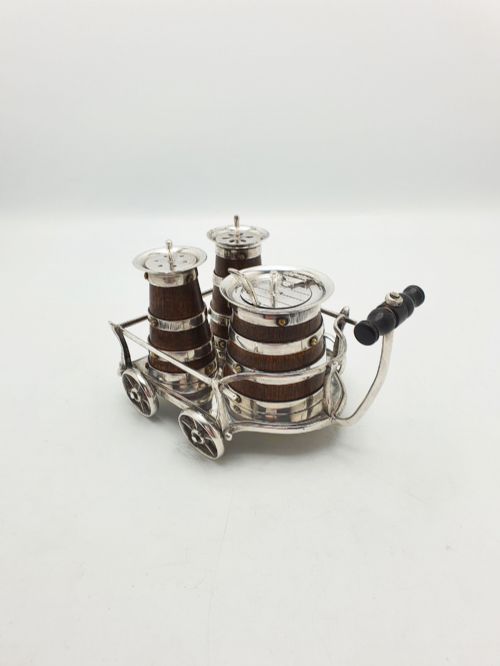
Metals appeared not only as structural binding hoops but also in decorative handles, liners, and silver-plated mounts on tabletop items like condiment cruet sets and biscuit boxes. This combination of dense hardwood and resilient metal yielded exceptional durability.
Vintage Oak Barrel Retail Price Guide 2026
Typical asking prices for vintage oak barrel among the pieces listed under this phrase on Sellingantiques today, from the lower quarter to the upper quarter. They describe what is for sale here now, not the wider market.
Some barrels doubled as heavy-duty money boxes, ensuring that saving coin required serious timber-breaking effort.
Assessing quality
Quality rests upon the precision of the cooperage, visible in the tight, uniform alignment of the oak staves and the correct tension of the metal binding. Superior examples retain their original patinated timber surfaces and matching metal mounts without clumsy replacement parts.
The presence of maker stamps, cast armorial badges, or integrated drip pans elevates a piece above standard utility items. Finer desk accessories and wine coolers exhibit refined silver plating and detailed carpentry rather than purely functional agrarian assembly.
The Vintage Oak Barrel Glossary
- Coopered
- Constructed from curved wooden staves bound together by hoops to form a cylinder or vessel. This traditional method allows wood to expand and contract naturally without losing structural integrity.
- Stave
- One of the narrow strips of oak that form the sides of a barrel or tub. Each piece is tapered and beveled to fit snugly against its neighbours.
- Jardiniere
- An ornamental pot or stand designed to hold plants or flowers. In oak, these often feature waterproof metal liners to protect the timber.
- Cruet set
- A small tray or stand holding matched bottles for condiments, oil, or vinegar. Silver-plated mounts frequently accompany oak frames in these tabletop pieces.
Vintage Oak Barrel: Frequently Asked Questions
How were oak barrels used originally?
These vessels served diverse roles ranging from storing dry goods, flour, and bottled beverages to holding wet provisions in domestic and maritime settings. Smaller versions functioned as table containers for biscuits and condiments.
Over time, many larger casks found secondary purposes in hallways as umbrella and stick stands, adapting their deep cylindrical shapes to hold walking aids and wet outerwear.
How do I care for antique oak?
Keep oak furniture away from direct heat sources and sudden temperature shifts to prevent the timber from drying out or splitting. Occasional application of suitable wax helps maintain the natural lustre of the wood.
Avoid excessive moisture on unlined surfaces, wiping down metal bands gently if humidity causes surface oxidation on iron or brass components.
How can I tell Victorian barrels apart?
Victorian examples often display heavier brass or iron bands, deeper patination, and robust construction suited to grand country houses. They frequently incorporate umbrella loops or cast-iron drip trays for hallway use.
Later Edwardian and early twentieth-century pieces can feature lighter proportions, brighter copper bindings, or domestic adaptations like coal buckets and jardiniere stands.
Can these barrels hold water safely?
While originally built to contain liquids, antique coopered vessels may have dried timber joints that require careful rehydration before holding water. Many survivors intended as umbrella stands or planters rely on removable metal liners rather than water-tight wooden seals.
Testing a vintage cask should be done cautiously to check whether the historical staves and base retain their watertight seal.