


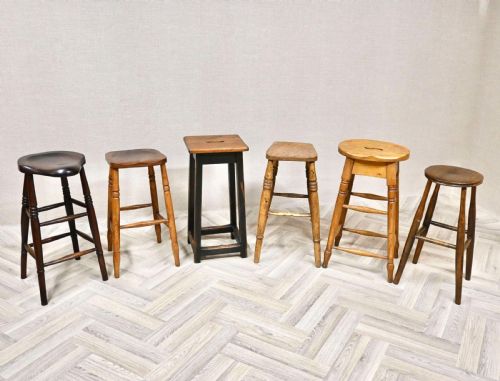
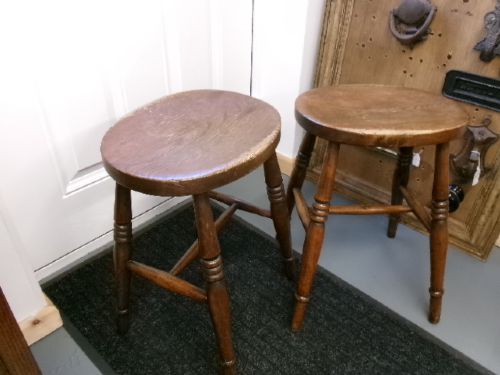


Vintage Oak Bar Stools
These vintage oak bar stools are honest timber seats built for endurance, bringing sturdy rustic character and practical height to any kitchen island or counter.
Vintage Oak Bar Stools
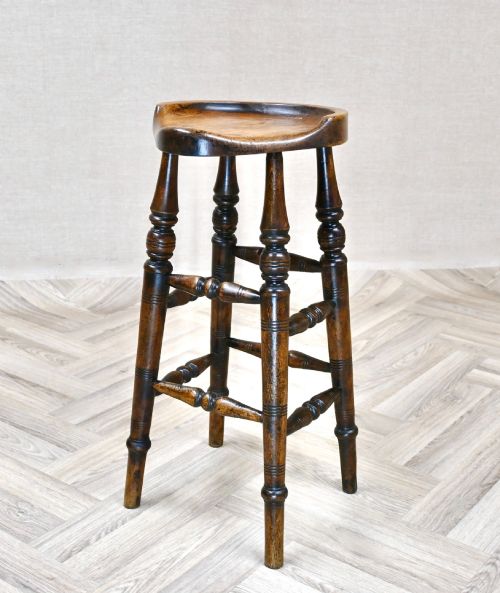
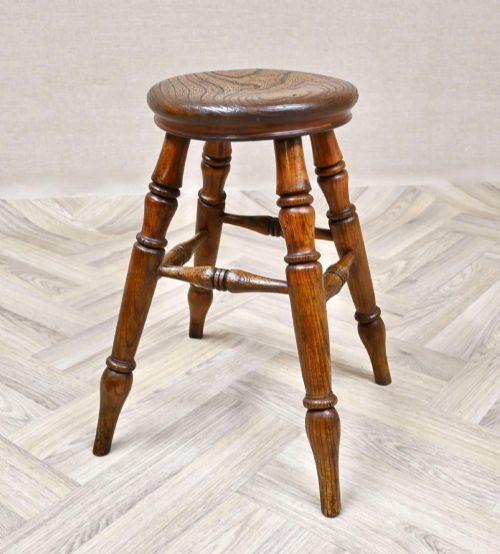
Vintage oak bar stools encompass tall seating designed for public houses, country houses, and farmhouses during the nineteenth and early twentieth centuries. These sturdy pieces serve functional purposes at counters and high tables while offering robust timber construction.
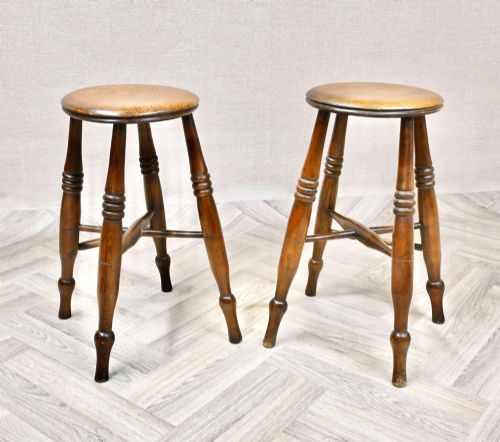
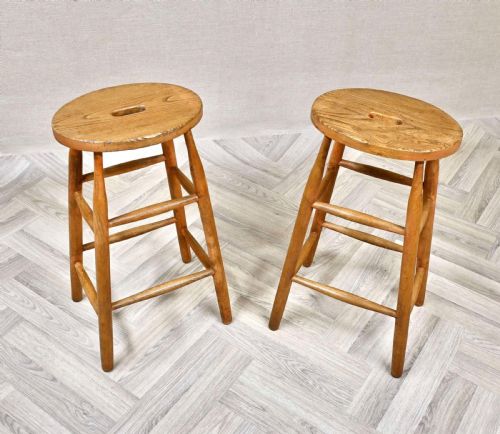
Visitors to this selection encounter nineteenth-century examples and items from around nineteen thirty, reflecting English country and Victorian vernacular styles. Forms range from pairs of tall bar stools to tavern stools featuring oval dished tops and general purpose designs.
The assortment relies on regional traditions where makers adapted domestic seating heights for commercial and tavern environments. Such pieces deliver tangible history and enduring utility for modern interior spaces.
What varies in quality
Quality in these stools rests upon the choice of timber and the integrity of the original construction rather than decorative flourishes. Seats carved from thick wild elm or finely figured oak command greater appreciation than softer woods like pine.
Proportion and stance dictate the visual success of a tall stool, where well-turned legs and balanced stretchers create harmonious form. Examples retaining rich patination and minimal structural replacement demonstrate superior historical authenticity.
Vintage Oak Bar Stools Retail Price Guide 2026
Typical asking prices for vintage oak bar stools among the pieces listed under this phrase on Sellingantiques today, from the lower quarter to the upper quarter. They describe what is for sale here now, not the wider market.
The Vintage Oak Bar Stools Glossary
- Dished top
- A seat surface hollowed out into a shallow concave shape by adzing or turning. This traditional shaping method improves sitting comfort.
- Vernacular
- Objects designed by local craftsmen following regional traditions rather than high-style academic rules. These pieces prioritise practical utility and local materials.
- Stretcher
- A horizontal wooden brace connecting the legs of a stool to provide lateral stability. It often doubles as a footrest on taller seating.
- Patina
- The surface sheen and colour acquired by timber through age, handling, and regular polishing. A deep patina indicates long service and careful maintenance.
Vintage Oak Bar Stools: Frequently Asked Questions
How were these tall stools used originally?
These tall stools served patrons in nineteenth-century public houses, taverns, and alehouses where elevated seating suited counter-height service. Domestic spaces also utilised them around farmhouse tables and prep areas.
Their sturdy height made them versatile furniture for commercial settings that required durable, unpretentious seating for standing height counters.
Are antique bar stools comfortable for daily use?
Many examples feature oval dished tops carved to fit the body, providing surprising comfort despite their lack of upholstery. The inclusion of sturdy stretchers offers a practical place to rest feet.
Placing them at modern kitchen islands or breakfast bars requires checking the seat height against the counter clearance for proper ergonomics.
How do I identify a nineteenth-century bar stool?
Nineteenth-century stools display traditional hand-turned legs, pegged joinery, and heavy native timbers like oak, elm, and sycamore. Tool marks on the underside often reveal the use of traditional adzes and drawknives.
Surface wear patterns and deep, waxy patination accumulated over generations help distinguish genuine nineteenth-century pieces from later reproductions.
What timber types should I look for?
The listings feature robust hardwoods and softwoods including oak, elm, beech, sycamore, and pine. Wild elm and oak provide exceptional weight and striking grain patterns.
Choosing the right wood depends on the desired visual contrast within a room and the level of historical authenticity preferred by the collector.