





Vintage Needlework Furniture
Vintage needlework furniture brings together textiles and timber, offering functional household pieces sewn by hand and framed in period woods.
Vintage Needlework Furniture
Vintage needlework furniture encompasses items designed to store sewing materials or display stitched textiles, merging utility with decorative handwork. Buyers searching for vintage needlework furniture encounter forms ranging from sewing and work tables to ottomans, footstools, fire screens, and table screens.
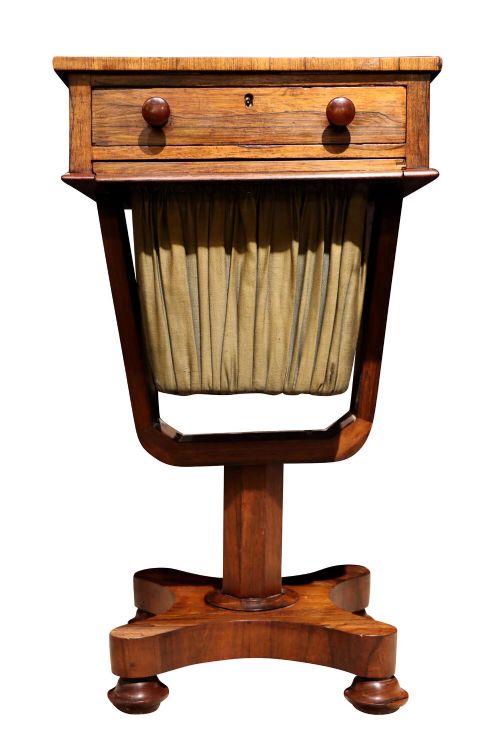
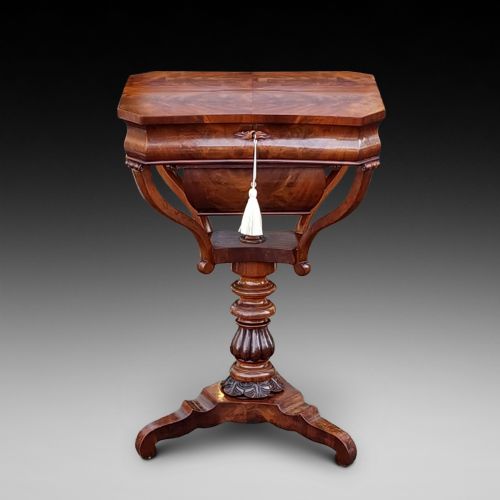
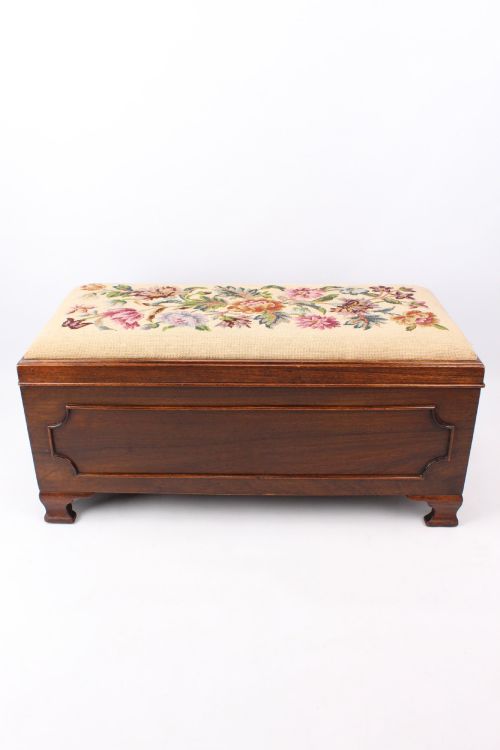
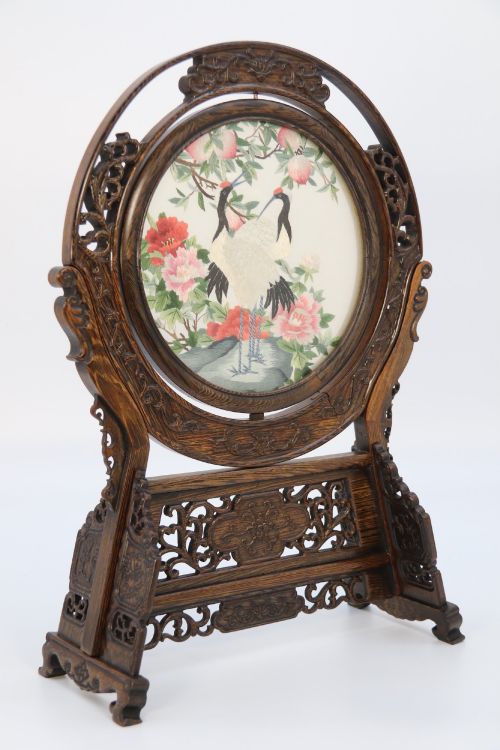
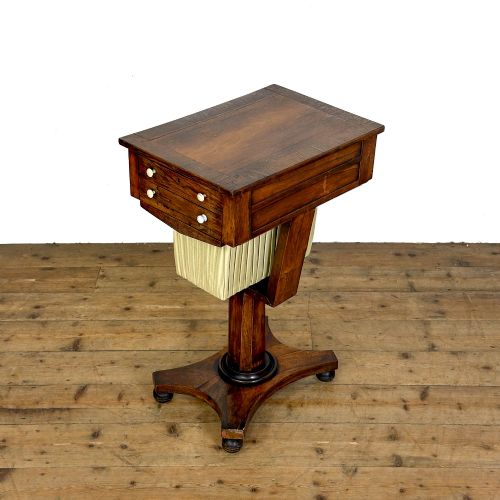
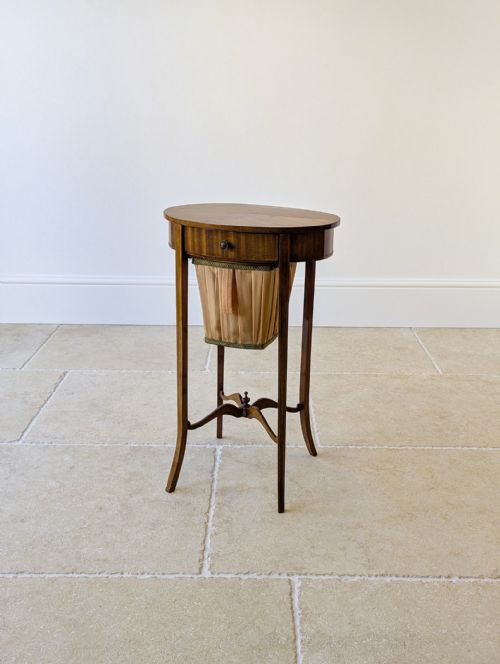
Side tables and work tables equipped with silk baskets or compartments form a large part of the selection. Alongside these are smaller items like footstools and rotating display stands holding double-sided silk embroidery.
How they were made
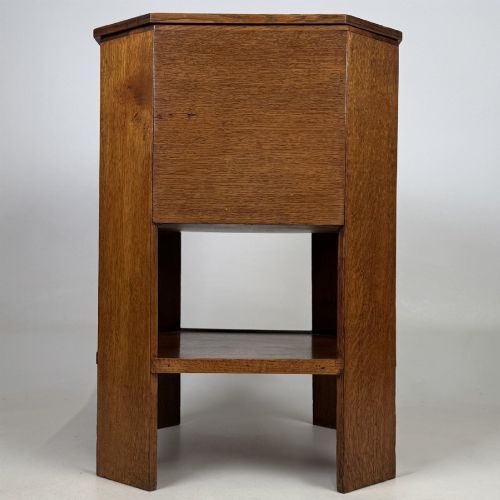
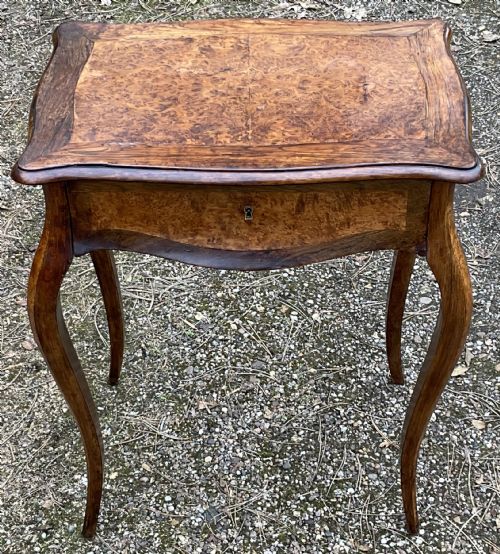
Construction relies heavily on traditional cabinet timbers such as mahogany, rosewood, satinwood, walnut, and oak. These woods are shaped into pedestals, octagonal tops, and framed stands to support the textile elements.
Needlework components involve fabric, tapestry, and silk worked directly into upholstery, removable panels, or hanging screens. Brass accents frequently appear as fittings, handles, or decorative mounts on the timber structures.
Vintage Needlework Furniture Retail Price Guide 2026
Typical asking prices for vintage needlework furniture among the pieces listed under this phrase on Sellingantiques today, from the lower quarter to the upper quarter. They describe what is for sale here now, not the wider market.
Listings span the nineteenth and early twentieth centuries, featuring mahogany, rosewood, satinwood, and oak alongside silk and tapestry textiles.
What varies in quality
Quality differences emerge in the choice of timber and the complexity of the cabinetwork, from plain oak boxes to figured flame mahogany and inlaid satinwood tables. The calibre of the textile work itself, whether fine silk embroidery or robust floral tapestry, dictates the distinction between standard and superior examples.
Design integration separates basic utility pieces from refined decorative objects, seen in balanced proportions, intricate inlay, and harmonised wood and fabric pairings.
The Vintage Needlework Furniture Glossary
- Work table
- A small table fitted with compartments, drawers, or hanging silk bags intended for storing sewing equipment and needlework supplies.
- Pole screen
- A vertical decorative screen mounted on a tall wooden pole with a tripod or weighted base, designed to shield a person's face from the heat of a fireplace.
- Tapestry
- A form of textile art woven or stitched by hand, frequently featuring floral or pictorial designs used for seat covers and wall panels.
- Satinwood
- A durable, yellowish timber prized for its smooth grain and used extensively for fine veneer and inlay work during the Georgian and Edwardian periods.
Vintage Needlework Furniture: Frequently Asked Questions
What is vintage needlework furniture?
Vintage needlework furniture refers to wooden household objects integrated with stitched textiles, including sewing tables, ottomans, footstools, and embroidered screens.
These pieces combine furniture making with textile arts, providing functional storage for sewing equipment or displaying hand-stitched decorative panels.
How were sewing tables used?
Sewing tables served as dedicated pieces of furniture for storing threads, needles, and fabric scraps inside built-in drawers or suspended silk baskets.
Ladies utilised the top surfaces and internal compartments for needlework tasks in the parlour or drawing room during the Victorian and Edwardian eras.
What woods are used in these pieces?
Makers utilised dense hardwoods such as mahogany, rosewood, walnut, and oak to construct the structural frames and tabletops.
Satinwood also appears on finer Edwardian examples, often enhanced with decorative inlay work around the edges and drawers.
How do I identify the period?
Period identification relies on matching the furniture style, such as Regency scrollwork, William IV pedestals, or Edwardian satinwood inlay, with the materials used.
Stitched textiles and embroidery techniques also offer clues to the era of manufacture, reflecting the prevailing designs of the nineteenth and early twentieth centuries.