






Vintage Needlepoint Screen
A vintage needlepoint screen brings warmth and texture to a room, functioning as both a decorative panel and a functional heat guard.
Vintage Needlepoint Screen
When you search for a vintage needlepoint screen, you encounter pieces designed to shield occupants from open fireplace heat or to divide interior spaces. The selection ranges from tall four-panel room dividers to adjustable pole screens supported on slender wooden stands.
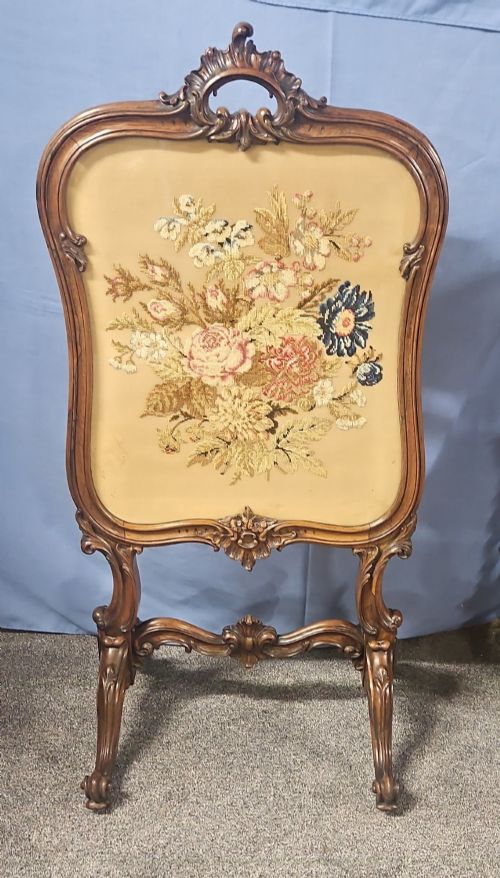
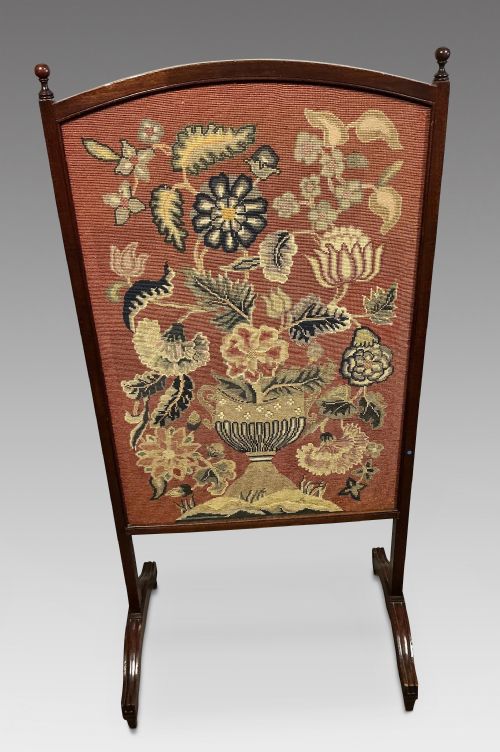
The most common formats on this page are fire screens and fireside pole screens featuring hand-worked wool tapestry panels. These items originate predominantly from the Regency, Victorian, and William IV periods, constructed in forms that served both domestic utility and polite display.
Makers utilised woods such as mahogany and rosewood to frame textile insertions depicting pastoral scenes, sampler embroidery, and figural tapestries. Smaller examples include metamorphic occasional tables where the needlework panel pivots or folds flat.
Materials and construction methods
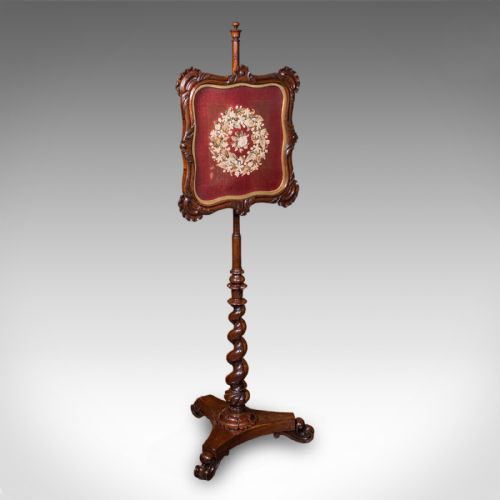
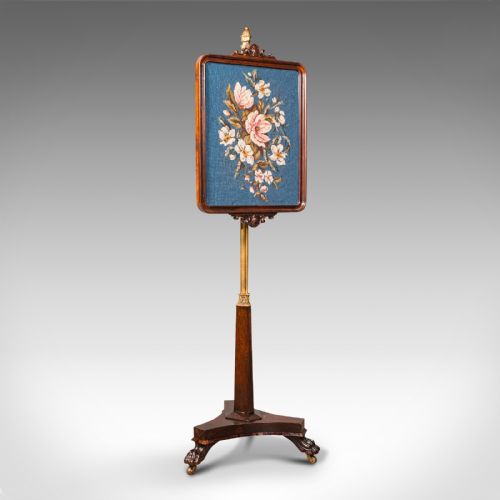
Makers constructed the structural frames of these pieces using dense timbers like mahogany, rosewood, oak, and walnut, often applying bobbin turning and elaborate carving to the supports and bases. Brass fittings and glass elements appear alongside wood to mount adjustable pole screens and multi-panel room dividers.
The textile panels themselves consist of wool needlepoint, tapestry, and embroidery stitched onto canvas backings by hand. These decorative inserts are secured within wooden frames or suspended on brass adjustable shields designed to slide vertically along a turned timber pole.
Vintage Needlepoint Screen Retail Price Guide 2026
Typical asking prices for vintage needlepoint screen among the pieces listed under this phrase on Sellingantiques today, from the lower quarter to the upper quarter. They describe what is for sale here now, not the wider market.
Materials recorded across current pieces include mahogany, rosewood, oak, walnut, brass, glass, wool, and textile tapestry.
Evaluating craftsmanship and proportion
Quality in these pieces rests upon the density and execution of the needlework panel, alongside the crispness of the timber carving on the frame. Finer examples display intricate hand-woven pastoral imagery or figural detail within the wool tapestry rather than simpler geometric samplers.
The mechanical sophistication of the piece also dictates its standing, particularly in adjustable pole screens where the brass thumbscrews, sliding mechanism, and weighted tripod bases must operate smoothly and hold the shield securely at the desired height.
The Vintage Needlepoint Screen Glossary
- Pole screen
- A standing fireside screen featuring an adjustable vertical shaft and a sliding shield designed to block hearth heat. The shield typically mounts on a brass collar that locks at various heights.
- Needlepoint
- A form of canvas work embroidery stitched with wool yarn to create pictorial or patterned textile surfaces. It forms the primary decorative panel in most historic firescreens.
- William IV
- A British design period spanning the 1830s characterised by robust classical revival forms and dark timbers such as rosewood and mahogany. Pieces from this era often feature heavy carved bases.
- Bobbin turned
- A method of woodturning where the lathe creates a series of rounded, spool-like spheres along the length of a furniture leg or stretcher. This technique appears frequently on Victorian frames.
- Metamorphic
- Describing an item of furniture designed to transform into another functional object, such as a fire screen that converts into an occasional table.
Vintage Needlepoint Screen: Frequently Asked Questions
What was a pole screen used for?
A pole screen was placed near an open fireplace to shield a person's face from the intense radiant heat of the fire. The adjustable panel could be moved up or down the vertical pole depending on where the heat needed blocking.
Beyond functional hearth utility, these items served as decorative accessories in nineteenth-century drawing rooms where gentle needlework showcased domestic accomplishments.
How do I distinguish a Regency screen from a Victorian one?
Regency screens generally exhibit cleaner classical lines, lighter proportions, and rosewood or mahogany frames reflecting neoclassical influences. They often feature simple geometric or restrained floral needlework.
Victorian examples tend to be heavier in scale, incorporating carved walnut or oak with more elaborate ornamentation like bobbin turning and ornate Rococo Revival motifs.
Are these screens suitable for modern rooms?
These items integrate easily into contemporary interiors as decorative room dividers or freestanding panels that introduce historical texture and colour. Large multi-panel versions work effectively to zone open-plan spaces.
Smaller pole screens function well as sculptural accent pieces in corners or beside seating arrangements where their textile panels add warmth to plain walls.
How do needlework panels attach to the frames?
The textile panels are typically stretched tightly over a wooden or canvas backing and secured within a rebated groove inside the main wooden frame. In pole screens, the embroidered panel is mounted onto a secondary shield frame that grips the vertical wooden shaft via a brass collar.
This mounting allows the textile insert to remain taut while protecting the edges of the wool stitching from excessive fraying during daily adjustment.