




Vintage Navigation Instrument
These vintage navigation instruments are precision tools of brass, wood, and glass that seasoned travellers and sailors relied upon to find their way.
Vintage Navigation Instrument
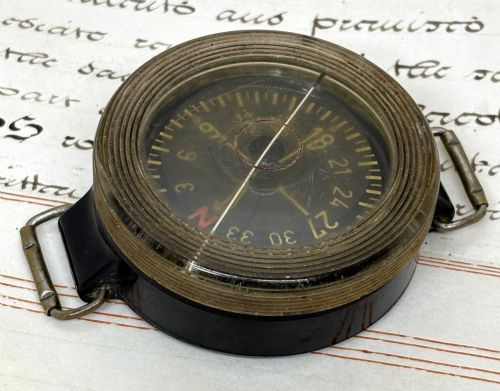
When you search for a vintage navigation instrument, you are looking at scientific apparatus designed to measure position, time, and direction at sea and on land. The pieces on this page span from the eighteenth century through the Edwardian era, taking forms such as pocket compasses, portable sundials, binnacles, and octants. You are most likely to meet portable brass compasses and sundials housed in wooden boxes, alongside larger scientific instruments from the nineteenth century.
The objects range from personal travellers' tools like diptych dials and pocket compasses to substantial shipboard items like binnacles and chronometers. Georgian and Victorian examples appear frequently, reflecting Britain's maritime history and the expansion of global exploration during those periods. Each instrument served a distinct mechanical purpose, whether calculating latitude, measuring inclination, or keeping precise marine time.
How they were made
Makers fashioned these instruments using durable metals primarily, with brass and lacquered metal forming the structural bodies of compasses, sextants, and transit instruments. Wood such as mahogany, boxwood, ebony, and treen provided protective outer cases and pocket housings for delicate portable dials.
Glass protected sensitive dial faces, compass cards, and artificial horizons, while paper and thread appeared in graduated compass scales and internal mounting components. Skilled artisans combined metal casting, precision engraving, and woodwork to create instruments that maintained their mechanical integrity under rigorous conditions.
Vintage Navigation Instrument Retail Price Guide 2026
Typical asking prices for vintage navigation instrument among the pieces listed under this phrase on Sellingantiques today, from the lower quarter to the upper quarter. They describe what is for sale here now, not the wider market.
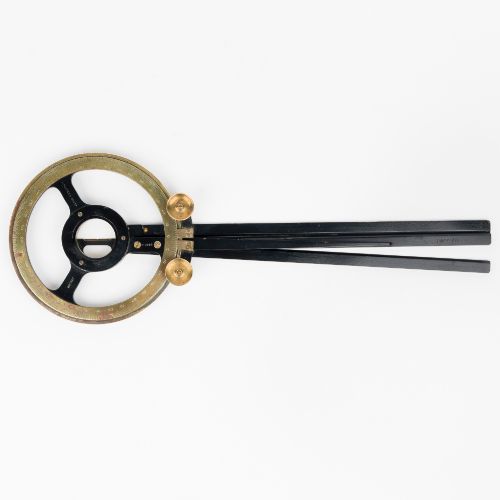
Cartographers and explorers relied on rolling rulers to draw parallel lines across maps without losing their stride.
What varies in quality
The distinction between standard utility items and finer pieces lies in the crispness of the engraved markings and the quality of the materials used in the housing. Instruments produced by known makers exhibit superior legibility on their paper scales and smoother movement in their folding sights and gimbals.
Preservation of the original components, such as intact glass, clear brass lacquering, and matching wooden cases, elevates an object's standing. Finer examples retain their original adjustments and operational precision, showing careful upkeep through the Georgian, Victorian, and Edwardian periods.
Hughes and Son·Henri de Magnac·A Hurlimann Paris·John Lilley and Son·Thomas Mercer
The Vintage Navigation Instrument Glossary
- Binnacle
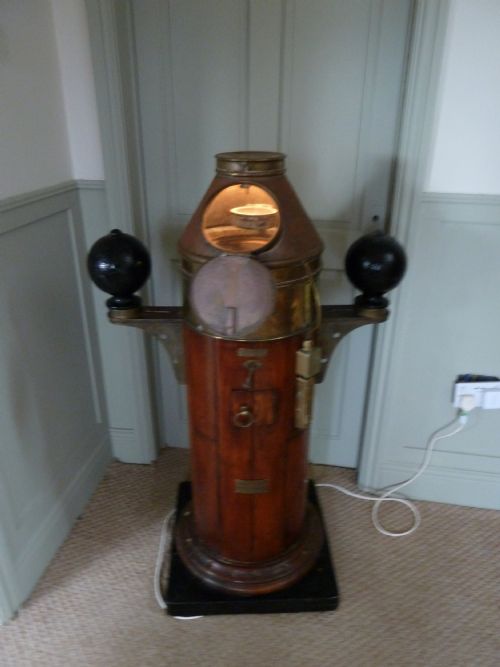
- A upright stand or housing on a ship that held the ship's compass and a lamp for night navigation. These heavy structures protected the compass from iron interference.
- Diptych-dial
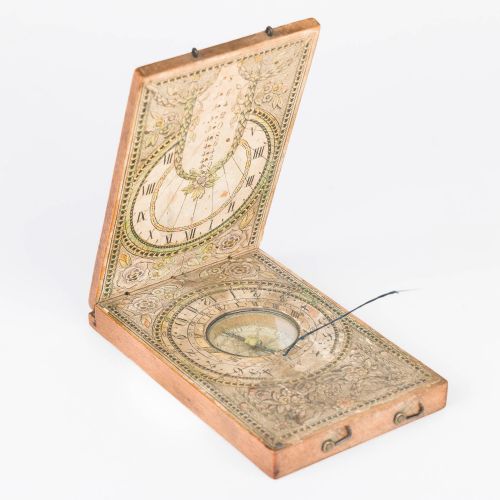
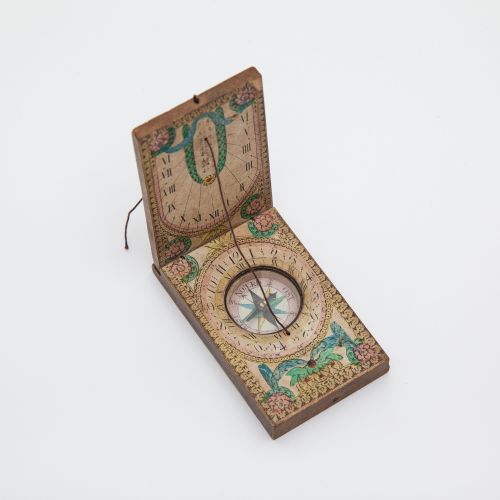
- A portable pocket sundial formed of two small hinged leaves with a string gnomon and an inset compass. Travellers utilised them to tell time and find direction simultaneously.
- Octant
- An early reflecting instrument used to measure the angle between an astronomical object and the horizon for navigation. It predated the modern sextant and used an eighth of a circle.
- Artificial horizon
- A device used with a sextant on land or in calm conditions to provide a mirror surface for measuring altitudes when the sea horizon was obscured. Glass and mercury were common mediums.
- Chronometer
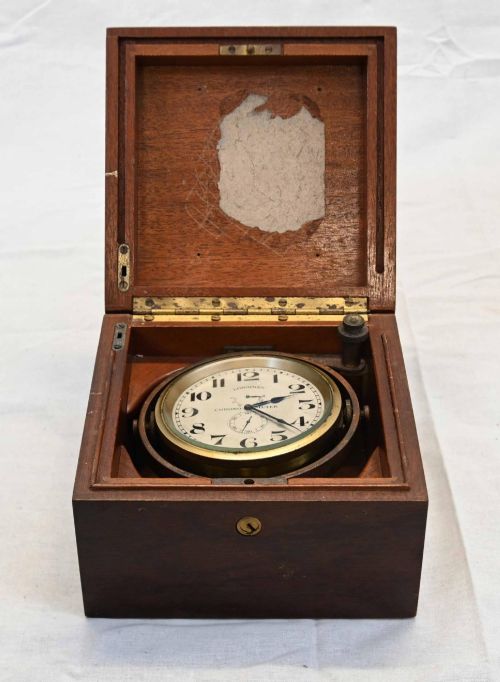
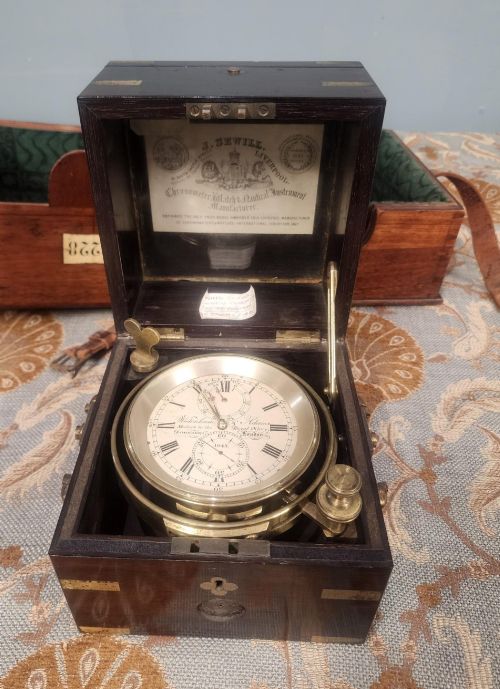
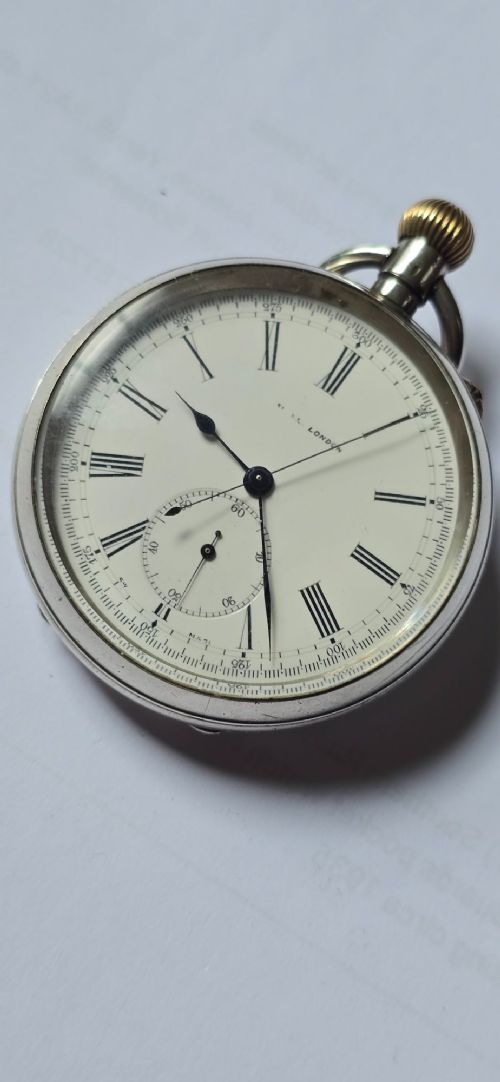
- A highly accurate portable timepiece used to determine longitude at sea by maintaining Greenwich Mean Time. Marine versions were typically mounted in brass gimbals within wooden boxes.
Vintage Navigation Instrument: Frequently Asked Questions
How do I use a portable sundial compass?
Open the hinged leaves of the diptych and align the string gnomon so that the shadow falls on the correct hour mark. The inset compass helps orient the instrument toward magnetic north before reading the time.
Ensure the instrument rests on a flat surface during use. Many Georgian and Victorian pocket versions relied on precise levelling bubbles or plumb lines to maintain accuracy.
What is the difference between an octant and a sextant?
An octant measures angles up to ninety degrees using an arc that spans one-eighth of a circle. Sextants measure angles up to one hundred and twenty degrees using a sixth of a circle.
Both instruments employ mirrors to bring the image of a celestial body down to the horizon, but sextants succeeded octants as the standard tool for ocean navigation.
How should I clean a brass navigation instrument?
Dust the surface gently with a soft dry cloth and avoid harsh chemical polishes that remove the historic patination. Preserving the original lacquered metal finish maintains the object's character.
Wooden cases benefit from occasional treatment with appropriate wax to prevent the timber from drying out. Keep instruments away from direct sunlight and damp environments.
Why do some compasses have liquid inside?
Liquid-filled compasses dampen the movement of the needle, allowing it to settle quickly and remain steady while a ship pitches or rolls. Alcohol or water mixtures prevented freezing in cold climates.
Dry card compasses rely on balance and jewel bearings instead, which were common in earlier pocket instruments and land-based travelling compasses.
How can I date an antique compass?
Examine the typography on the paper dial, the style of the needle, and the construction of the outer brass or wooden case. Maker signatures and patent marks often provide a reliable production window.
Stylistic cues from Georgian, Victorian, and Edwardian design periods help narrow down the decade when the instrument was manufactured.