



Vintage Nautical Watch
These vintage nautical watch items and related marine instruments offer functional timekeeping and maritime history for collectors and interiors.
Vintage Nautical Watch
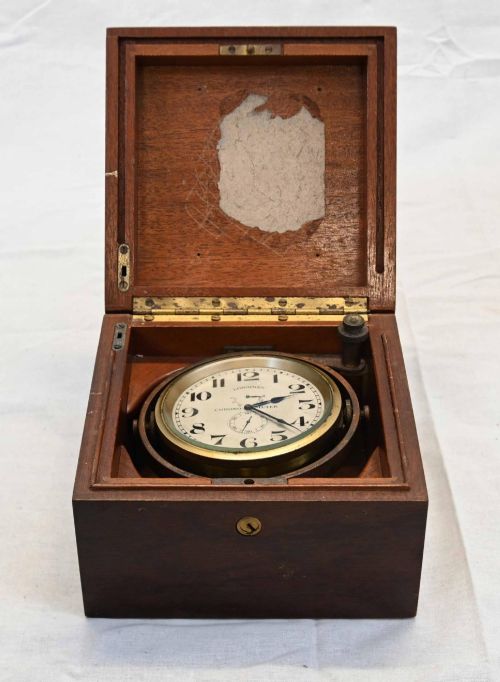
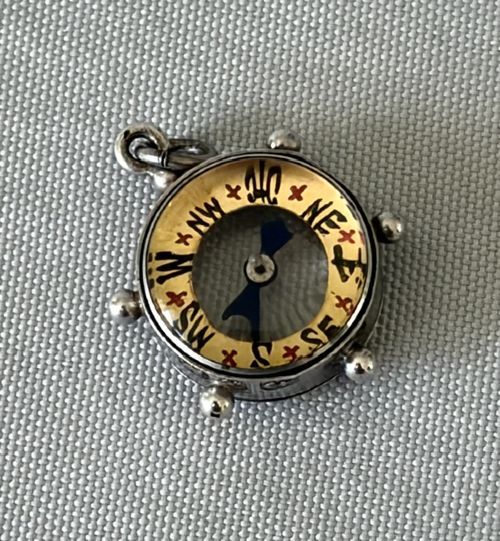
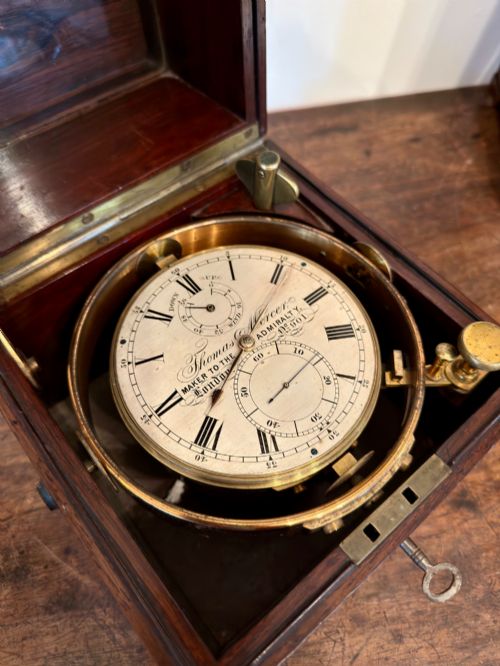
When you search for a vintage nautical watch, you find an assortment of timepieces, marine chronometers, watch chains, and associated instruments from the nineteenth and twentieth centuries. The selection spans pocket watches featuring painted ship dials alongside precision chronometers housed in wooden boxes.
Most items you encounter date from the Victorian era up to the mid-twentieth century, reflecting maritime exploration and naval service. These range from heavy two-day marine chronometers by known makers to silver watch chains with fobs designed for daily wear.
Object types vary widely beyond standard pocket watches, taking in deck clocks, hourglasses, and officer of the watch telescopes. This diversity means every search brings up different facets of maritime history rather than a single uniform style.
Materials and construction
Construction relies heavily on durable metals and hardwoods suited to maritime environments, featuring brass cases, silvered metal dials, and sterling silver. Storage boxes and chronometer housings utilise mahogany and oak, often fitted with brass corner brackets and glass viewing ports.
Vintage Nautical Watch Retail Price Guide 2026
Typical asking prices for vintage nautical watch among the pieces listed under this phrase on Sellingantiques today, from the lower quarter to the upper quarter. They describe what is for sale here now, not the wider market.
Some nineteenth-century pocket watches feature hand-painted scenes of ships leaving port, capturing maritime departures on a miniature scale.
Assessing quality and craftsmanship
Quality rests upon the reputation of the maker and the precision of the mechanical movement. Chronometers produced by established chronometer houses demonstrate superior engineering compared to standard civilian timepieces.
The preservation of original materials, from the mahogany housing to the silvered metal dial, determines the desirability of a piece. Finer examples retain their original fitted boxes, maker signatures, and legible hand-painted dial details.
Mercer of London·Thomas Mercer·Litherland Davies Of Liverpool·Voigtländer and Sohn AG Braunschweig·Ross of London
The Vintage Nautical Watch Glossary
- Marine Chronometer
- A highly accurate portable timekeeper used at sea to determine longitude by celestial navigation. These precision clocks are typically housed in brass-bound mahogany or oak boxes with gimbal mounts.
- Watch Chain
- A decorative or functional chain attached to a pocket watch, frequently paired with a fob. They appear in silver and sterling silver across the nineteenth and early twentieth centuries.
- Officer of the Watch Telescope
- A compact optical instrument used by naval officers for signalling and identification at sea. These brass telescopes were often wrapped in leather for grip.
- Painted Dial
- A watch or clock face decorated with hand-painted artwork, such as a ship leaving port. This traditional decorative technique gives individual character to nineteenth-century timepieces.
- Silvered Metal
- A metal base treated with a thin coating of silver to create a reflective, uniform dial surface. It provides high contrast for engraved or painted numerals on marine instruments.
Vintage Nautical Watch: Frequently Asked Questions
What is a marine chronometer?
A marine chronometer is a precision clock designed to maintain accurate time at sea despite the rolling of a ship. These instruments were essential for navigators calculating longitude before electronic navigation.
Housed in wooden boxes, they represent the peak of nineteenth and twentieth-century horology and mechanical engineering.
What are officer of the watch telescopes?
Officer of the watch telescopes are portable optical devices utilised by naval personnel to scan the horizon and identify vessels. They are constructed from brass and frequently feature leather grips for handling in wet conditions.
Examples from makers like Ross of London and Voigtländer reflect military specifications from the late nineteenth and early twentieth centuries.
How do I date a painted dial pocket watch?
Dating painted dial pocket watches involves examining the typography, the style of the painted ship scene, and the materials used in the case. Nineteenth-century examples often feature hand-painted maritime motifs unique to local makers.
Comparing the movement and hallmarks helps narrow down the decade of production within the Victorian period.