



Vintage Narrow Drawer Unit
A vintage narrow drawer unit brings practical storage into compact spaces, offering useful compartments without dominating the room.
Vintage Narrow Drawer Unit
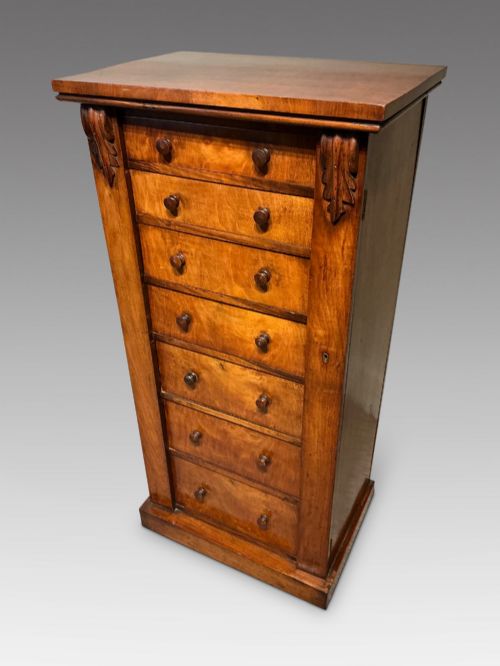
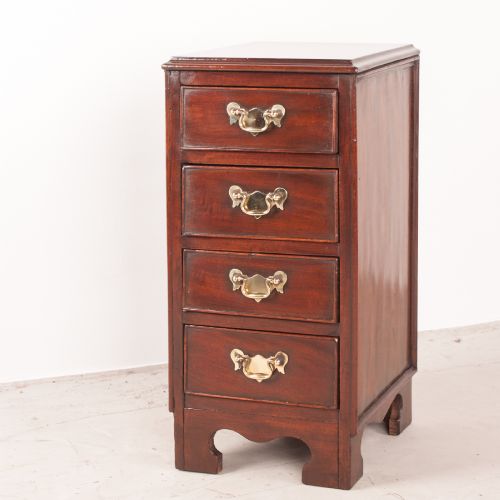
When you search for a vintage narrow drawer unit, you encounter compact storage forms designed to fit modest spaces. The selection on this page spans several distinct eras, including Edwardian, Victorian, Georgian, and early twentieth-century examples.
The physical forms vary from small mahogany trinket storage chests and slim Edwardian drawer units to music cabinets, bedside tables, and tall shop chests. These pieces originate from domestic and commercial settings, united primarily by their restricted width and vertical emphasis.
You are most likely to meet mahogany, oak, and walnut specimens from the Edwardian period or the nineteen-twenties. These range from simple functional bedroom chests to more decorative items featuring inlay, burr walnut, or Dutch painted finishes.
Materials and construction
Cabinet makers built these units predominantly from hardwoods such as mahogany, oak, walnut, and yew wood, supplemented by timber frames and occasional inlay work. These materials provided the structural rigidity necessary for tall, narrow carcasses that might otherwise tip or rack under daily use.
Joinery techniques relied on traditional drawer construction, often featuring graduated drawers fitted within splayed feet or tall vertical housings. Surface finishes range from polished walnut and carved oak to painted treatments, reflecting the specific style revival of the period, from Jacobean to Dutch Neoclassical.
Vintage Narrow Drawer Unit Retail Price Guide 2026
Typical asking prices for vintage narrow drawer unit among the pieces listed under this phrase on Sellingantiques today, from the lower quarter to the upper quarter. They describe what is for sale here now, not the wider market.
Formats range from music cabinets and bedside tables to tall shop chests and waterfall bookcases.
Distinguishing quality in narrow storage forms
Quality in a narrow drawer unit rests upon timber selection and the integrity of the carcass joinery. Denser woods like burr walnut and figured mahogany, paired with clean internal construction, separate standard utility pieces from finer decorative examples.
The refinement of secondary details dictates the upper tier of the range. Subtle decorative elements, such as carved oak details, harmonious inlay, or well-graduated drawers with matching brass hardware, elevate an ordinary storage box into a considered piece of furniture.
The Vintage Narrow Drawer Unit Glossary
- Graduated drawers
- Drawers within a chest that decrease in depth from bottom to top. This arrangement creates a balanced visual weight on taller, narrow units.
- Trinket storage chest
- A miniature chest of drawers designed for small valuables or personal items. These sit on tables or desks rather than standing on the floor.
- Shop chest
- A commercial storage unit built for retail or trade use. They frequently feature robust timber construction and multiple shallow drawers for stock organisation.
- Waterfall bookcase
- An open shelving unit where the sides step back in tiers from top to bottom. This profile creates a cascading effect reminiscent of falling water.
Vintage Narrow Drawer Unit: Frequently Asked Questions
What rooms suit a narrow drawer unit?
These compact pieces fit comfortably in hallways, small bedrooms, or tight corners where standard furniture proves too bulky. Their vertical proportions maximise storage capacity while maintaining a minimal floor footprint.
They serve multiple practical purposes, functioning as bedside tables, music cabinets, or supplemental storage for small accessories. This versatility allows them to integrate smoothly into both traditional and contemporary interiors.
How do I care for polished wood surfaces?
Maintain polished mahogany, oak, and walnut by dusting regularly with a soft, dry cloth. Avoid placing these pieces in direct sunlight or near heat sources to prevent timber splitting and fading.
Apply a quality beeswax periodically to nourish the grain and protect the finish. This preserves the natural lustre of the wood without building up heavy chemical residues.
How can I tell Edwardian pieces apart?
Edwardian furniture often draws inspiration from earlier Georgian and Sheraton styles, featuring lighter construction and subtle inlay work. Pieces from this era typically display softer tones of mahogany or satinwood highlights.
By contrast, Victorian examples tend to be heavier and darker in appearance, utilising dense oak or walnut with more robust mouldings. Examining the interior secondary timbers and drawer linings further clarifies the period of manufacture.
Are narrow chests historically authentic?
The listings include genuine pieces from the Victorian and Edwardian eras alongside early twentieth-century revivals. Cabinet makers built narrow formats historically to fit confined urban spaces or specific domestic functions like sheet music storage.
Revival styles from the nineteen-twenties often replicated these earlier Georgian and Queen Anne forms. Each piece carries construction markers appropriate to its actual date of creation rather than the historical style it mimics.