


Vintage Narrative Painting
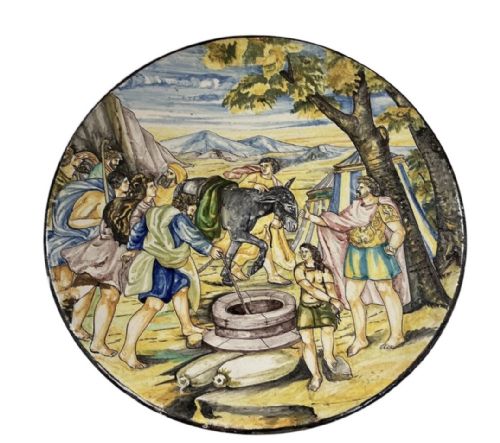
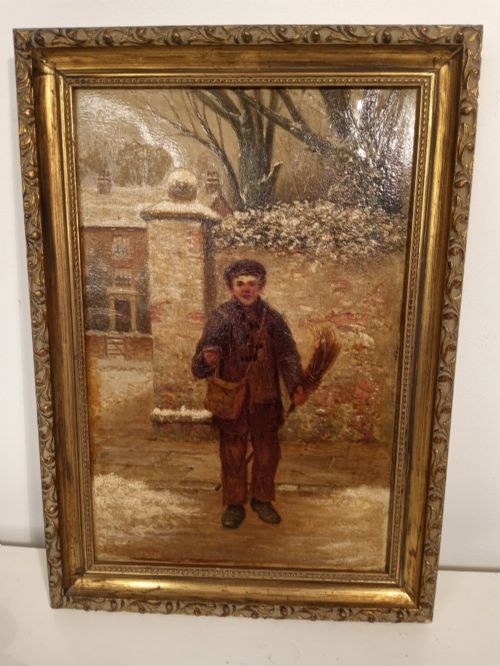
Vintage narrative painting captures human stories and domestic scenes on canvas or panel across the nineteenth and twentieth centuries.
Vintage Narrative Painting
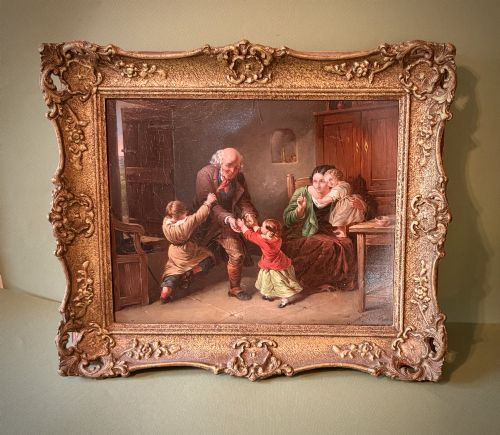
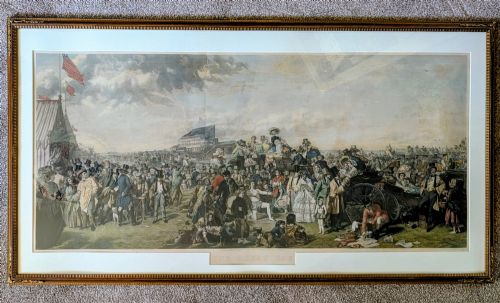
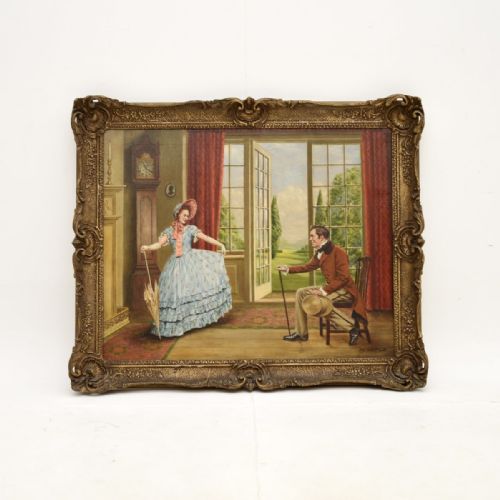
A vintage narrative painting tells a specific story, depicting human interactions, historical moments, and domestic episodes rather than abstract subjects or pure landscapes. Buyers seeking these works find scenes filled with figures, from rural workers and family interactions to historical episodes and literary adaptations.
The selections available here span from nineteenth-century realism and Victorian genre works to later twentieth-century interpretations. Canvases and panels show daily life, portraiture with context, and dramatic human moments across British, French, and wider international schools.
Materials and techniques
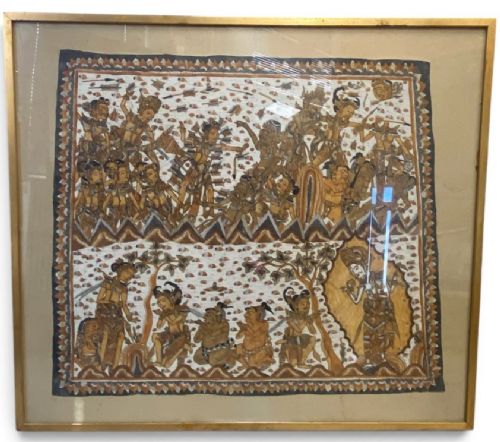
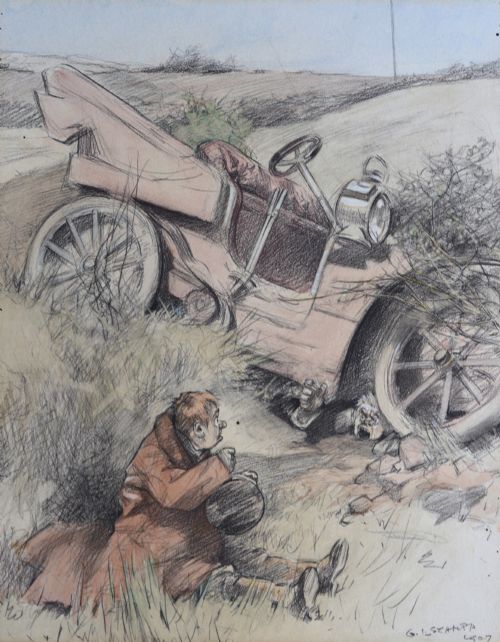
Oil paint applied to canvas or wood panel forms the primary medium for these works, allowing artists to build rich layers of colour and fine detail. Watercolour on paper and pen and ink drawings also appear, alongside specialised surfaces like textile, lacquered wood, and glass.
Framing often involves gilded wood or papier mache plaques that complement the period of the artwork. Pigments and binders are handled with academic precision, particularly in Victorian and continental realist schools.
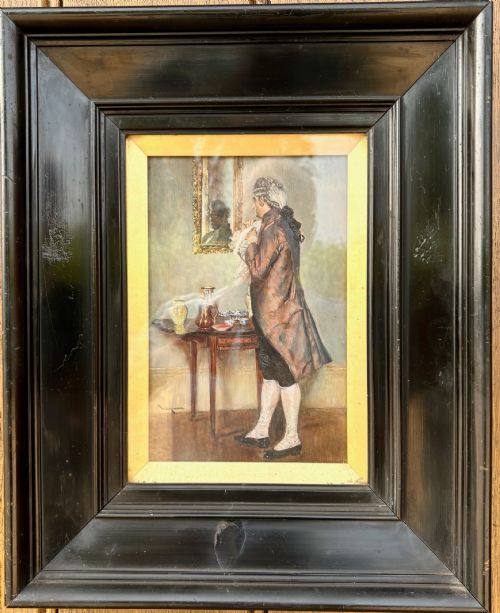
One domestic interior captures a gentleman's shaving ritual abruptly interrupted by his watchful wife.
Assessing quality and execution
Quality rests upon the artist's ability to render facial expressions, anatomical proportion, and narrative tension within the scene. Superior works display confident brushwork and thoughtful composition that draw the viewer directly into the interaction between the figures.
The preservation of the paint surface and the stability of the original canvas or panel matter significantly. Finer examples retain their original framing and surface varnish without heavy restoration obscuring the artist's hand.
William Powell Frith·Alfred Lyndon Grace·Thomas Hicks·Léon Joseph Voirin·George Smith·Arthur Longley Vernon·Hendricus Joseph Dillens·John A Houston·Ralph Hedley·Hans Temple·Théophile Emmanuel Duverger·Rolinda Sharples·Pauline Delacroix Garnier·Arthur David McCormick·Alexandre Decamps
The Vintage Narrative Painting Glossary
- Genre painting
- A style depicting scenes from everyday life, typically involving ordinary people engaged in domestic chores, social gatherings, or work. These works provide valuable social history through their detailed observation of period costume and interiors.
- Oil on canvas
- Pigment mixed with drying oil applied to a stretched woven fabric support. This combination offers flexibility and durability while permitting rich impasto and subtle glazing.
- Realism
- An artistic movement focused on the faithful, unidealised depiction of real-life subjects. Practitioners aimed to show contemporary life and people with truth and accuracy.
- Panel painting
- A flat piece of wood used as a structural support for a painting. Artists favoured wood panels for their rigid surface, which allows for minute detail and smooth finishes.
Vintage Narrative Painting: Frequently Asked Questions
What defines a narrative painting?
A narrative painting tells a distinct story through the depiction of human figures engaged in an action, event, or interaction. Unlike still lifes or pure landscapes, these works invite the viewer to interpret a specific moment in time.
Subjects range from domestic interiors and literary scenes to historical episodes and rural work. The focus remains on character, relationship, and narrative development within the composition.
How do I care for an oil painting?
Protect oil paintings on canvas or panel by keeping them away from direct sunlight, high humidity, and rapid temperature fluctuations. Stable indoor environments prevent the wood panels from warping and the canvas from slackening.
Dust the surface gently with a soft, dry brush without applying pressure. Avoid using water or chemical cleaners on the paint layer or the gilded wood frame.
How can I date a nineteenth-century painting?
Dating often relies on artist signatures, exhibition labels on the reverse, and stylistic markers such as costume, furniture, and interior decor. Canvas stamps and frame construction also offer clues to the period of creation.
Written inscriptions on the back of the stretcher or panel frequently record the exact year, the title, or the artist's address. Comparing the handling of paint to documented works by the same school helps narrow the timeframe further.
Where were these paintings displayed originally?
Nineteenth and early twentieth-century narrative works hung primarily in domestic parlours, dining rooms, and institutional galleries. Wealthy patrons and middle-class collectors purchased them to adorn their homes and spark conversation among guests.
Many pieces also appeared in annual exhibitions held by royal academies and regional art societies. Exhibition labels pasted to the reverse often record these public showings.