
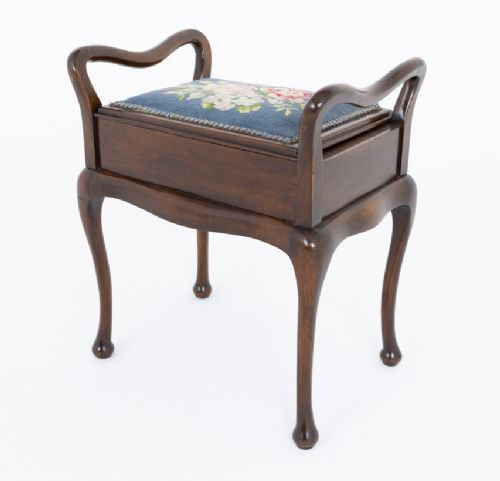
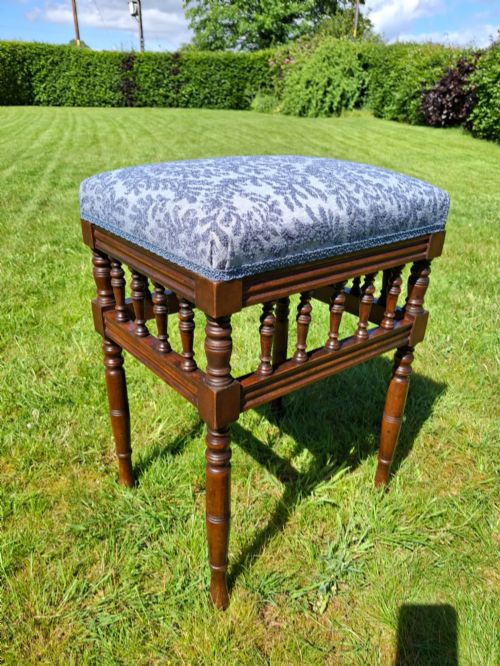


Vintage Music Stool
A vintage music stool offers the right seat for a piano or harp, combining period timber with practical height adjustment.
Vintage Music Stool
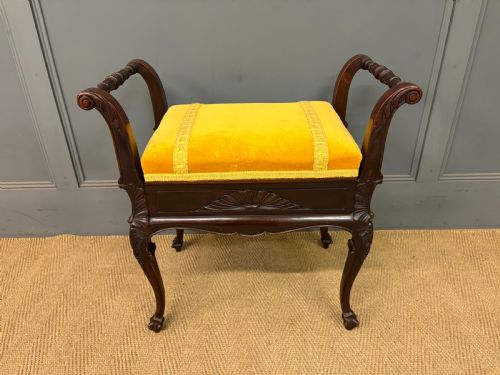
A vintage music stool meets the practical needs of musicians and dressing rooms, appearing primarily as piano stools, music chairs, and duet stools across this selection. Buyers find these seating options spanning the nineteenth century through the Edwardian period and Art Deco eras.
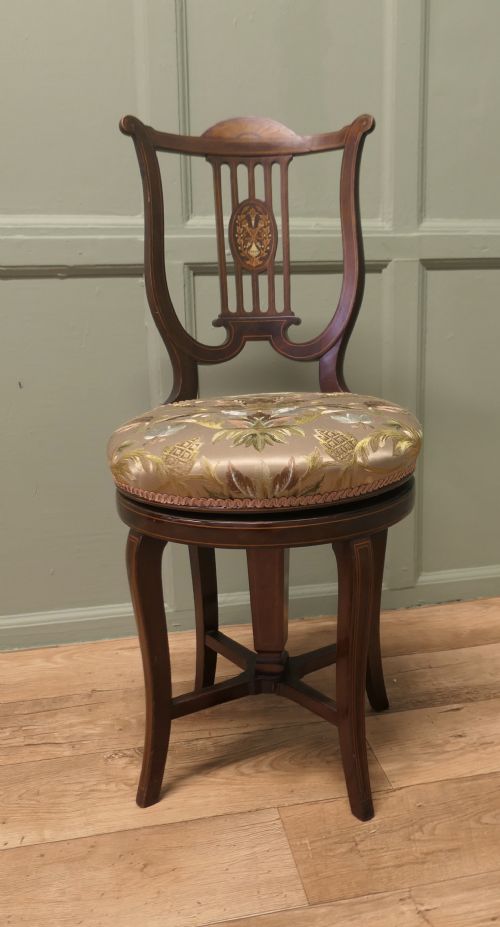
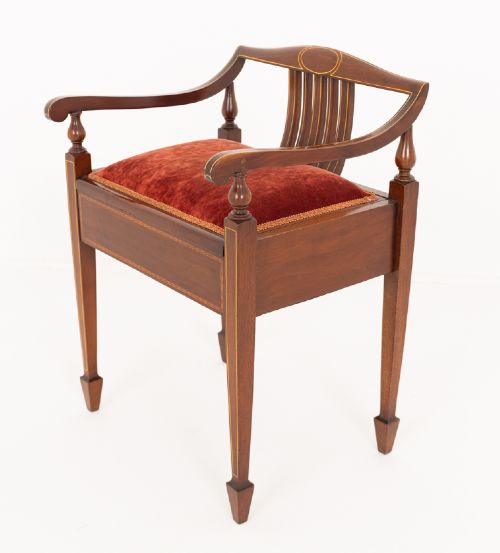
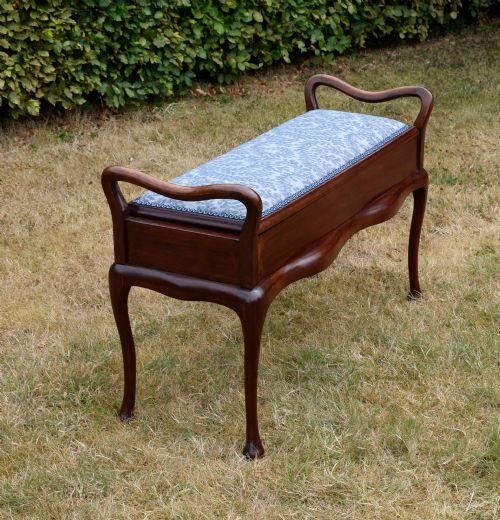
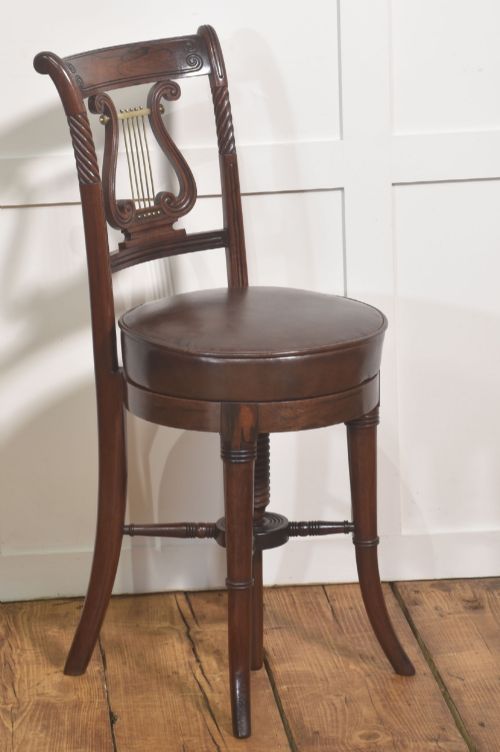
The most common pieces on this page are mahogany and walnut piano stools, alongside revolving harpist chairs and inlaid Edwardian examples. Forms range from single swivel seats to long duet benches with storage compartments.
Origins stretch from English workshops to French makers, encompassing revival styles like Sheraton Revival and Queen Anne alongside William IV and Regency designs. Each piece reflects the domestic musical habits of its original era.
What varies in quality
The distinction between standard examples and superior pieces rests on the complexity of the mechanism and the crispness of the timber carving. Elaborate revolving actions and patent designs show a higher grade of manufacture than simple fixed seats.
Material selection and decorative treatment also divide the range, with figured mahogany, rosewood, and subtle marquetry inlay marking out the finer workshops. Original upholstery materials and branded cabinet maker signatures elevate individual pieces.
Listings feature mahogany, walnut, rosewood, and oak, spanning the Victorian, Edwardian, and Art Deco periods.
Gillows·Jas Shoolbred·James Shoolbred
The Vintage Music Stool Glossary
- Revolving
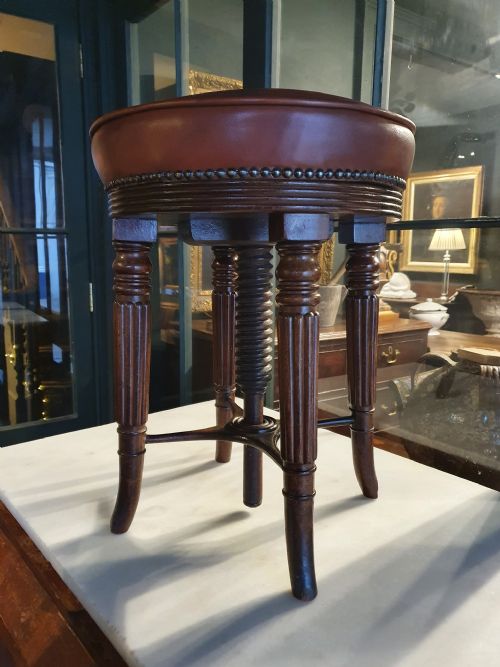
- A seat mechanism that turns on a central screw to adjust height for the player. This allowed musicians to find their precise playing position easily.
- Duet stool
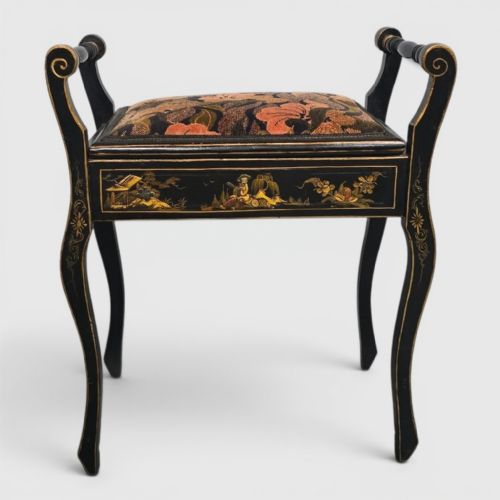
- A wider seat designed to accommodate two players performing together on a piano. These often include hinged lids or fall-fronts concealing sheet music storage.
- Canterbury stool
- A compartmented piece combining a seat with vertical dividers for holding folios and sheet music. Victorian examples in walnut are typical.
- Patent music chair
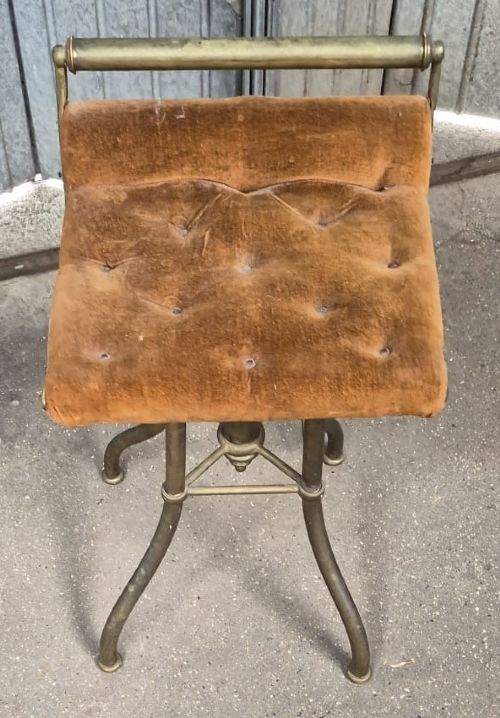
- A specialised seat featuring mechanical adjustments designed for harpists or cellists. These often include tilted backs and rotating actions.
- Sheraton Revival
- A late nineteenth and early twentieth century style drawing on eighteenth century neoclassical motifs. It is characterised by slender proportions and delicate line inlay.
Vintage Music Stool: Frequently Asked Questions
How do I adjust the height on these stools?
Many vintage music stools use a central wooden or brass screw mechanism that raises or lowers the seat when rotated. Others rely on nineteenth century patent lever systems.
Buyers should test the action gently to ensure the thread moves smoothly without jamming or excessive lateral play.
Where were music stools typically placed?
These pieces sat beside upright and grand pianos in domestic drawing rooms, or in music salons alongside harps and cellos. Their compact footprint also suited dressing tables.
Today they function flexibly as piano seats, dressing chairs, or small occasional seats in living spaces.
How do I distinguish Victorian from Edwardian music stools?
Victorian examples frequently feature dark walnut or rosewood, heavier turning, and rich upholstery such as velvet. They often emphasise revolving functions and carved details.
Edwardian pieces lean towards lighter mahogany frames with satinwood inlay, reflecting the Sheraton Revival style popular around nineteen hundred.
Do duet stools offer storage inside?
Many duet piano stools feature a hinged seat lid or a fall-front door that opens to reveal internal compartments. These spaces were originally intended for organising sheet music.
This hidden capacity makes them practical for modern living rooms needing discreet storage for small items.