





Vintage Music Drawers
Vintage music drawers bring period craft and practical storage together, offering timber storage designed for sheets and folios that suits modern rooms.
Vintage Music Drawers
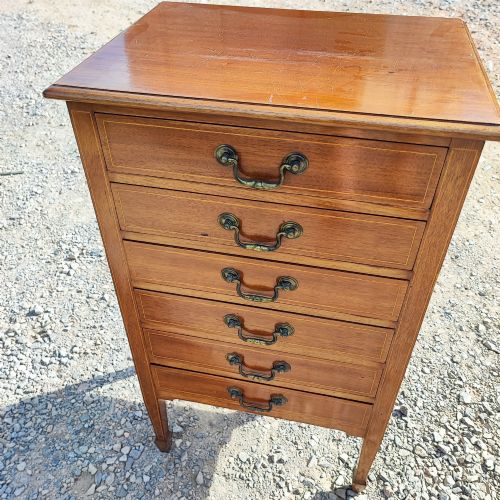
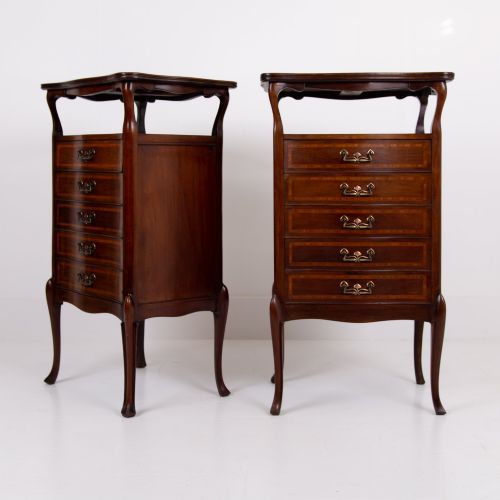
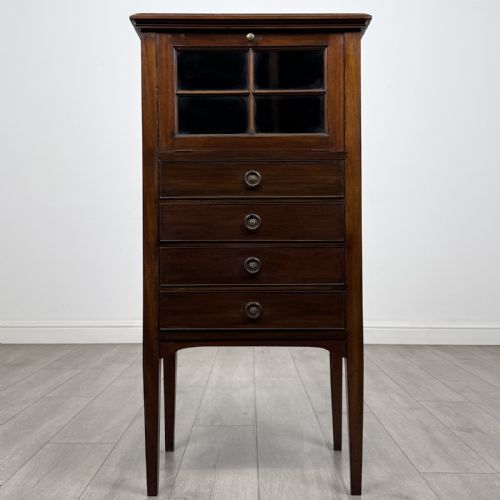
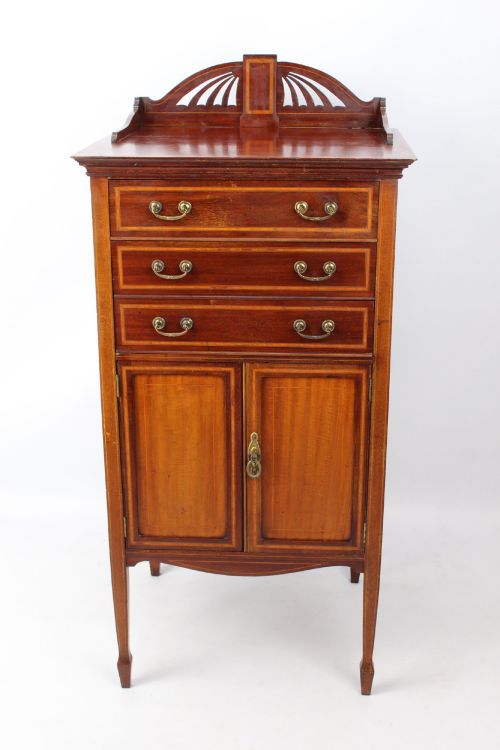
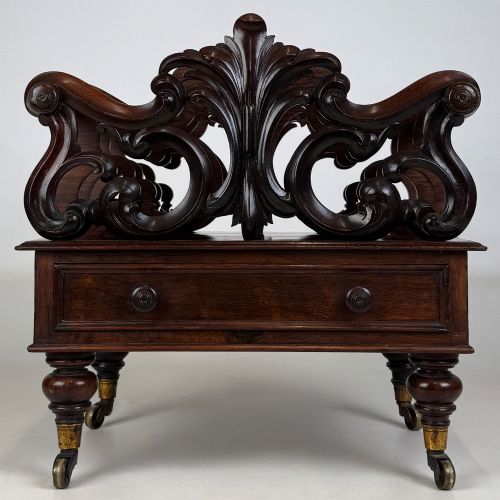
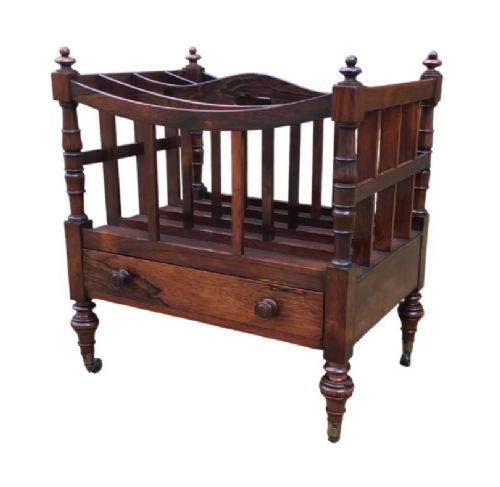
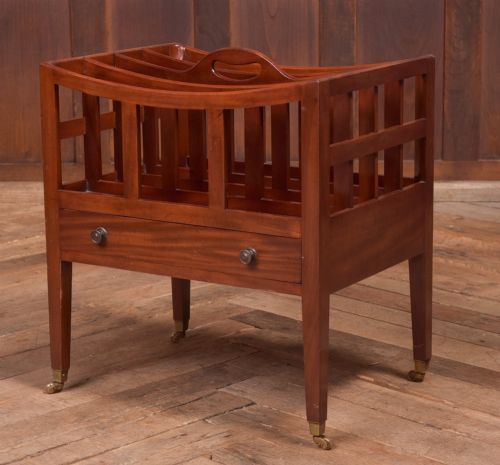
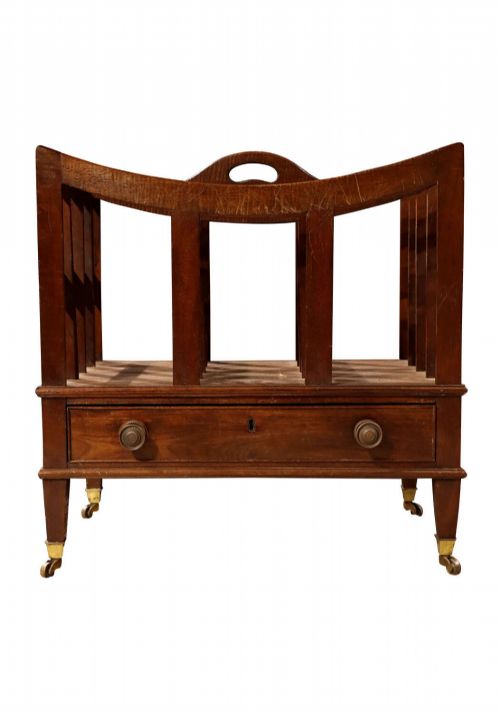
Vintage music drawers encompass dedicated sheet music cabinets, canterburys, and multi-drawer storage pieces originating from the 19th century through to the Edwardian era. Buyers seeking vintage music drawers will encounter Edwardian mahogany cabinets alongside earlier Regency and Victorian canterburys constructed for domestic sheet storage.
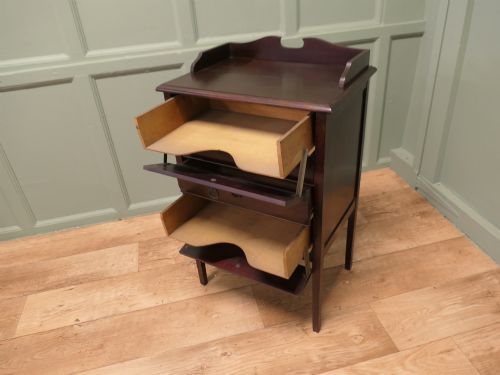
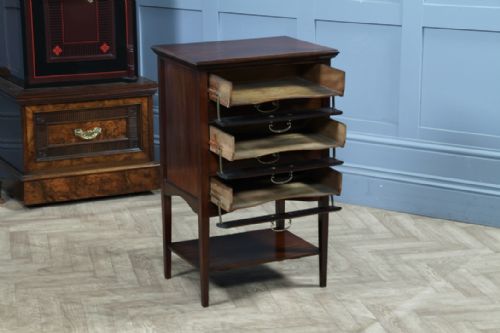
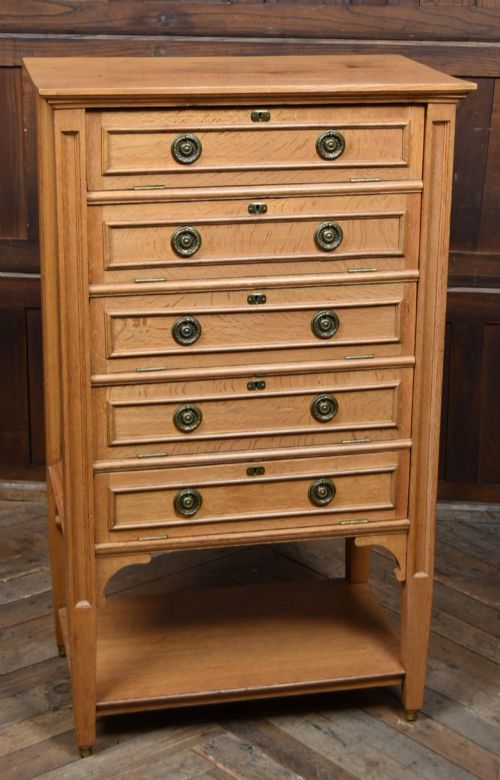
The form typically combines vertical compartments or drop-front drawers suited to paper folios, often accompanied by lower utility drawers. Most examples rely on durable timber frames designed to hold heavy paper collections while remaining compact enough for domestic placement.
Origins stretch across Georgian, William IV, and Victorian periods, with Edwardian mahogany and inlaid variations appearing frequently. Each piece reflects the domestic musical habits of its era, providing specialised compartments for organised storage.
What varies in quality
The refinement of timber figure and internal divider joinery separates standard utility items from exceptional examples. Finer pieces display carefully matched burr walnut or delicate satinwood stringing that elevates the visual presence of the cabinet.
Proportion and structural balance dictate the success of the piece, particularly in boat-shaped or freestanding canterburys where leg turnings and castor fixings must support the weight distribution. Original hardware and intact internal divisions preserve the historical integrity of the piece.
Vintage Music Drawers Retail Price Guide 2026
Typical asking prices for vintage music drawers among the pieces listed under this phrase on Sellingantiques today, from the lower quarter to the upper quarter. They describe what is for sale here now, not the wider market.
Listings feature mahogany, rosewood, and burr walnut across pieces spanning the Regency, Victorian, and Edwardian periods.
The Vintage Music Drawers Glossary
- Canterbury
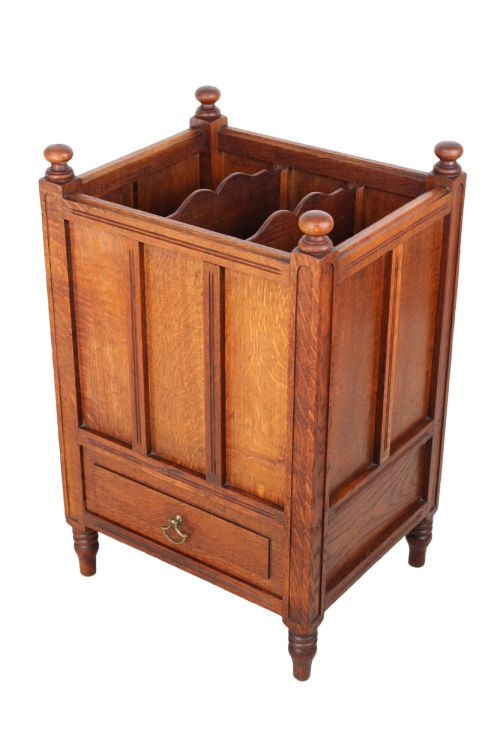
- A low, open-framed stand featuring slatted partitions, originally designed to hold sheet music or newspapers. These pieces frequently incorporate a single lower drawer and stand upon turned legs with castors.
- Music cabinet
- An upright piece of furniture enclosed by a door or fitted with multiple shallow drawers intended for organising sheet music. Edwardian iterations often feature mahogany construction with inlaid decorative motifs.
- Burr walnut
- A highly figured timber veneer prized for its swirling grain patterns derived from tree growths. It appears on polished surfaces of Victorian and Edwardian cabinets.
- Whatnot
- A multi-tiered open shelving unit used for display and storage, occasionally found alongside music furniture within period domestic interiors.
- Drop-front
- A hinged panel that lowers to reveal internal compartments or writing surfaces, seen on specialised storage cabinets.
Vintage Music Drawers: Frequently Asked Questions
What is a music cabinet?
A music cabinet is an enclosed piece of furniture designed with shallow drawers or vertical slots to protect and organise sheet music.
These pieces emerged strongly during the Victorian and Edwardian periods as domestic piano playing became widespread.
How do you use a canterbury?
A canterbury serves as a low stand with divided sections for sorting sheet music, periodicals, or newspapers within easy reach.
Its open partitions keep paper collections upright while lower drawers hold smaller accessories.
What woods were used?
Cabinetmakers utilised dense timbers such as mahogany, rosewood, and walnut to build durable storage frames.
Decorative elements often included satinwood inlay, burr walnut veneers, and brass fittings.
How do I date a piece?
Dating relies on observing structural characteristics, timber choices, and decorative styles associated with periods like the Regency or Edwardian eras.
Inlaid mahogany and specific leg turnings offer strong indicators of the manufacturing decade.