




Vintage Moorcroft Earthenware
Vintage Moorcroft earthenware brings tactile depth and rich glaze colour to any room, offering classic ceramic forms from the early twentieth century.
Vintage Moorcroft Earthenware
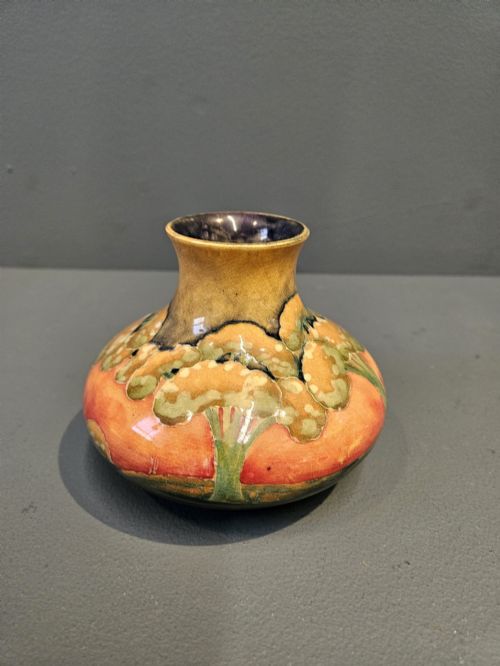
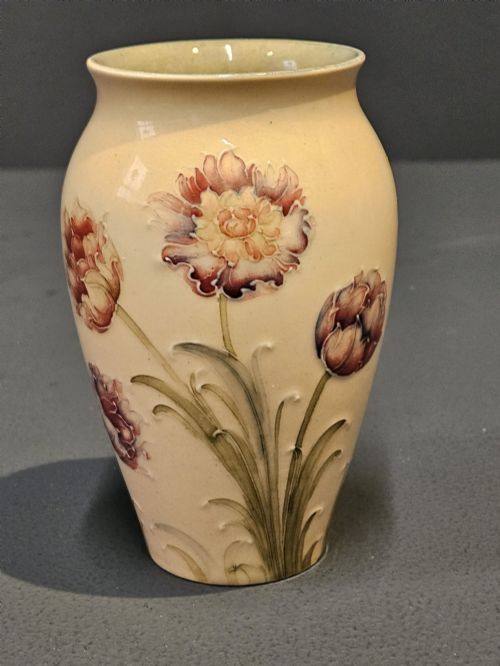
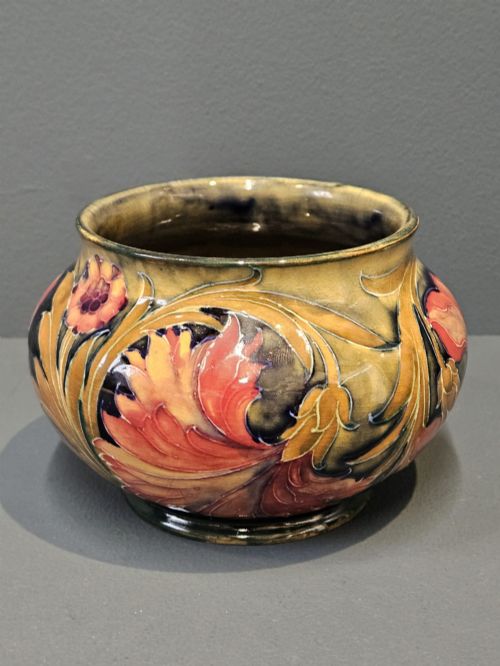
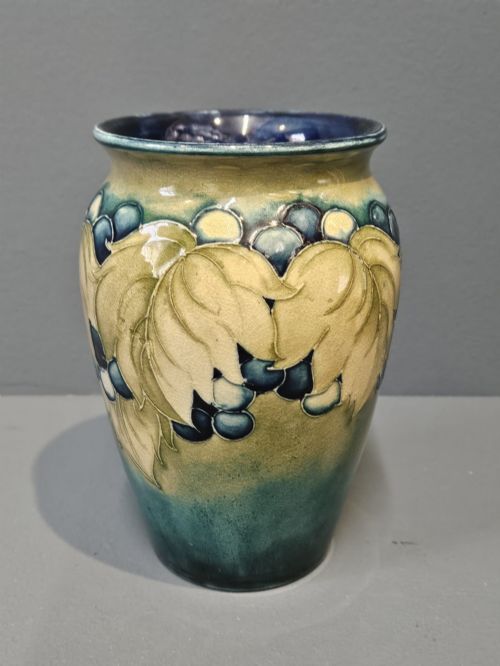
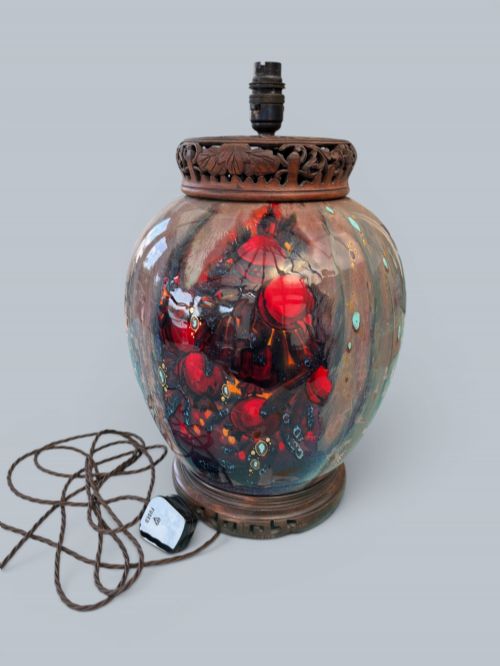
Vintage moorcroft earthenware pieces comprise decorative vases, bowls, table lamps, and plates produced during the early decades of the twentieth century. These ceramics capture design movements from the Arts and Crafts period through to Art Nouveau and Art Deco. Buyers encounter forms ranging from miniature flower vessels to large bulbous vases and pot pourri jars.
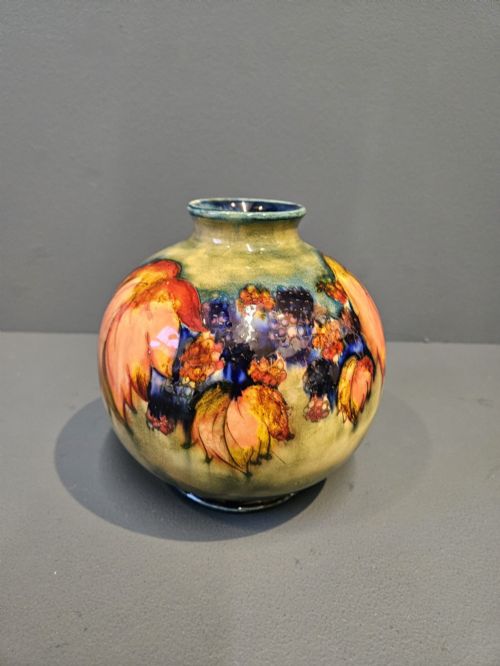
The selection on this page centres on pieces from the 1910s, 1920s, and 1930s. Vases and decorative bowls dominate the inventory, often featuring the rich fruit and foliage patterns associated with the maker. Earlier examples from the Macintyre period sit alongside later studio output.
Methods and materials of production
Production relies on earthenware bodies shaped into vessels, bowls, and lamp bases, finished with thick, vibrant coloured glaze. Workers applied raised outlines using pipe-clay before hand-painting the colour beneath the glaze. This tube-lining technique creates the characteristic tactile ridges that define the surface.
Selected pieces incorporate secondary materials such as wood, brass, or gold leaf, particularly in functional items like table lamps and fitted jars. Kiln firing sets the glaze to produce deep pools of colour with a characteristic sheen across the earthenware surface.
Vintage Moorcroft Earthenware Retail Price Guide 2026
Typical asking prices for vintage moorcroft earthenware among the pieces listed under this phrase on Sellingantiques today, from the lower quarter to the upper quarter. They describe what is for sale here now, not the wider market.
Listings feature items from the 1910, 1920, and 1930 periods, incorporating earthenware, brass, wood, and gold leaf.
Distinctions in quality and execution
Quality separates by the crispness of the tube-lined outline and the depth achieved in the glaze firing. Superior examples show precise control in the hand-painted colour gradients across complex botanical motifs like pomegranates and leaves. Stronger definition in the raised clay lines marks out the finer studio pieces.
Scale and ambition of the form also dictate the tier of a piece, with large pot pourri vessels and substantial vases demonstrating greater technical mastery than miniature flower holders. The clarity of studio stamps and signatures adds documentary weight to the physical execution.
William Moorcroft·Macintyre And Co
The Vintage Moorcroft Earthenware Glossary
- Earthenware
- A porous pottery body fired at lower temperatures than stoneware or porcelain, requiring a vitreous glaze to hold liquids. This material forms the thick canvas for the maker's colourful designs.
- Tube-lining
- A decorative technique where liquid clay is squeezed through a small nozzle onto the unglazed ceramic body to create raised outlines. This process maps out the pattern before the colours are applied by hand.
- Glaze
- A glassy coating fused to the earthenware body through kiln firing to seal the porous clay and provide colour and shine. Multiple applications create the rich, layered depth seen on these vessels.
- Pot pourri
- A perforated vessel designed to hold dried scented plant material to fragrance a room. These lidded jars combine decorative ceramic art with domestic function.
Vintage Moorcroft Earthenware: Frequently Asked Questions
What periods do these ceramics cover?
The pieces span the early twentieth century, specifically drawing from the 1910s, 1920s, and 1930s.
This era encompasses the transition from Arts and Crafts ideals into Art Nouveau and Art Deco styling.
How do I identify a Moorcroft pattern?
Look for raised outlines created by tube-lining, which separate areas of hand-painted colour.
Common motifs include botanical subjects such as pomegranates, leaves, and floral arrangements set against deep blue or celadon grounds.
Were these pieces used daily?
Most items served as ornamental focal points, including decorative vases, bowls, and display plates.
Some pieces, such as table lamps and lidded jars, fulfilled practical domestic roles while maintaining artistic ambitions.
How should I display vintage earthenware?
Place pieces where natural light can catch the glazed surfaces and highlight the rich depth of colour.
Keep them away from direct edges where heavy foot traffic might cause accidental knocks.