




Vintage Mirrored Credenza
A vintage mirrored credenza brings depth and light to a room through glass plates set into timber cabinetry spanning the Victorian to Art Deco eras.
Vintage Mirrored Credenza
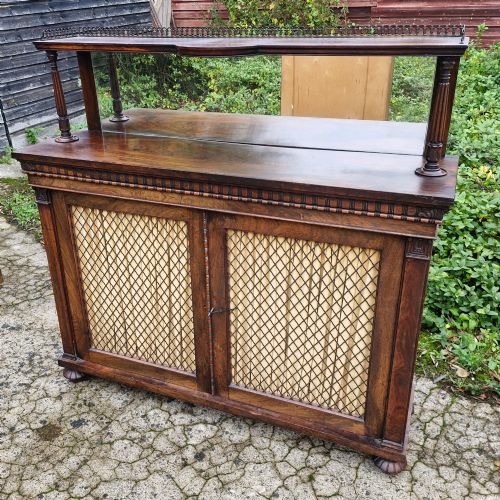
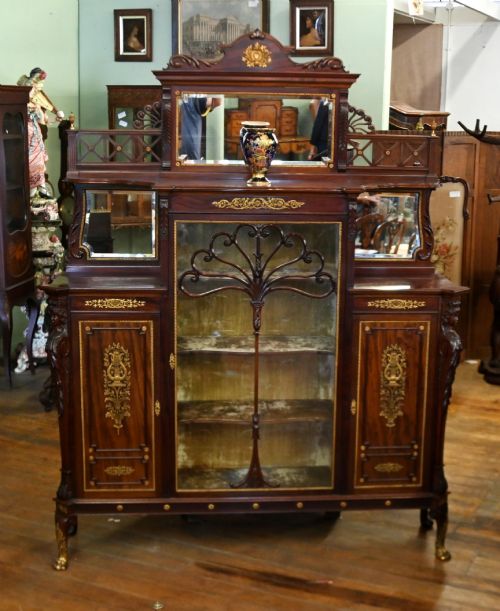
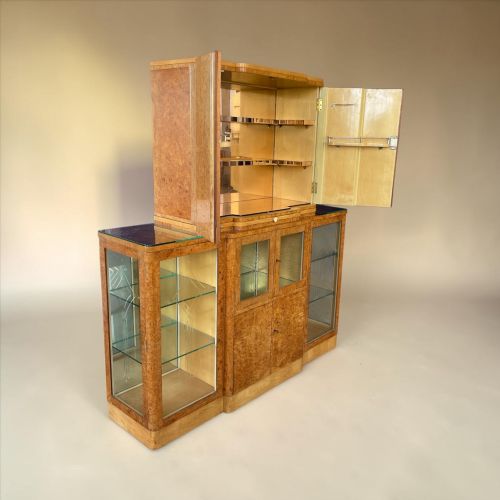
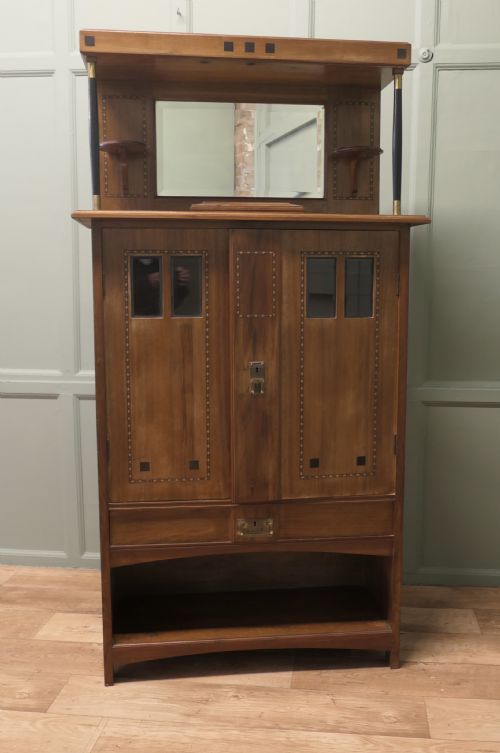
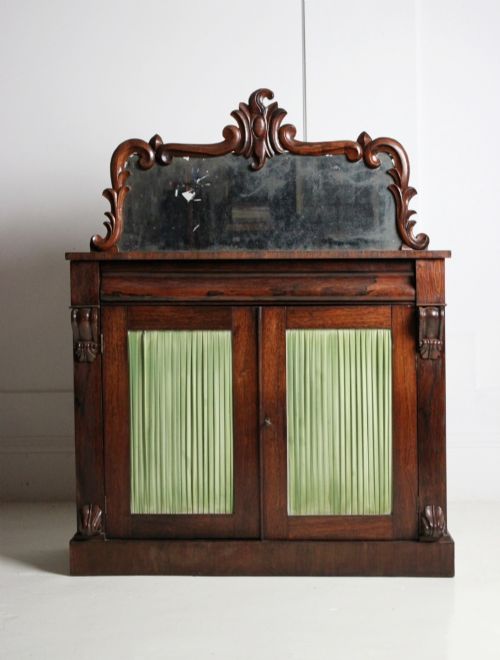
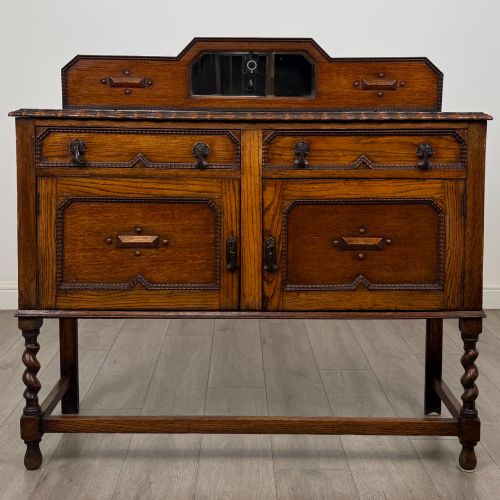
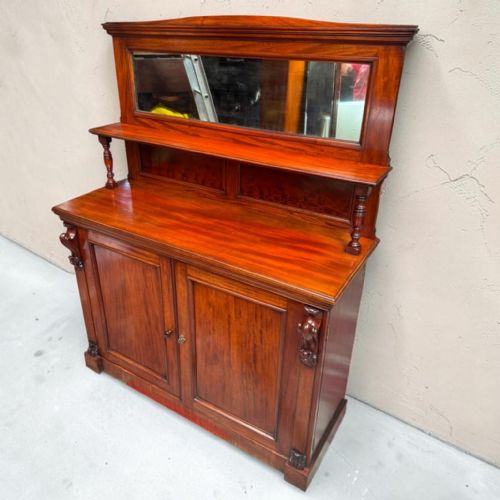
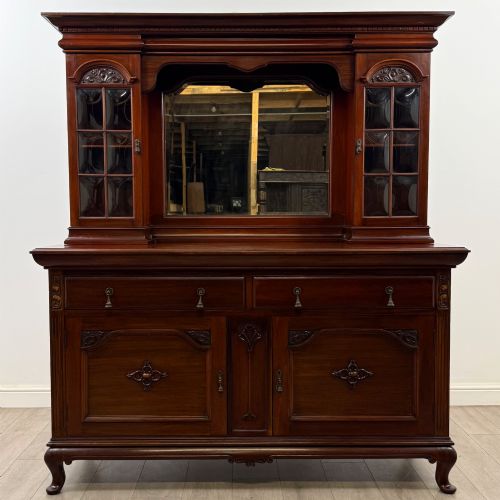
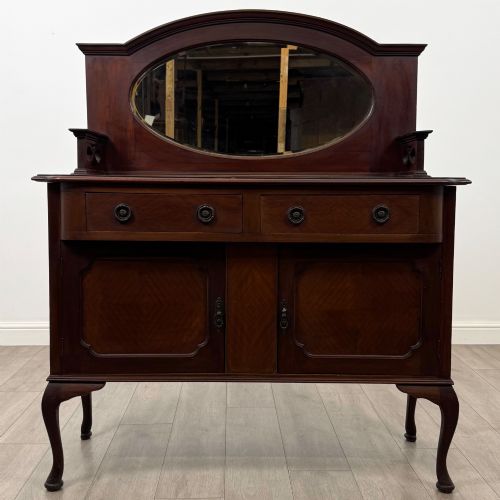
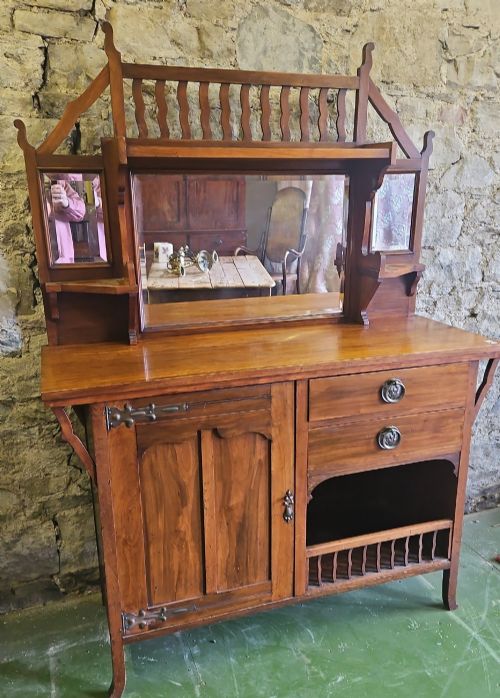
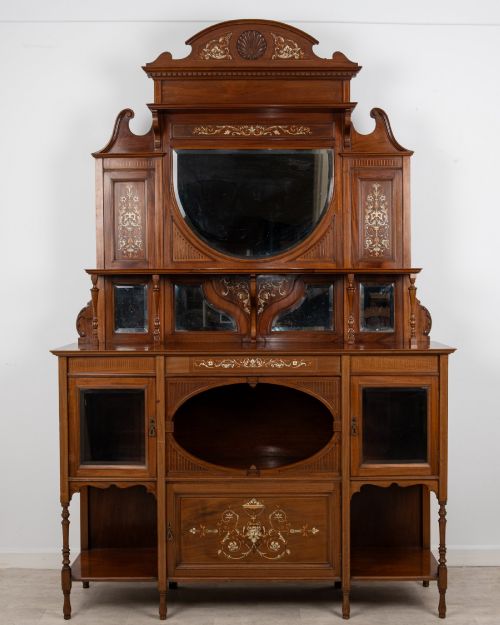
When you search for a vintage mirrored credenza, you encounter large storage furniture primarily originating from the nineteenth and early twentieth centuries. These forms include sideboards, mirror back cabinets, chiffoniers and display units designed to hold dining ware or display decorative objects.
The pieces on this page span several decades, moving from heavily carved Victorian walnut and mahogany through to cleaner Arts and Crafts oak and streamlined Art Deco designs. Many incorporate reflective glass panels within the wooden framework, often placed above a marble top or serving surface.
Origins stretch across British workshops and continental makers, incorporating regional styles such as Jacobean Revival and Secessionist cabinet making. Buyers select these items to anchor a dining room or living space with period character and functional surface area.
How they were made
Cabinet makers built these frames using solid hardwoods like oak, mahogany and walnut, frequently applying burr walnut or rosewood veneers to primary surfaces for striking grain patterns. Carved ornamentation, brass hardware and inlaid details appear across many examples.
Mirror glass was silvered by hand or through early industrial chemical processes, then fitted securely into wooden backboards or door panels. Marble tops, seen on several mid-nineteenth century pieces, were cut, polished and fitted directly to the timber base to provide a durable serving top.
Vintage Mirrored Credenza Retail Price Guide 2026
Typical asking prices for vintage mirrored credenza among the pieces listed under this phrase on Sellingantiques today, from the lower quarter to the upper quarter. They describe what is for sale here now, not the wider market.
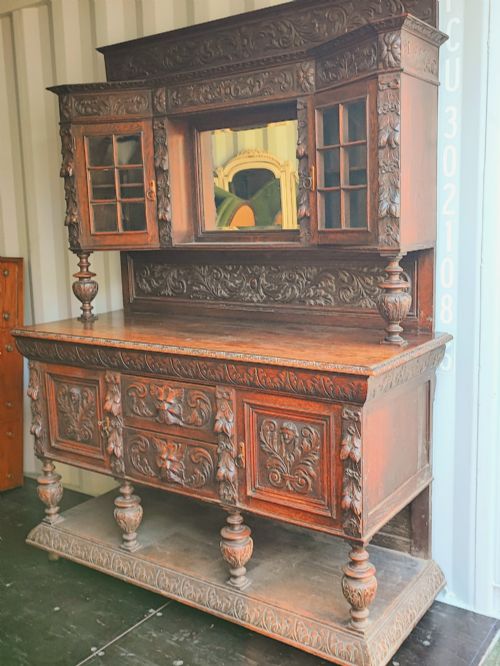
Some nineteenth century oak sideboards secretly watch the room with carved Green Man faces peering through the foliage.
What varies in quality
Construction methods distinguish standard workshop production from exhibition pieces, particularly in the precision of dovetail joints, the thickness of applied veneers and the depth of hand carving on the timber. Superior examples employ carefully selected burr woods that match symmetrically across large door and drawer fronts.
The condition and clarity of the mirror glass alongside the retention of original brass handles and working locks strongly influence the integrity of a piece. Finer items integrate marble tops and majolica panels with precise stonemasonry and ceramic firing, whereas lesser pieces rely on simpler applied mouldings.
Harry and Lou Epstein
The Vintage Mirrored Credenza Glossary
- Credenza
- A low cabinet or sideboard designed for dining rooms, often featuring doors and sometimes elevated with a mirrored superstructure. This form evolved from a serving table into a fully enclosed display unit.
- Chiffonier
- A compact sideboard or small cabinet featuring a shelved superstructure above a drawer and cupboard base. Originating in France, these pieces served smaller domestic spaces for storing glassware and linens.
- Burr walnut
- A prized timber harvested from the gnarled growths on walnut trees, yielding intricate, swirling grain patterns. Cabinet makers sliced this wood into thin veneers for decorative furniture fronts.
- Secessionist
- A stylistic movement emerging around nineteen hundred that rejected historic revivalism in favour of geometric lines and simplified forms. This aesthetic influenced early twentieth century cabinet makers.
- Majolica
- Opaque tin-glazed earthenware decorated with colourful metallic oxide pigments. These panels frequently adorn the doors and panels of late nineteenth century cabinets.
Vintage Mirrored Credenza: Frequently Asked Questions
Where should I place a mirrored cabinet?
These cabinets suit dining rooms, hallways or living spaces where the reflective glass can bounce natural light around the interior.
Ensure the floor is level and that the piece has sufficient clearance from direct heat sources to protect the wooden veneer and mirror backing.
How do I clean the mirror glass?
Use a soft cloth and a gentle, ammonia-free glass cleaner applied to the cloth rather than sprayed directly onto the glass. This prevents moisture from seeping behind the silvered coating.
Take care around the wooden rebate and old putty to avoid loosening the vintage glass plate from its frame.
Can I remove the mirror back?
Most mirror backs form an integral structural component of the cabinet and are secured with original screws, tongue and groove joints or framing pins. Disassembling them risks damaging the timber framework and altering the proportions designed by the maker.
If transport requires removal, consult a professional restorer to ensure the glass and decorative cresting remain intact.
How do I identify the period?
Examine the timber species, joinery techniques and decorative motifs, such as heavy Victorian carvings or geometric Arts and Crafts metalwork. Labels, stamps inside drawers and construction methods often point to specific decades.
Comparing the hardware styles, such as brass drop handles versus simpler wooden pulls, also clarifies the era of manufacture.