



Vintage Military Gun
These vintage military gun pieces span centuries of ordnance and arms, offering collectors authentic brass, steel, and timber pieces of history.
Vintage Military Gun
The assortment includes specific historical categories such as Victorian military arms, Georgian maritime pieces, and French military models. Buyers frequently meet items like Tower-marked percussion pistols, Enfield rifles, and decorative cast iron or bronze field guns.
Materials and construction
Makers utilised dense hardwoods such as walnut and oak for stocks and carriages, pairing them with heavy metals for barrels and mechanisms. Brass and bronze appear frequently alongside iron, cast iron, and steel.
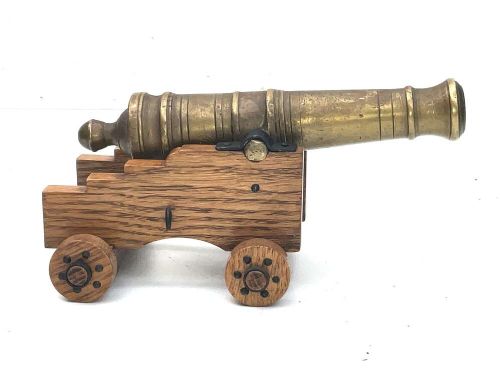
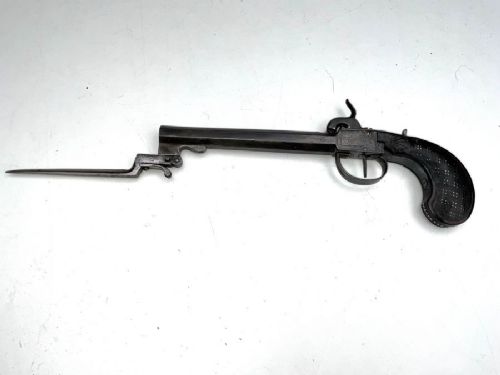
Mechanisms rely on traditional firing systems like flintlock and percussion locks, matched with mounted bayonets where applicable. Cannons incorporate metal barrels cast in bronze, brass, or iron, mounted to stepped wooden or iron carriages.
Vintage Military Gun Retail Price Guide 2026
Typical asking prices for vintage military gun among the pieces listed under this phrase on Sellingantiques today, from the lower quarter to the upper quarter. They describe what is for sale here now, not the wider market.
Some nineteenth-century gentlemen kept pocket-sized persuaders close at hand, ensuring disputes at sea or on land were settled with proper British steel.
Factors in quality
Quality rests on the integrity of the original materials, the precision of metal casting, and the preservation of wood grain. Signed locks and matching serial numbers elevate an item significantly.
The distinction between utilitarian service issue and officer-grade finish dictates the refinement of the piece. Decorative models and scale replicas vary by the hand-built detail in their carriages and metalwork.
Tower·Wilson
The Vintage Military Gun Glossary
- Flintlock
- An ignition mechanism utilising a flint held in a cock to strike a steel frizzen, creating sparks to ignite the powder charge. This system pre-dates percussion caps.
- Percussion
- A later ignition system where a hammer strikes a primer cap containing fulminate of mercury, sending a flame into the barrel. This method replaced flintlocks in the nineteenth century.
- Blunderbuss
- A muzzle-loading firearm with a flared barrel designed to scatter shot at close range. It saw extensive use by coach guards and maritime officers.
- Musketoon
- A shorter, lighter version of a standard military musket designed for cavalry or naval use. It allowed easier handling in confined spaces.
- Gribeauval
- A standardised system of field artillery developed in France by Jean Baptiste Vaquette de Gribeauval. It revolutionised cannon design for mobility and interchangeable parts.
Vintage Military Gun: Frequently Asked Questions
What is the difference between flintlock and percussion?
Flintlock arms use a piece of flint striking steel to create a spark for ignition. Percussion arms rely on a hammer striking a primed percussion cap.
Percussion systems emerged later in the nineteenth century, offering greater reliability in wet weather compared to earlier flint mechanisms.
Are these pieces functional antiques?
The selection includes antique firearms, muskets, and pistols alongside non-firing scale models and decorative cannons. Many antique firearms survive from the eighteenth and nineteenth centuries.
Operational capability depends on professional inspection and the specific condition of the mechanical parts and barrels.
What periods do these pieces represent?
The inventory spans the eighteenth and nineteenth centuries, with items originating from Georgian and Victorian eras. You will find specific dates like 1853 alongside broader periods.
French and British military pieces dominate, reflecting standard service arms and maritime equipment of those eras.
How do I identify a military model from a service arm?
Service arms display standard government or regimental markings, such as Tower stamps or East India Company property marks. They were issued to troops for active duty.
Scale models and decorative field guns are built to smaller proportions for display or desktop use, lacking standard service ordnance markings.