



Vintage Military Dresser
A vintage military dresser brings utilitarian strength and rich timbers into a home, offering modular storage built for movement.
Vintage Military Dresser
When buyers search for a vintage military dresser, they encounter sturdy modular chests of drawers and specialist boxes designed for transit during the nineteenth and early twentieth centuries. These campaign pieces originate from periods spanning the Victorian era through to the early twentieth century, reflecting a history of colonial service and army life.
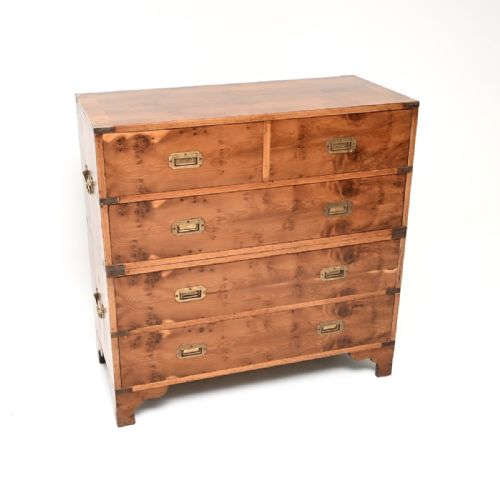
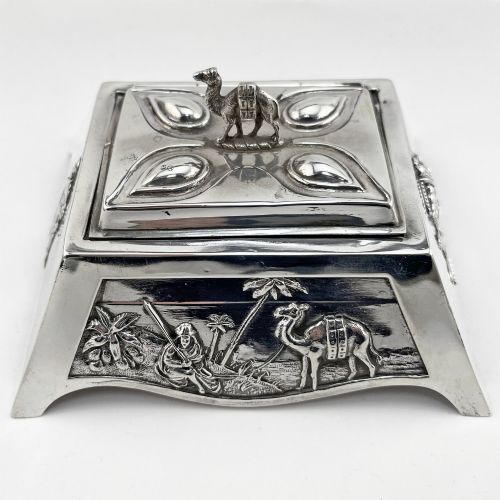
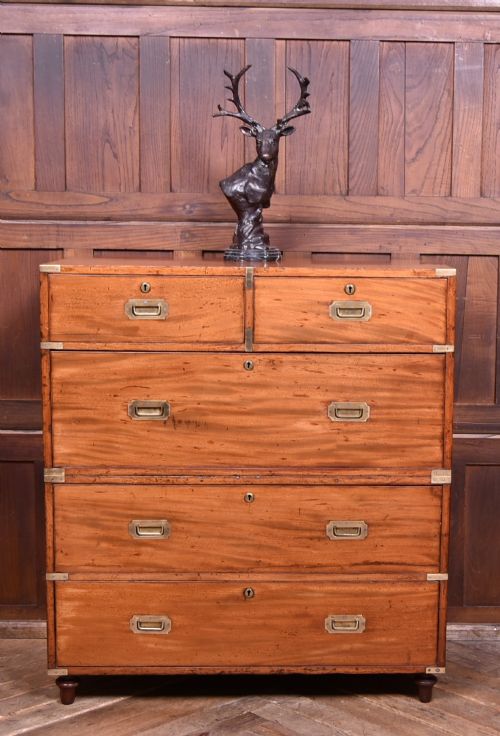
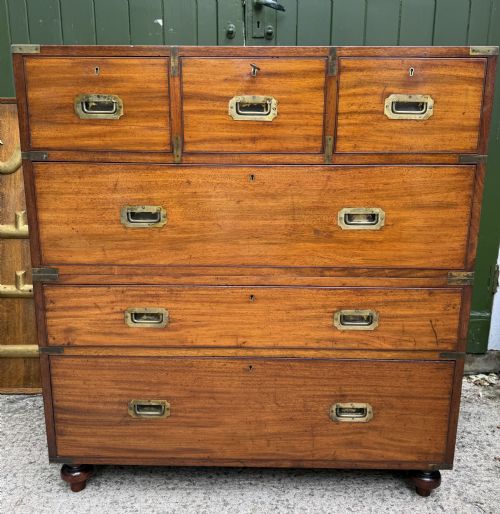
The most common form on this page is the two-part chest of drawers, built in sections to ease carriage on horseback or ship. Alongside these chests, buyers find secretaire variants and decorative trinket boxes that share the same robust functional lineage.
Materials dictate the character of these pieces, drawing predominantly on rich hardwoods like mahogany, teak, and oak. Each item carries the structural hallmarks of military utility, designed to withstand rigorous relocation without losing its formal dignity.
Materials and construction
Makers constructed these campaign items from dense hardwoods such as mahogany, teak, and oak, chosen for their resilience against humidity and travel. These timbers were often polished to a deep lustre, hiding the heavy usage the furniture endured in the field.
Brass corners, flush-fitting handles, and strap mounts were screwed into the timber to protect vulnerable edges from impact during transit. Cast iron carrying handles and substantial brass fittings added further structural integrity to the sectional carcass.
Vintage Military Dresser Retail Price Guide 2026
Typical asking prices for vintage military dresser among the pieces listed under this phrase on Sellingantiques today, from the lower quarter to the upper quarter. They describe what is for sale here now, not the wider market.
Listings span from the nineteenth century into the twentieth century, featuring mahogany, teak, oak, and rosewood alongside brass and cast iron.
Judging quality and craft
The distinction between ordinary field furniture and finer pieces lies in the precision of the brass-mounting and the choice of primary timber. Tighter joinery and unblemished mahogany or teak indicate a higher grade of officer's commission rather than standard barracks issue.
Internal configuration also separates basic chests from superior secretaire versions fitted with writing drawers and pigeonholes. The crispness of the carving and the quality of the original inset handles demonstrate the skill of the workshop involved.
Mappin and Webb
The Vintage Military Dresser Glossary
- Campaign chest
- A modular chest of drawers built in two or more stackable sections for ease of transport during military movements. These pieces typically feature recessed brass handles to prevent snagging.
- Secretaire
- A cabinet or chest incorporating a pull-down writing flap that conceals small drawers and pigeonholes. This fitted desk space allowed officers to manage correspondence in the field.
- Brass mounting
- Protective metal corners and plates screwed to the edges and faces of furniture. They absorbed the knocks of travel and held sectional carcasses firmly together.
- Tallboy
- A tall chest of drawers formed by stacking one cabinet atop another. This vertical format maximised storage space within tight quarters.
Vintage Military Dresser: Frequently Asked Questions
Why are vintage military dressers built in two parts?
These chests were separated into modular sections to facilitate packing into crates and transport on campaign. This modular design allowed officers to move their heavy belongings easily across difficult terrain.
Once arrived at a new posting, the sections were simply stacked one upon the other and secured with side brackets or bolts.
How do I maintain the brass fittings?
The brass mounts and flush handles require minimal intervention beyond dusting and occasional gentle cleaning. Many owners prefer to leave the aged patina untouched rather than polishing the metal to a bright shine.
Avoid harsh chemical cleaners that might strip the historic surface from the surrounding timber or pit the metal.
Can I use a campaign chest as a bedside table?
Smaller boxes and lower single-section chests adapt well to bedside use, offering concealed storage within a compact footprint. Their robust construction means they withstand daily household items without difficulty.
Larger two-part dressers, however, require more generous floor space and work best as main bedroom or hallway storage.
How do I distinguish mahogany from teak pieces?
Mahogany typically displays a deep reddish-brown hue with a fine, straight grain that takes a high polish. Teak tends toward a warmer golden-brown or medium brown tone with a slightly oily feel and visible natural grain.
Both timbers were favoured for their durability, but their distinct colours help identify the regional origin and period of the furniture.