





Vintage Middle Eastern Metalwork
Vintage middle eastern metalwork brings tangible heritage into a room, offering heavy brass, copper and silver inlaid vessels that collectors prize for their intricate hand work.
Vintage Middle Eastern Metalwork
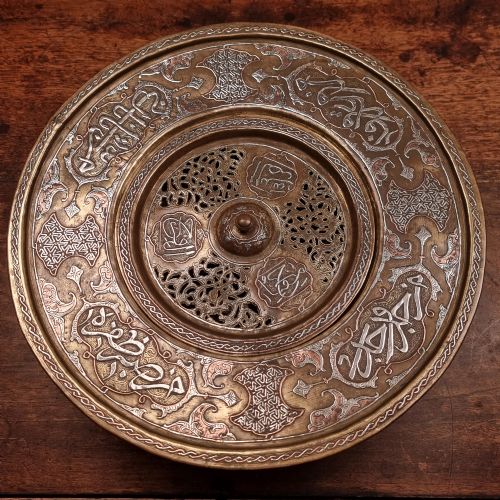
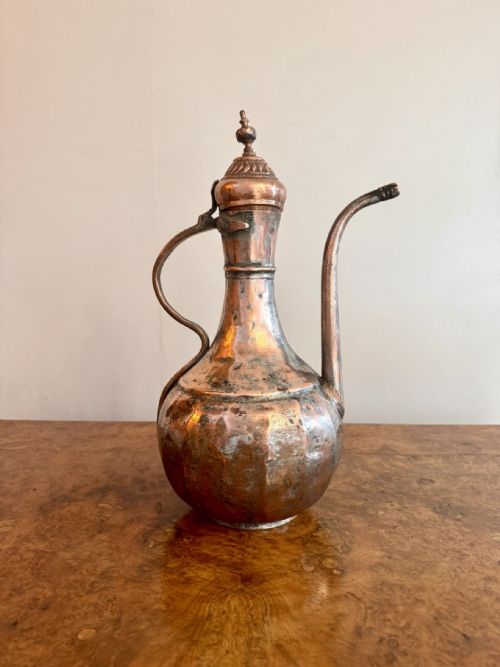
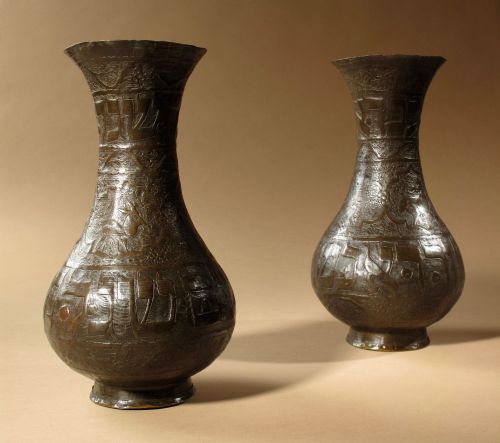
The objects on this page include decorative bowls, basins, plates, dishes, platters, trays, chargers, pitchers, ewers, coffee pots, candlesticks, lamps, vases and occasional tables. These pieces encompass specific regional styles such as Persian, Ottoman, Mamluk Revival, Qajar Persian, Anglo-Indian and Judaica.
How they were made
Makers shaped these pieces from copper and brass, employing techniques such as hand-engraving, repousse work and embossing to build up detailed surface ornament. Artisans also utilised silver inlay to create striking contrasts against darkened patinated copper grounds.
Mixed metal construction appears frequently, combining different metal alloys within a single tray or bowl to heighten visual depth. Selected items incorporate carved wood elements alongside metal components, particularly in larger functional furniture forms like occasional tables.
Materials documented across the inventory include copper, brass, silver, patinated copper, tin, mixed metal and carved wood.
What varies in quality
Quality in these metal objects rests upon the crispness of the hand-engraving and the depth of the repousse decoration. Pieces showing precise, patient toolwork across copper and brass surfaces stand distinctly apart from simpler production.
The choice of materials and the integration of silver inlay further define the standard of a piece. Well-executed mixed metal elements and deliberate patination demonstrate a higher level of artisan skill during manufacture.
The Vintage Middle Eastern Metalwork Glossary
- Cairoware
- Metalwork originating from Cairo, typically brass inlaid with silver and copper in traditional Islamic geometric and calligraphy patterns. This style became popular during the nineteenth century revival periods.
- Repousse
- A metalworking technique where an artisan hammers metal from the reverse side to form a raised design in relief on the front. This method creates tactile texture on chargers and vessels.
- Qajar
- Pertaining to the Qajar dynasty of Persia, known for distinct brass and copper work featuring figural panels and dense floral engraving. Items from this period display specific regional motifs.
- Charger
- A large decorative plate or basin used historically for display or serving rather than daily dining. These substantial metal pieces often feature intricate central medallions and border work.
- Patinated copper
- Copper that has undergone chemical or natural oxidation to darken its surface colour and highlight applied decorative engraving. This treatment adds visual depth to vintage vessels.
Vintage Middle Eastern Metalwork: Frequently Asked Questions
How do I clean vintage brass and copper?
Clean these metal surfaces gently with a soft dry cloth to remove dust without disturbing the historic surface. Avoid harsh chemical dips that strip away the aged patination collected over decades.
Leaving the natural patina intact preserves the character and visual history of the metalwork. Professional advice should be sought before attempting any intensive restoration on silver inlaid pieces.
Were these copper pots used for coffee?
Many copper coffee pots and ewers served practical domestic or ceremonial drink preparation roles in Middle Eastern households. Their distinctive spouts and handles were designed for pouring hot liquids.
Over time, these functional vessels transitioned into decorative objects valued for their craftsmanship and material presence in interior spaces.
What is Mamluk Revival metalwork?
Mamluk Revival refers to nineteenth century pieces inspired by the medieval metalwork of the Mamluk Sultanate. Artisans replicated the elaborate inlaid brass and silver techniques of that earlier golden age.
These later revival items capture the intricate geometric patterns and calligraphic bands characteristic of the historic Islamic workshops.
How can I date nineteenth century metalwork?
Dating relies upon stylistic markers, material combinations and documented manufacturing periods associated with specific regional revivals. Nineteenth century pieces often exhibit characteristic hand tool marks distinct from later machine production.
Examining the construction methods and any inscribed text helps place an object within the broader 1860 to 1920 timeframe.
Can I use brass top tables daily?
Brass top occasional tables function well for everyday display use in living spaces, holding light decorative objects or books. Care should be taken to protect the metal surface from moisture and scratches.
The removable brass trays resting on carved wood bases require simple dusting to maintain their engraved surface detail.