





Vintage Metal Tea Canister
These vintage metal tea canisters range from heavy silver plate to painted tinplate, offering practical storage with distinct period character.
Vintage Metal Tea Canister
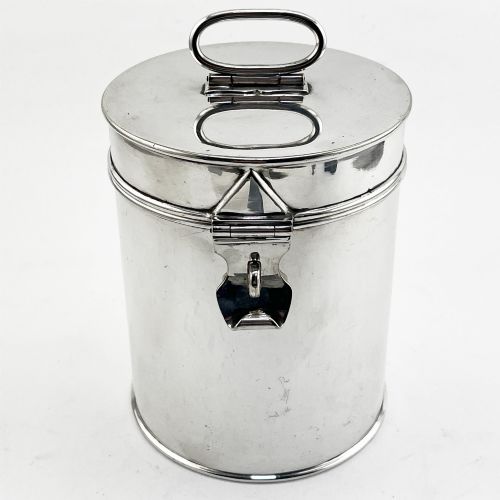
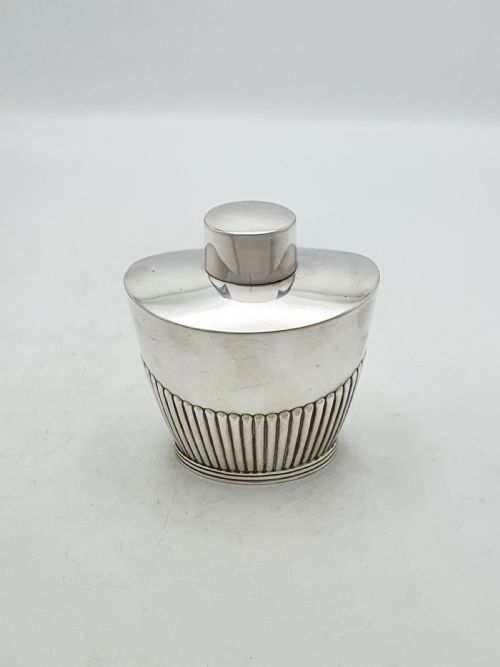
A vintage metal tea canister serves as a robust container for dry leaf tea, taking forms from campaign chests to grocer shop counters. You encounter examples spanning the Georgian era through the Edwardian period, often constructed from tinplate or silver plate.
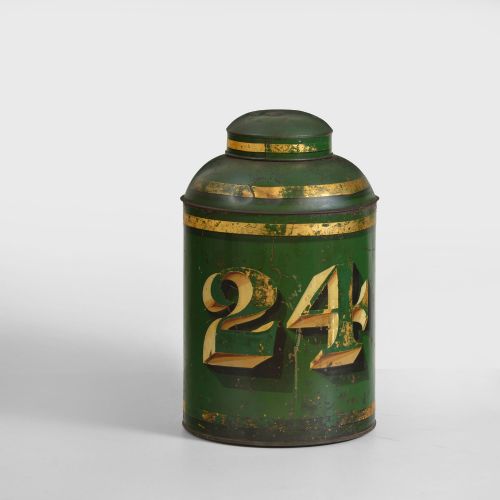
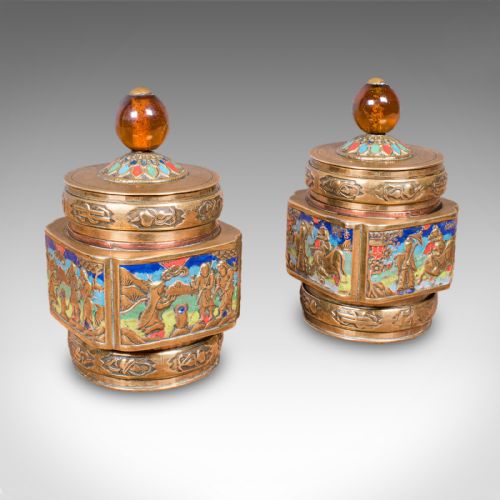
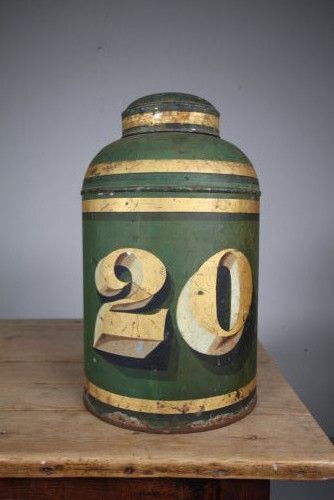
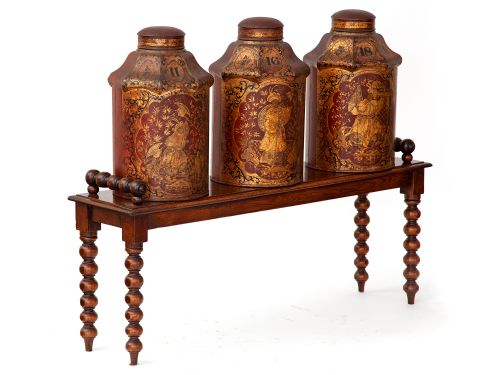
The selection here includes toleware tins, champleve caddies, and converted table lamps, reflecting diverse domestic and commercial uses. English country styles and Chinoiserie pagoda designs appear among the groupings.
Makers such as Mappin & Webb contributed plated pieces, while commercial makers produced biscuit tins and shop displays that now function as decorative objects. These items combine utilitarian function with period craftsmanship.
How they were made
Tinplate and iron provide the structural foundation for many containers, shaped and soldered to form airtight bodies for storing loose leaves. Artisans applied hand-painted finishes, japanning, or gold leaf to the exterior surfaces.
Silver plate and Old Sheffield plate techniques coat base metals with precious layers, requiring skilled smiths to apply decorative borders and shields. Inlaid mahogany cases house internal metal canisters, combining cabinet making with metalwork.
Vintage Metal Tea Canister Retail Price Guide 2026
Typical asking prices for vintage metal tea canister among the pieces listed under this phrase on Sellingantiques today, from the lower quarter to the upper quarter. They describe what is for sale here now, not the wider market.
Some tea canisters lived second lives as biscuit tins or desk accessories before finding their way onto modern tables.
What varies in quality
The thickness of the metal and the integrity of soldered joints determine the structural durability of each container. Heavier gauges of silver plate and tinplate indicate higher manufacturing standards.
The execution of painted decoration, whether Chinoiserie motifs or simple lettering, separates standard commercial items from finer decorative works. Preserved surface patination and intact interior linings elevate the overall standard of a piece.
Mappin & Webb·Huntley & Palmers
The Vintage Metal Tea Canister Glossary
- Toleware
- Painted or japanned metalware, typically tin, decorated with lacquer or enamel. This technique allowed makers to achieve rich colours and patterns on utilitarian items.
- Silver Plate
- A thin layer of silver fused or electroplated onto a base metal such as copper or brass. This method offered the appearance of solid silver at a lower cost.
- Champleve
- An enamelling technique where troughs are carved into the metal surface and filled with vitreous enamel. These coloured areas are then fired and polished flush with the metal.
- Old Sheffield Plate
- A fused composite material made by melting a sheet of silver onto a thicker copper ingot. This early plating method produces a warm tone as the copper occasionally shows through wear.
- Campaign Canister
- A portable container made for travel, featuring sturdy construction and secure fittings. These pieces were built to withstand movement during journeys.
Vintage Metal Tea Canister: Frequently Asked Questions
What were metal tea canisters used for?
These containers protected delicate tea leaves from moisture, light, and air in domestic parlours and grocer shops. Airtight lids preserved the flavour of expensive imports.
Larger examples stood on counters for daily retail trade, while smaller caddies sat in dining rooms under lock and key.
How do I date a metal canister?
Stylistic clues such as Edwardian lettering, Victorian silver plating marks, and Regency lamp conversions provide chronological anchors. Construction methods like hand soldering also indicate age.
Examining the type of hinges and fasteners helps place an object within its manufacturing era.
Can I still store tea inside them?
Many metal containers retain clean interiors suitable for dry goods, provided the soldering is stable and sealed. Tinplate options require dry conditions to prevent oxidation.
Vintage silver plated options benefit from gentle washing with non-abrasive cleaners before food use.
How do I clean old toleware?
Painted surfaces require dry dusting or gentle wiping with a soft, damp cloth to preserve the original finish. Avoid harsh chemical solvents that lift historic paint layers.
Wax can protect japanned surfaces from further wear while maintaining a soft sheen.