




Vintage Metal Strapped Box
These vintage metal strapped box items are robust storage containers reinforced with iron bands and hinges, offering enduring utility for the home.
Vintage Metal Strapped Box
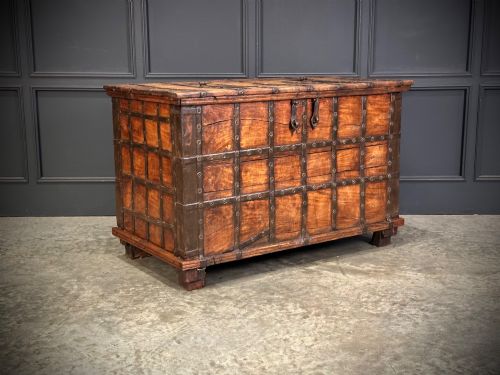
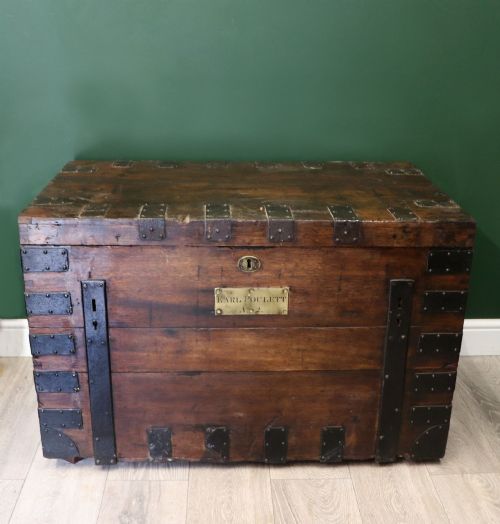
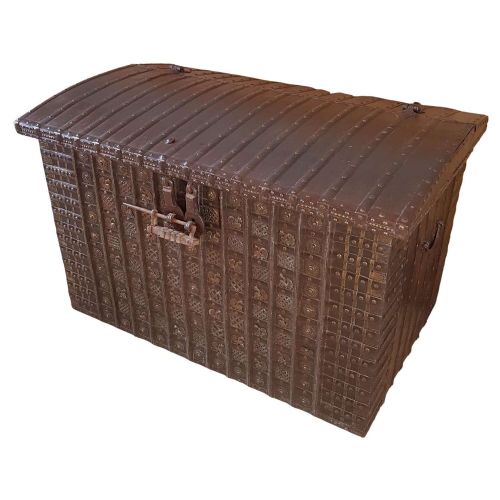
When you search for a vintage metal strapped box, you encounter heavy wooden chests and trunks designed for rigorous travel and secure domestic storage. These containers take forms such as blanket boxes, dome top coffers, dowry chests, and silver chests across various regional traditions.
The versions you are most likely to meet on this page span the eighteenth, nineteenth, and early twentieth centuries. They originate from English, Scandinavian, Indian, and American workshops, reflecting diverse utilitarian purposes from shipping to household storage.
Common regional styles include Scandinavian folk art, rustic country pine, and Rajasthani iron-banded dowry chests. Each piece displays distinct carpentry and strapping configurations that reveal its specific geographical and functional roots.
How vintage metal strapped box items were made
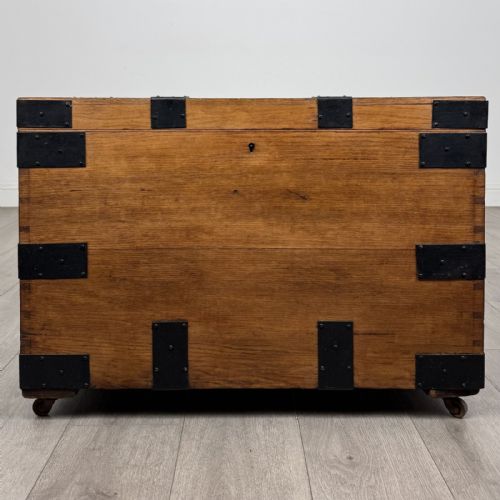
Constructed primarily from sturdy timbers such as pine, oak, teak, and occasionally American woods, these boxes rely on solid timber joints to withstand heavy loads. Carpenters formed dome tops and flat lids using pegged or dovetailed construction.
Iron and wrought iron bands, straps, and corner brackets are fastened across the wooden bodies to reinforce the structure against the rigours of transport. Brass elements frequently appear on locks, escutcheons, and hinges, adding both security and decorative contrast to the dark metalwork.
Vintage Metal Strapped Box Retail Price Guide 2026
Typical asking prices for vintage metal strapped box among the pieces listed under this phrase on Sellingantiques today, from the lower quarter to the upper quarter. They describe what is for sale here now, not the wider market.
Some dowry chests hid secret compartments beneath the iron bands to guard wedding gold.
What varies in quality in a vintage metal strapped box
The integrity of the original iron strapping and the completeness of the metalwork dictate the initial assessment of a piece. Hand-forged iron bands with intact rivets show superior craftsmanship compared to later replacements or machine-cut repairs.
The quality of the underlying woodwork, from finely grained oak to painted Scandinavian pine, determines the enduring stability of the box. Original painted surfaces or well-waxed timber patinas separate untouched examples from heavily restored ones.
The Vintage Metal Strapped Box Glossary
- Dome top
- A rounded lid construction designed to shed water during travel and increase internal storage capacity. This profile appears frequently on eighteenth-century Scandinavian and nineteenth-century American coffers.
- Damchiya
- A traditional low dowry chest originating from Rajasthan, heavily banded with iron and utilised for storing household valuables. These pieces often feature intricate internal compartments.
- Silver chest
- A specialised storage trunk lined to protect domestic silverware, typically constructed from robust oak with iron carrying handles. These containers were built for affluent households and shipping.
- Cofer
- A large strongbox used for storing valuables, linen, or documents, usually secured with heavy iron straps and intricate locking mechanisms. Eighteenth-century examples demonstrate early European joinery.
- Strapping
- Metal bands applied externally to wooden chests to reinforce corners, seams, and lids against heavy impact. Wrought iron strapping defines the industrial aesthetic of these storage pieces.
Vintage Metal Strapped Box: Frequently Asked Questions
What were these metal strapped boxes used for?
These containers served primarily for transporting personal belongings, valuable silver, and household linens across long distances. Families also utilised them domestically for secure storage in bedrooms and halls.
Over time, their robust construction made them reliable repositories for blankets, dowries, and travel gear. Their heavy iron reinforcements ensured contents remained protected during rough shipping conditions.
How do I date a metal strapped box?
Dating relies on observing the combination of timber species, joinery techniques, and the style of the ironwork. Eighteenth-century examples often feature pegged oak frames and dome tops, while nineteenth-century pieces frequently utilise pine or teak with machine-rolled straps.
Examining the locks, hinges, and overall construction provides further clues to the manufacturing era. Regional characteristics, such as Scandinavian folk art paintwork or Rajasthani banding, also help narrow down the period.
Where did these boxes originate?
The listings encompass items from diverse geographical regions, including England, Scandinavia, India, and America. Each region developed distinct construction methods using local timbers like oak, pine, and teak.
Traders and travellers carried these trunks across borders, resulting in a global mix of styles. Local workshop traditions dictated whether a box received painted finishes or heavy wrought iron strapping.
How do I care for a vintage wooden box?
Maintain the timber by applying traditional wax sparingly to preserve the natural grain and aged patina. Avoid placing the box in direct sunlight or near heat sources to prevent the wood from splitting.
Keep the metal straps clean and dry to prevent surface corrosion. Gentle dusting protects the original ironwork and painted finishes from unnecessary wear.