

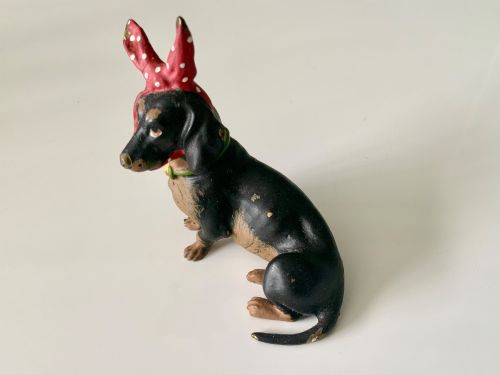
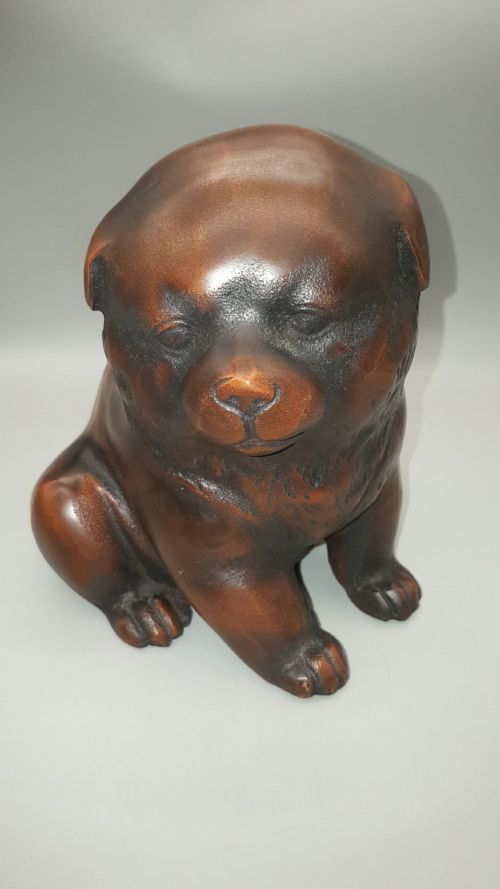
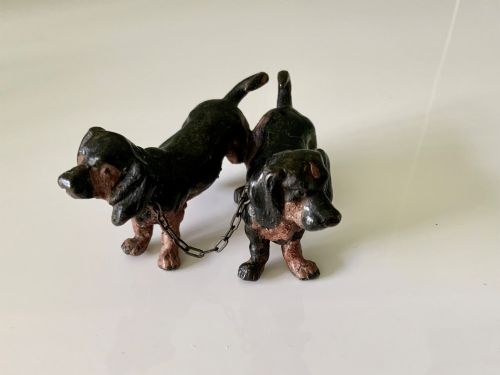
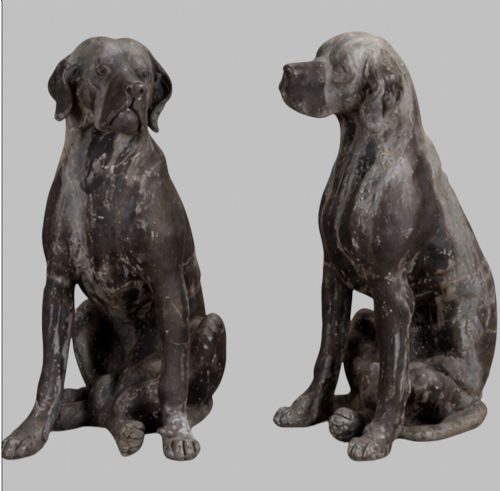


Vintage Metal Dog Sculpture
These vintage metal dog sculpture pieces bring character and weight to a room, cast in bronze, spelter, and iron.
Vintage Metal Dog Sculpture
A vintage metal dog sculpture captures canine form in solid materials, ranging from small desk ornaments to life-size garden hounds. Buyers seek these pieces for their sculptural presence and the distinct personality each breed representation brings to a room.
The selections here span the nineteenth century through the mid-twentieth century, encompassing domestic table figures, car mascots, and heavy fireside statues. Animalier works and Art Deco designs dominate the forms found in this collection.
Smaller tabletop models function as bookends, inkwells, or desk paperweights, while larger figures stand independently on marble plinths. Every piece reflects the specific material choices and casting techniques of its originating period.
How they were made
Foundries utilised traditional casting methods to shape bronze, cast iron, and spelter into detailed animal forms. Molten metal poured into moulds captured the musculature and texture of each hound or terrier before cooling.
Cold painting and patination added surface colour after the casting process, though many examples relied on the natural finish of the metal or integrated marble and onyx bases.
Vintage Metal Dog Sculpture Retail Price Guide 2026
Typical asking prices for vintage metal dog sculpture among the pieces listed under this phrase on Sellingantiques today, from the lower quarter to the upper quarter. They describe what is for sale here now, not the wider market.
Listings feature bronze, spelter, and cast iron sculptures ranging from the nineteenth century to the mid-twentieth century.
What varies in quality
The precision of the casting and the crispness of detail define the finer examples in this field. Artisanal skill shows in how accurately the fur, expression, and posture of the animal are rendered.
The condition of the original cold painted surface and the quality of the mounting plinth, such as fitted marble or onyx, distinguish standard production pieces from superior works.
Tsunemitsu·C Masson·P.de Soete·Franze Bergman·Louis Lejeune·AL Barye·Barbedienne
The Vintage Metal Dog Sculpture Glossary
- Animalier
- A nineteenth-century artistic movement focused on the realistic depiction of animals. Sculptors in this tradition studied anatomy closely to create lifelike figures.
- Cold painted bronze
- A method where bronze objects are painted with cold enamel paint rather than fired in a kiln. The technique was particularly popular in Austrian workshops.
- Spelter
- An alloy of zinc and lead used as a cheaper alternative to bronze. It was widely cast during the Art Deco period and often given a bronze-like finish.
- Car mascot
- A decorative figurine mounted on the radiator cap of a motor car. Many metal dog sculptures served this practical yet stylish purpose during the early twentieth century.
- Patina
- The surface sheen or colour that develops on metal over time through age and handling. A good patina adds depth and evidence of history to a sculpture.
Vintage Metal Dog Sculpture: Frequently Asked Questions
How do I date a metal dog sculpture?
Dating relies on stylistic clues, foundry marks, and the material composition used in the casting. Art Deco pieces display geometric lines, while nineteenth-century works often show classical Animalier realism.
Base materials also help narrow the age, as spelter gained popularity in the early twentieth century alongside traditional bronze casting.
What is cold painted bronze?
Cold painted bronze refers to metal figures decorated with oil or enamel paints without undergoing kiln firing. This technique allowed for vibrant, detailed colouring on small tabletop sculptures.
Over decades, the paint develops natural wear that collectors look for as a sign of authenticity.
Were these sculptures used on cars?
Several metal dog sculptures functioned as radiator mascots for automobiles during the early motoring era. These aerodynamic or striking figures bolted directly onto car caps to personalise the vehicle.
Collectors frequently remove them for display on desk plinths or bookshelves today.
How do I clean a bronze dog sculpture?
Dust the surface gently with a soft, dry brush to remove particles without disturbing the underlying patina. Avoid harsh chemical cleaners or polishes that strip away age and historical finish.
Occasional light application of microcrystalline wax can protect exposed metal surfaces from moisture.
What is the difference between bronze and spelter?
Bronze is a durable alloy of copper and tin that takes fine detail and patination exceptionally well. Spelter is a softer zinc alloy that feels lighter and was often painted to imitate bronze.
Examining the underside or base usually reveals the distinct weight and material composition of the piece.