




Vintage Metal Clock
These vintage metal clock selections range from industrial station dials to ornate Victorian carriage pieces, offering robust mechanical timekeeping housed in brass, bronze, and chrome.
Vintage Metal Clock
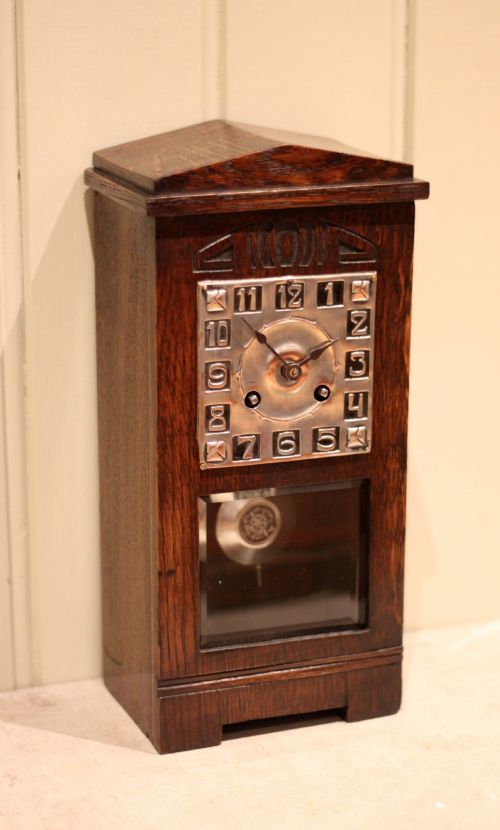
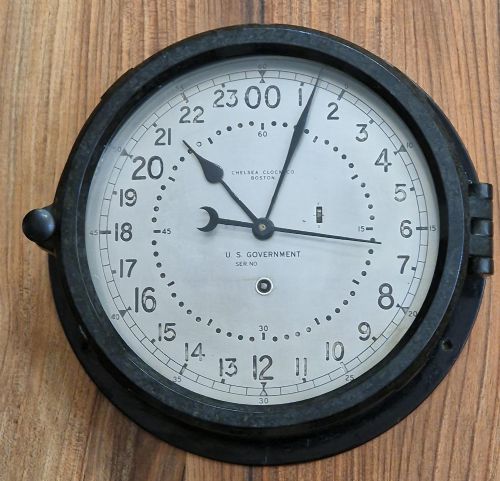
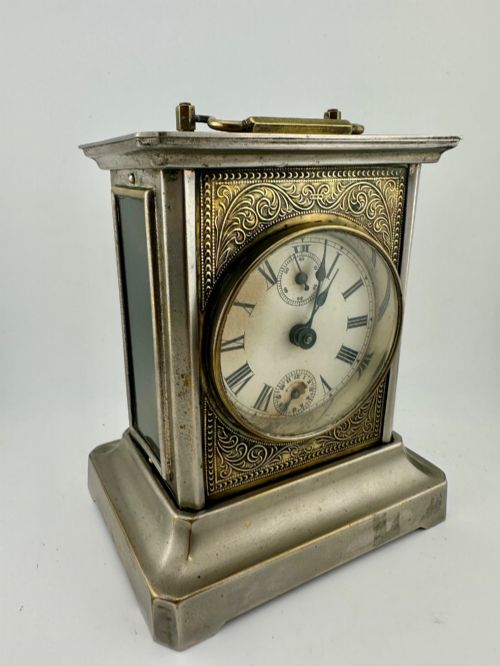
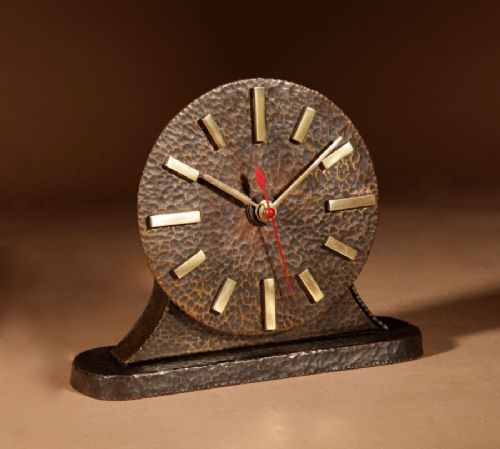
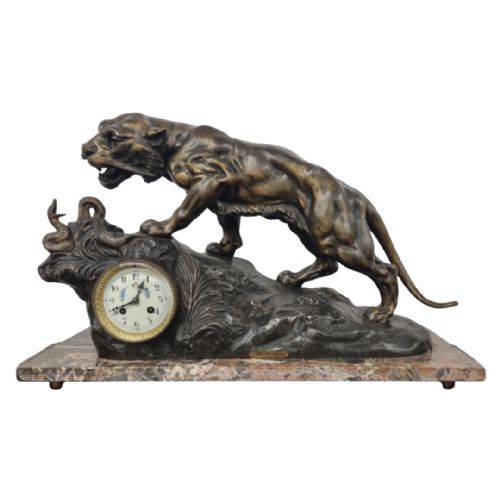
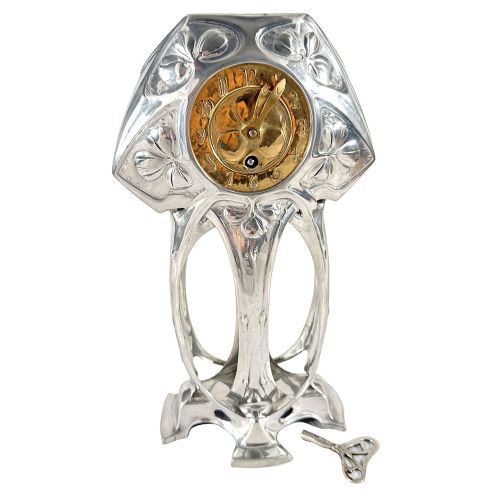
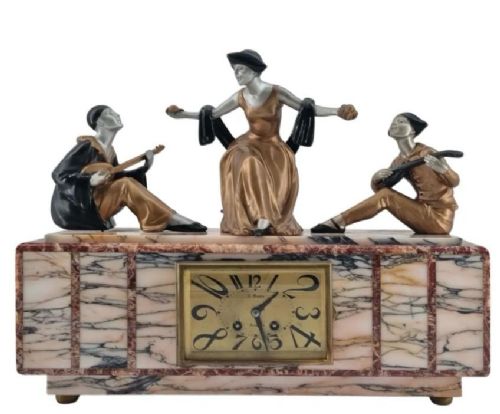
When you search for a vintage metal clock, you encounter a diverse array of timepieces spanning from the nineteenth century through the mid-twentieth century. The selection encompasses monumental station dials, architectural tower clock faces, intricate mantel pieces, and compact desk clocks.
The material forms vary considerably, including heavy cast bronze, hammered brass, polished chrome, and delicate champlevé enamel dials. Each item carries the distinct aesthetic markers of its original context, whether domestic drawing rooms or industrial railway platforms.
Materials and Construction
Maker workshops utilised durable base metals such as brass, iron, copper, and pewter to form robust structural cases and decorative mountings. Gilt finishes, bronze ormolu, and silvered platings were frequently applied to enrich the surface texture of high-status domestic clocks.
Dials were constructed using enamelled copper, glass covers, and painted metal plates, often incorporating distinct typographic styles characteristic of specific manufacturing decades. Movement engineering involved intricate brass gear trains, fusee mechanisms, and early electrical or spring-driven systems.
Vintage Metal Clock Retail Price Guide 2026
Typical asking prices for vintage metal clock among the pieces listed under this phrase on Sellingantiques today, from the lower quarter to the upper quarter. They describe what is for sale here now, not the wider market.
Listings feature metal clocks across multiple periods, incorporating brass, chrome, iron, and gilt bronze materials.
Distinctions in Quality
The distinction between standard commercial timepieces and finer examples lies in the precision of the metalwork and the complexity of the internal movement. Hand-chased bronze figures, finely executed enamel dials, and signed movements by known makers separate exceptional pieces from mass-produced utilitarian clocks.
Condition and originality dictate much of the standing of an individual piece, particularly regarding the retention of original gilding, dial paint, and functioning mechanical escapements. Objects that retain their original architectural mountings and untouched patination represent the upper tier of the range.
R Varnier·Friedrich Adler for Osiris·Smiths Clockmakers·Andre Guilmet·Jaeger LeCoultre·P.H Mourey
The Vintage Metal Clock Glossary
- Fusee
- A conical pulley used in mechanical clocks to maintain an even pull on the gear train as the mainspring unwinds. This mechanism improves timekeeping accuracy throughout the running period of the clock.
- Champlevé
- An enamelling technique where troughs are dug into a metal surface and filled with vitreous enamel before firing. It frequently appears on decorative dials and miniature carriage clocks.
- Ormolu
- A technique of applying finely ground, high-carat gold to a bronze object using a mercury amalgam. This treatment creates a durable golden finish characteristic of nineteenth-century decorative pieces.
- Lantern clock
- An early form of domestic brass weight-driven clock featuring an open movement design. These pieces typically display traditional bell striking arrangements on top of the case.
- Turret clock face
- A large exterior dial designed for mounting on towers, stations, or public buildings. These components often survive independently of their original internal movements.
Vintage Metal Clock: Frequently Asked Questions
How do I wind a mechanical desk clock?
Most spring-driven clocks require a key inserted into the winding square on the dial or back plate. Turn the key gently until you feel resistance, avoiding overwinding to protect the mainspring.
Ensure you do not force the mechanism past its stopping point. Regular gentle winding preserves the internal gear train over decades of use.
Where should I place a heavy bronze mantel clock?
Position these heavy metal pieces on sturdy, level furniture capable of supporting considerable weight. Mantels, sideboards, and heavy wooden desks provide stable platforms that prevent accidental tipping.
Keep the clock away from direct sources of heat and moisture to protect metal patination and internal lubricants. Level placement also ensures the escapement beats evenly for accurate timekeeping.
How do I identify an Art Deco clock?
Look for geometric forms, stylised numerals, and contrasting materials such as chrome paired with dark wood or enamel. Designers from this era favoured streamlined silhouettes and symmetrical architectural arrangements.
Many examples incorporate figural motifs or bold rectilinear cases that reflect the aesthetic of the 1920s and 1930s. These pieces often utilise modern metal finishes like polished chrome alongside traditional brass.
What maintenance do old station clocks need?
Station clocks require periodic cleaning of their electrical or mechanical movements by a professional horologist. Dust accumulation inside the large dial enclosures can impede the smooth operation of the hands.
Check the electrical wiring on converted pieces or maintain the spring tension on mechanical variants. Gentle exterior dusting with a dry cloth keeps the metal cases and glass faces clear.