



Vintage Meissen Ceramics
These vintage meissen ceramics bring hard-paste porcelain figures, dishes and inkwells into a room with distinct historical presence.
Vintage Meissen Ceramics
Vintage meissen ceramics encompass hard-paste porcelain objects ranging from mid-nineteenth-century dishes and inkwells to eighteenth-century figurines and platters. Collectors searching this phrase encounter nineteenth-century interpretations of earlier rococo and neoclassical styles alongside genuine eighteenth-century models and twentieth-century naturalist pieces.
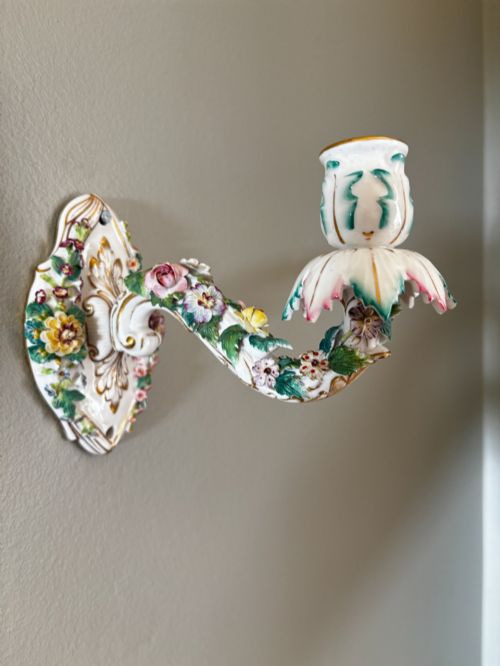
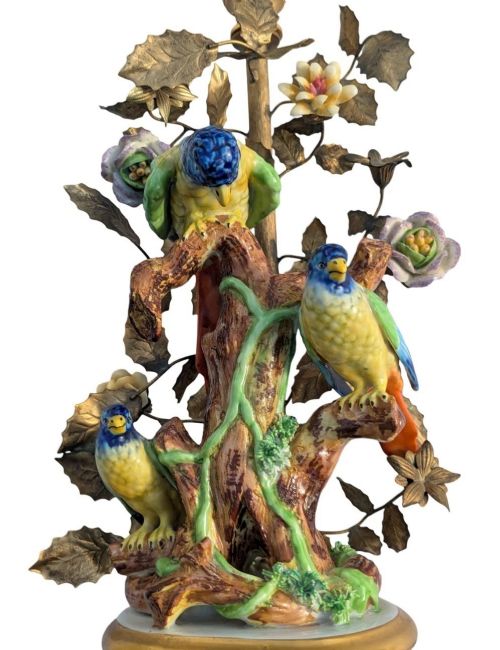
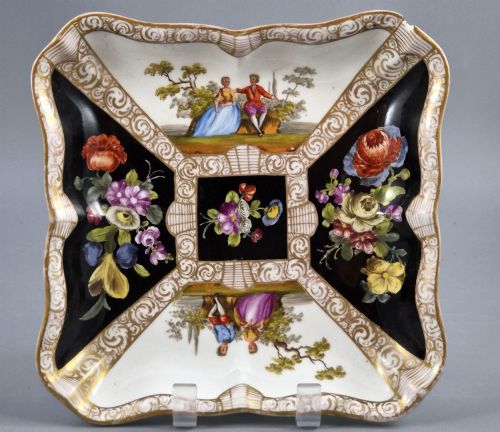
The inventory on this page spans utilitarian vessels like gravy boats and jugs, ornate candelabras, and decorative plates painted with birds, insects or Watteau scenes. Eighteenth-century pieces such as street trader figures and Marcolini period groups appear alongside nineteenth-century platters and early twentieth-century boxes.
How they were made
Hard-paste porcelain forms the physical foundation of these pieces, fired at high temperatures to yield a dense, vitrified body. Enamel pigments and handpainting bring colour to the surfaces, depicting natural motifs, scenes and black ground patterns.
Gold leaf and gilding provide metallic highlights on rims, figures and decorative highlights, often complemented by intricate moulding in styles running from rococo revival to chinoiserie.
Vintage Meissen Ceramics Retail Price Guide 2026
Typical asking prices for vintage meissen ceramics among the pieces listed under this phrase on Sellingantiques today, from the lower quarter to the upper quarter. They describe what is for sale here now, not the wider market.
Materials recorded across these pieces include gold leaf, gilt, ceramic and enamel applied to hard-paste porcelain bodies.
What varies in quality
The finesse of the handpainting distinguishes finer pieces, particularly in the rendering of birds, insects, human figures and Watteau scenes. Crispness in the porcelain moulding and the precision of the gilding also separate standard production wares from more ambitious sculptural groups.
Fidelity to historical styles, whether neoclassical revival or eighteenth-century meissen traditions, dictates the aesthetic success of the piece. The complexity of the object type, from simple plates to elaborate figural candelabras and centrepieces, shapes its visual weight.
Edmé Samson·Sitzendorf
The Vintage Meissen Ceramics Glossary
- Hard-paste porcelain
- A durable, high-fired ceramic composition made from kaolin and petuntse. It provides the smooth, impervious body characteristic of these wares.
- Gilding
- The application of gold leaf or powdered gold to ceramic surfaces. It enhances decorative details on plates, bowls and candelabras.
- Rococo
- An ornate design style marked by asymmetry, scrollwork and natural motifs. This aesthetic heavily influences eighteenth-century and revival-era forms.
- Chinoiserie
- European artistic interpretations of Chinese and East Asian decorative traditions. It appears on plates and vessels through specific motifs and scenic painting.
- Marcolini Period
- A specific era of production at the Meissen manufactory associated with Count Marcolini. Pieces from this time carry distinctive marks and refined modelling.
Vintage Meissen Ceramics: Frequently Asked Questions
What are vintage meissen ceramics?
Vintage meissen ceramics are hard-paste porcelain decorative and functional objects produced in Germany. They include figurines, plates, inkwells and candelabras spanning the eighteenth to the twentieth centuries.
Collectors prize them for their modelled forms and handpainted enamel decoration, which reflects shifts in European design from rococo revival to naturalist styles.
How do I identify periods?
Identifying periods involves examining the painting style, modelling techniques and material characteristics. Eighteenth-century pieces often display specific figural subjects and hand-mixed enamel palettes.
Nineteenth-century interpretations tend toward revival styles like rococo and neoclassical, while twentieth-century examples introduce bolder motifs such as black ground designs and naturalist animal figures.
How were they used?
Many pieces served dual purposes as functional household items and decorative art. Inkwells held writing equipment on desks, while gravy boats, platters and bowls featured on dining tables.
Figurines, centrepieces and candelabras were primarily intended for display in drawing rooms and parlours to demonstrate taste and refinement.