



Vintage Measure Set
A vintage measure set offers a tactile encounter with historical trade, bringing calibrated weights, copper jugs, and pewter tankards straight from tavern counters and official assay offices into domestic spaces.
Vintage Measure Set
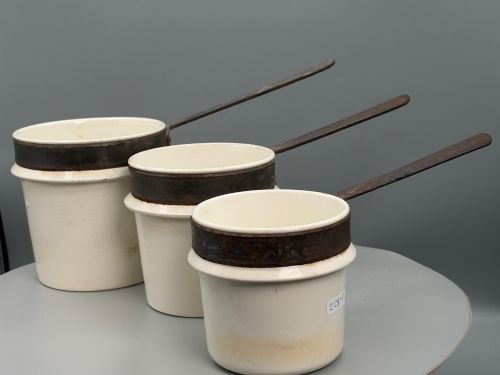
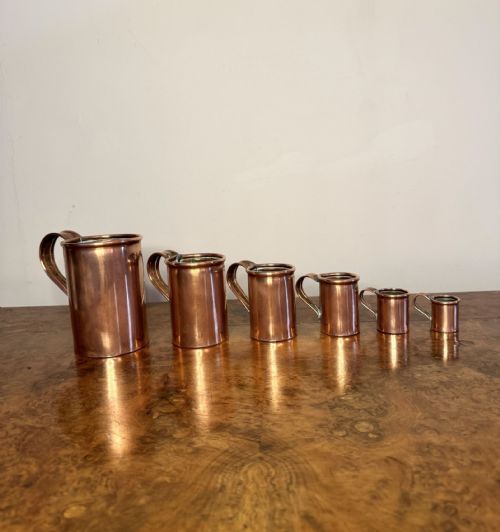
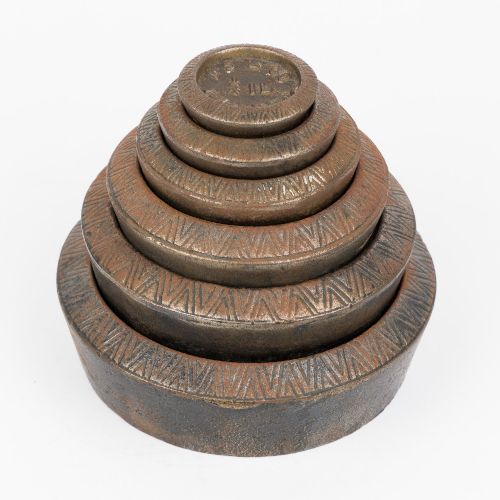
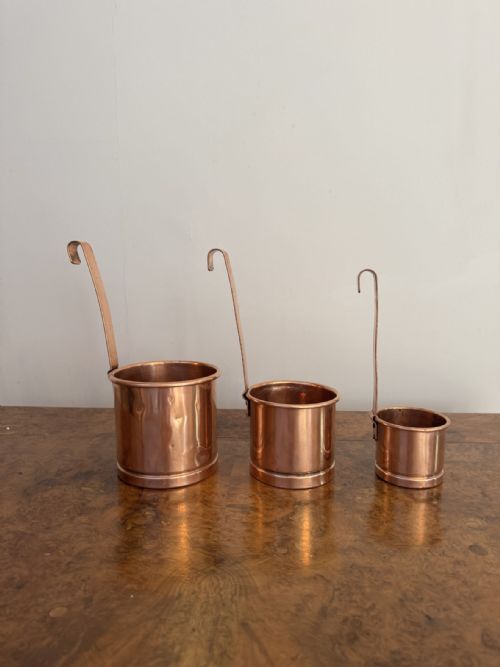
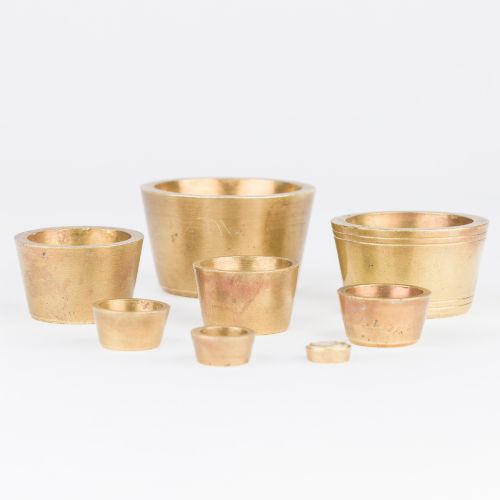
A vintage measure set gathers graduated instruments used for commerce, hospitality, and scientific calculation, spanning the nineteenth and twentieth centuries. These groupings typically take the form of stacked copper tankards, nests of brass weights, or ceramic jugs banded in iron.
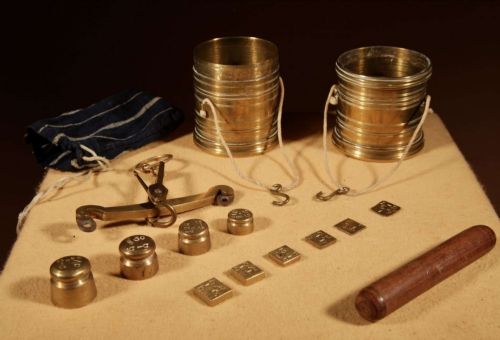
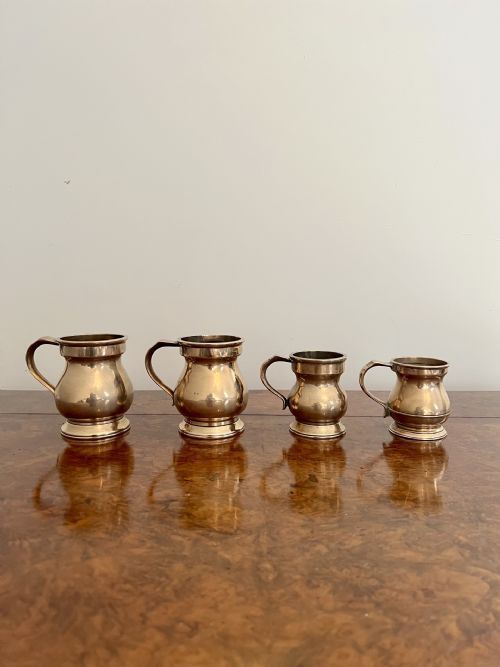
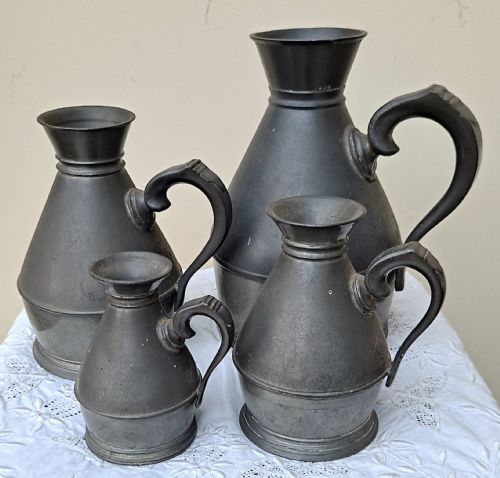
Buyers meet Victorian copper measures and pewter haystack sets most frequently on this page, reflecting nineteenth-century tavern and market standards. Alongside these liquid capacities, brass weight sets and scientific apparatus appear in various configurations.
The materials reflect practical demands, utilising durable metals like brass, copper, pewter, and iron alongside earthenware and mahogany cases. Styles range from plain Victorian industrial utility to Georgian simplicity and Art Deco silver plate.
Materials and Construction
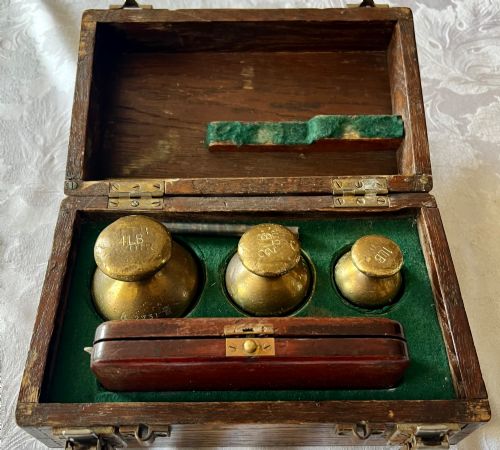
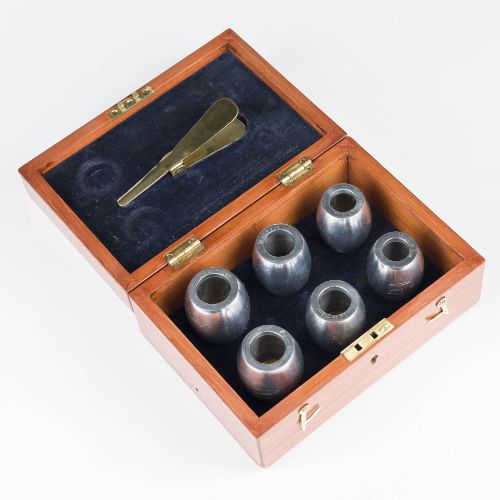
Metal sets rely heavily on heavy-gauge copper, spun or beaten brass, and cast pewter, often reinforced with iron bands or housed in fitted wooden presentation boxes lined with velvet. Sheet copper is shaped and soldered to form graduated liquid vessels, while brass and pewter components are cast in moulds and turned on lathes.
Surface finishing involves hand-beating, polishing, and stamping with governmental verification marks or maker stamps. These physical methods ensure the structural integrity required for precise daily trade use across centuries.
Vintage Measure Set Retail Price Guide 2026
Typical asking prices for vintage measure set among the pieces listed under this phrase on Sellingantiques today, from the lower quarter to the upper quarter. They describe what is for sale here now, not the wider market.
Some nineteenth-century weight sets retain the exact municipal punch marks for provincial towns that once settled pub disputes over beer volumes.
Markers of Quality
Superior quality in a vintage measure set rests upon completeness, crispness of official verification stamps, and the integrity of the metalwork. Sets retaining all their original graduated components without missing pieces command greater attention.
The clarity of makers' marks and regional assay stamps elevates an assembly, distinguishing standard commercial stock from pieces made by notable precision instrument makers.
De Grave Short And Co·W And T Avery·Maison Barra
The Vintage Measure Set Glossary
- Haystack measure
- A distinctively shaped Irish pewter vessel with a wide base and tapering neck, resembling a traditional farm haystack. These tall liquid measures were widely used in nineteenth-century establishments.
- Avoirdupois
- The standard system of weights used for general goods in commerce, distinct from troy weight which measured precious metals. Sets marked for this system appear frequently in regional standard collections.
- Hydrometer
- An instrument used for determining specific gravities, commonly employed in testing the strength of spirits. Nineteenth-century examples often survive in fitted wooden cases with thermometer attachments.
- Bell shaped tankard
- A liquid measure featuring a distinctive flared body resembling a church bell. These copper and pewter vessels were standard in Victorian taverns.
- Standard weight
- A verified mass used by municipal authorities or inspectors to check commercial scales. These items frequently bear civic stamps and regional inscriptions.
Vintage Measure Set: Frequently Asked Questions
How do I clean antique copper measures?
Copper vessels benefit from gentle washing with warm soapy water to remove surface dust, preserving the natural aged patina developed over generations.
Avoid harsh chemical abrasives that strip away historical character and the soft tones accumulated on nineteenth-century metal surfaces.
Were these sets used in homes?
Most surviving measure sets originated in public houses, apothecaries, and municipal inspection offices rather than private domestic kitchens. They governed trade accuracy and public commerce before standardisation became entirely automated.
Over time, collectors brought these utilitarian objects into domestic interiors for display and decorative arrangement.
What do the stamped marks mean?
Stamps and engravings on metal measures and weights indicate regional verification, crown ownership, or municipal inspection for accurate trade use. Borough names and reigning monarch ciphers help anchor the date and geographical origin of the set.
These official markings provide crucial evidence for authenticating nineteenth-century commercial equipment.
Can I use antique weights on scales?
Historical weight sets can still balance mechanical scales, though calibrated tolerances may shift slightly due to wear and cleaning over centuries.
Collectors generally preserve them as decorative or historical display collections rather than relying on them for modern culinary precision.